
Table of Contents
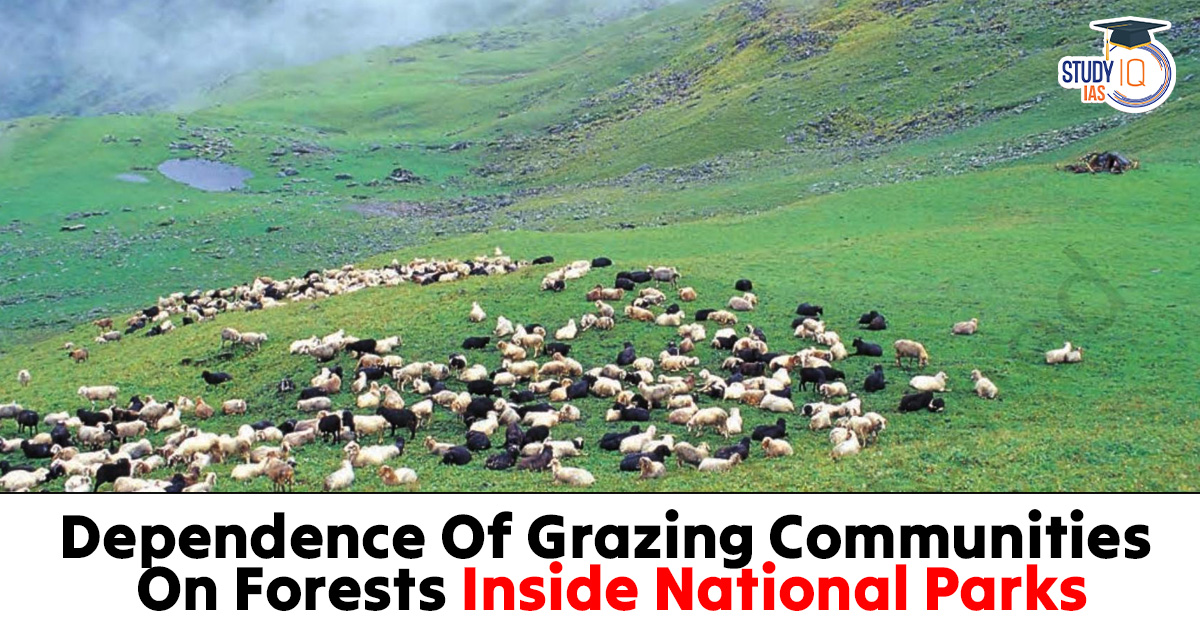
Context: The Standing Committee of the National Board for Wildlife (SC-NBWL), chaired by the Union Environment Minister, has directed the Wildlife Institute of India (WII) to conduct a comprehensive study on the dependence of pastoralist and nomadic communities on forests within national parks and wildlife sanctuaries.
About the Issue
- Pastoralist communities depend on forests within protected areas for grazing during the seasonal migration of livestock.
- SC-NBWL has tasked WII to:
- Assess the extent and nature of dependence
- Examine legal frameworks and constraints
- Study socio-economic and ecological dimensions
- States in focus: The study will focus on states like Madhya Pradesh, Gujarat, Rajasthan, Maharashtra, Uttarakhand, and Uttar Pradesh.
- Funding mechanism: Funding is proposed through the Compensatory Afforestation Fund Management and Planning Authority (CAMPA)
Key Communities Involved:
- Gujjars, Bakkarwals, Bhotia, Van Gujjars
- Maldharis, Rabari, Raika
- Dhangar, Gaddi, Changpa, Kuruba, among others
Significance
- Livelihood Security: Pastoralism sustains millions through livestock-based products while utilising vast rangelands critical for rural economies.
- Ecological Role: Regulated grazing supports grassland health and biodiversity, aligning with global frameworks like the United Nations Convention to Combat Desertification.
- Policy Relevance: It highlights the need to reconcile conservation goals with traditional rights through balanced, evidence-based policymaking.
Challenges
- Legal & Institutional Constraints: Overlapping and unclear legal frameworks restrict pastoralists’ grazing rights, creating conflicts between conservation laws and traditional livelihoods.
- Seasonal Migration Issues: Inter-state mobility of pastoralists leads to regulatory inconsistencies and weak institutional coordination.
- Rangeland Degradation: Declining pasture availability and livestock pressure accelerate ecological degradation and reduce carrying capacity.
- Conservation Concerns: Unregulated grazing may disturb habitats and intensify competition with native wildlife species.
- Global Dimension: Widespread degradation of rangelands globally highlights the urgency for sustainable management and policy intervention.
Way Forward
- Institutionalising Access: Establishing regulated grazing systems can balance livelihood needs with conservation priorities.
- Legal Clarity: Harmonised laws recognising customary rights can reduce conflicts and ensure sustainable resource use.
- Sustainable Rangeland Management: Scientific practices like rotational grazing can restore ecosystems while supporting pastoral economies.
- Community Participation: Inclusion of pastoralists enhances conservation outcomes through traditional ecological knowledge.
- Evidence-Based Policy: Data-driven policymaking can enable a balanced coexistence of biodiversity conservation and livelihoods.

 Ramsar Sites in India 2026 List: Names, ...
 Skyroot Vikram-1 Mission Aagaman: India'...
 Oor Pare Prehistoric Site: Location, Roc...














 WhatsApp





