Table of Contents
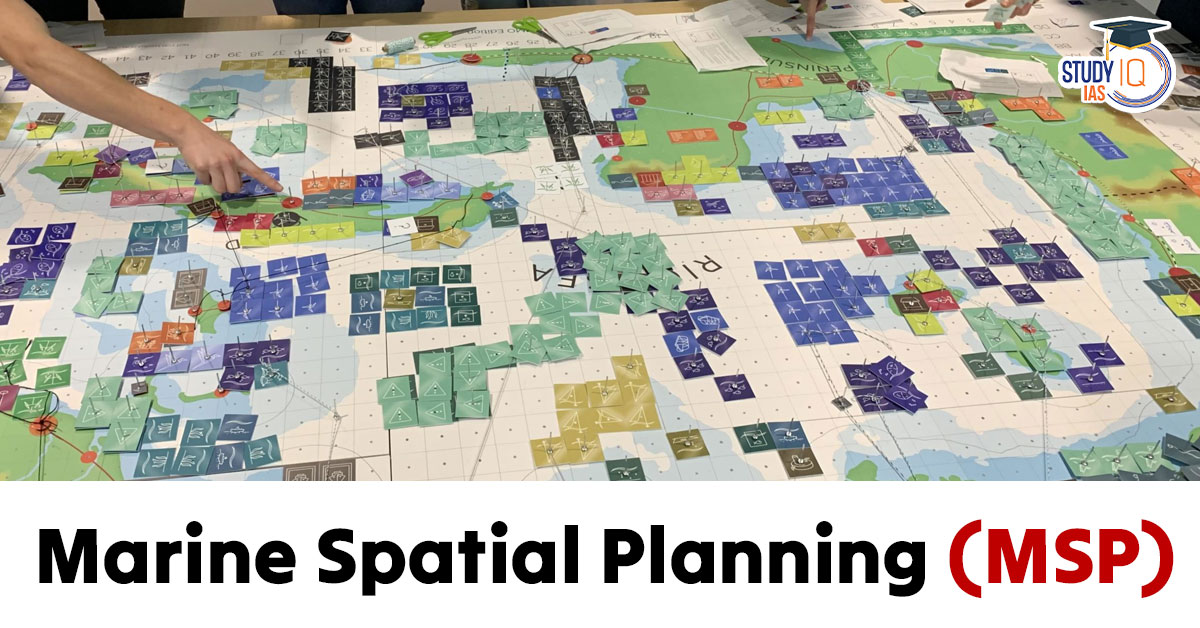
Context: The Odisha government has signed a Memorandum of Understanding (MoU) with the National Centre for Coastal Research (NCCR) to launch a Marine Spatial Plan (MSP), making it the first state in India to implement such a framework in the second phase of sustainable ocean planning.
About Marine Spatial Planning (MSP)
- According to the Intergovernmental Oceanographic Commission (IOC) of UNESCO, MSP is defined as a public, political process.
- Core Function: Analyzing and allocating the spatial and temporal distribution of human activities in marine areas.
- Triple Bottom Line: Aims to achieve balanced ecological, economic, and social objectives.
- Goal: To manage coastal and marine areas sustainably, boosting the blue economy while strengthening climate resilience. It specifically helps with: Port development, setting up industries, & Sustainable utilization of marine energy and economic activities.
Marine Spatial Planning Rationale for Odisha
- Extensive Coastal Ecosystems: Odisha’s 550-km coastline hosts globally sensitive zones, including Chilika Lake (India’s largest lagoon) and the Bhitarkanika mangroves.
- Scientific Resource Management: The Marine Spatial Plan (MSP) balances competing demands across fisheries, tourism, maritime trade, and ocean energy
- Resilient Blue Economy: The plan drives economic growth while ensuring the sustainable use of marine resources to maintain long-term ecosystem health.
| Associated Initiative: OMBRIC |
|

 Ramsar Sites in India 2026 List: Names, ...
 Skyroot Vikram-1 Mission Aagaman: India'...
 Oor Pare Prehistoric Site: Location, Roc...













 WhatsApp