Table of Contents
Context: Poila Baisakh, the first day of the Bengali solar calendar’s initial month (Baisakh), is celebrated with traditional fervour across West Bengal, Tripura, and Bangladesh.
Poila Boisakh
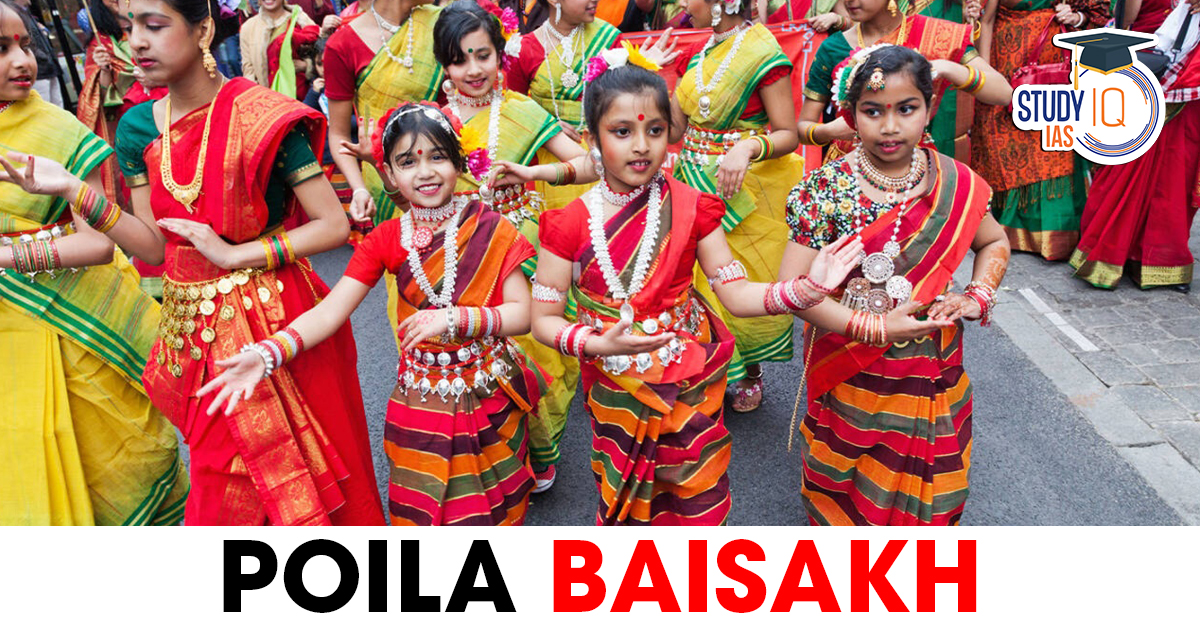
Poila Boishakh marks the beginning of the Bengali New Year and is one of the most vibrant cultural festivals celebrated in West Bengal, Tripura, Assam (Barak Valley), and Bangladesh. Observed on the first day of the Bengali month of Boishakh (usually 14th or 15th April), the festival symbolises new beginnings, prosperity, and cultural pride.
Historical Evolution of Poila Boishakh
- The Mughal Link (Akbar): Most historians credit the Mughal Emperor Akbar with the formalisation of the calendar.
- To ease tax collection, Akbar combined the Islamic lunar calendar (Hijri) with the Hindu solar calendar.
- The new calendar, Fasli San, allowed farmers to pay taxes after the spring harvest, aligning the fiscal year with the harvest cycle.
- The Vikramaditya Theory: Some traditions link the calendar to the King Vikramaditya, dating back to 57 BC, suggesting much older roots in the regional solar calendar system.
- The Shashanka Connection: Another school of thought attributes the calendar to the 7th-century King Shashanka of the Gauda Kingdom, marking the start of his reign.
How is Poila Boishakh Celebrated?
1. Hal Khata Ceremony
- Businessmen open new account books known as Hal Khata
- Customers are invited to clear old dues and begin new financial transactions
2. Cultural Festivities
- People wear traditional attire (sarees and kurta-pyjamas)
- Cultural programs featuring music, dance, and art are organised
3. Special Food
- Traditional Bengali dishes like panta bhaat, sweets, and festive meals are prepared
- Families gather to enjoy elaborate feasts
4. Processions and Events
- Colourful rallies and fairs take place, especially in cities like Kolkata and Dhaka
- Folk songs and performances reflect Bengali heritage
Cultural Significance
- Symbolizes renewal and prosperity
- Strengthens community bonds and cultural identity
- Encourages new beginnings in personal and professional life
Where is it Celebrated?
Poila Boishakh is widely celebrated in:
- West Bengal
- Tripura
- Parts of Assam (Barak Valley)
- Bangladesh (as Pohela Boishakh)
| Interesting Facts |
|
Regional Variants of New Year
| Region | Festival Name |
| Punjab | Baisakhi |
| Assam | Bohag Bihu |
| Kerala | Vishu |
| Tamil Nadu | Puthandu |
| Odisha | Maha Vishuva Sankranti |
Conclusion
Poila Boishakh is not just a festival but a celebration of Bengali culture, unity, and optimism. It reflects the rich traditions of Bengal while embracing the spirit of new beginnings, making it a cherished occasion for millions of people.

 Skyroot Vikram-1 Mission Aagaman: India'...
 Oor Pare Prehistoric Site: Location, Roc...
 Assam Election 2026: Exit Poll, Result D...














 WhatsApp