Table of Contents
Context: A recent ritual at the Pataleshwar Mahadev Temple in Sehore, Madhya Pradesh, involving the pouring of 11,000 litres of milk into the Narmada River, has reignited the national debate on balancing religious traditions with environmental preservation.
Environmental Implications of Large-Scale Ritual Offerings
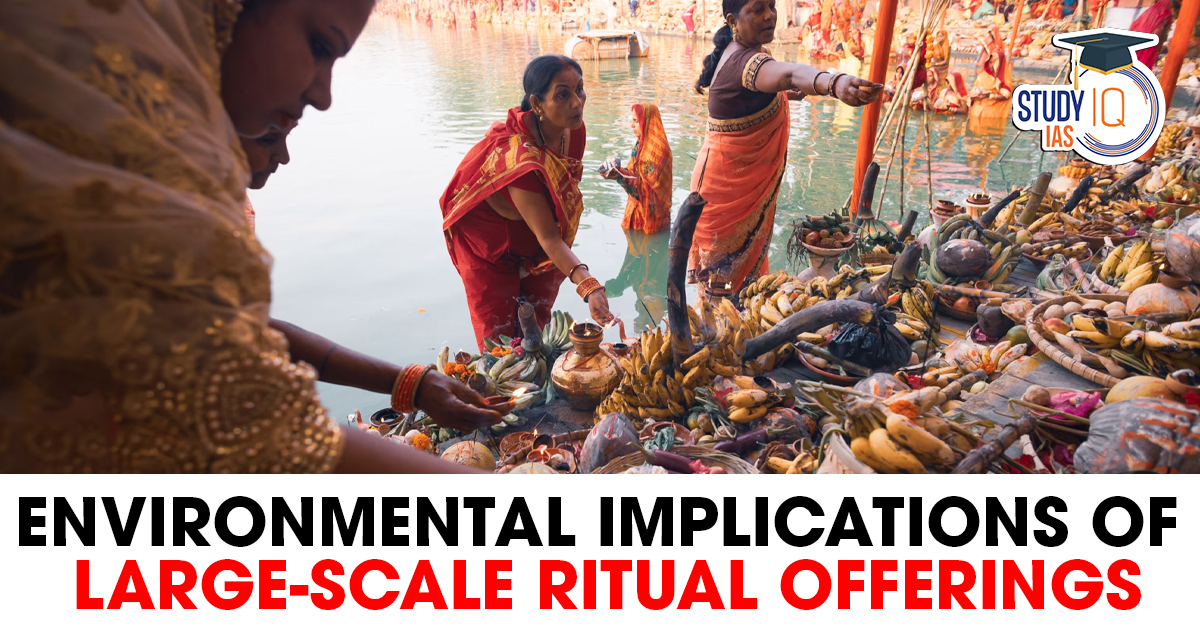
Large-scale ritual offerings are an integral part of cultural and religious practices in many parts of India, reflecting deep-rooted traditions and community participation. However, in recent years, concerns have grown over their environmental impact, particularly when materials like plastics, non-biodegradable items, chemicals, and excessive organic waste are disposed of in rivers, lakes, and open spaces.
These practices can lead to water pollution, harm aquatic life, and disrupt local ecosystems. As environmental awareness increases, there is a growing need to balance faith-based traditions with sustainable practices, ensuring that religious observances continue without causing long-term ecological damage.
Impact of Dairy Effluents on Aquatic Ecosystems
While culturally perceived as “pure,” the large-scale introduction of organic substances like milk into river systems creates severe ecological stress:
- Biochemical Oxygen Demand (BOD): Dairy products have extremely high BOD levels, often exceeding those of domestic sewage. Microorganisms consume dissolved oxygen to break down the milk, leading to rapid oxygen depletion.
- Hypoxia and Fish Kills: As dissolved oxygen levels plummet, aquatic life (fish and micro-fauna) effectively suffocate.
- Eutrophication: Nutrient enrichment from offerings can trigger algal blooms, which further degrade water quality and disrupt the light penetration necessary for underwater biodiversity.
- Microbial Proliferation: Organic offerings accelerate microbial activity, adding to the cumulative pollution load of the river.
| The Status of India’s Rivers: CPCB Data |
The Central Pollution Control Board (CPCB) 2025 assessment paints a grim picture of river health:
|
Legal and Constitutional Framework
The conflict between Article 25 (Freedom of Religion) and environmental protection is mediated through several legal pillars:
- Article 21 (Right to Life): The Supreme Court has interpreted this to include the right to a clean and healthy environment.
- The Precautionary Principle: A core tenet of Indian environmental law, mandating that the state must anticipate and prevent causes of environmental degradation.
- The Water (Prevention and Control of Pollution) Act, 1974: Provides the statutory framework for maintaining and restoring the “wholesomeness” of water bodies.
- NGT Mandates: The National Green Tribunal has historically intervened in cases of idol immersion and waste dumping, emphasizing that religious practice is subject to public health and environmental safeguards.

 Ramsar Sites in India 2026 List: Names, ...
 Great Indian Bustard (GIB): Features, Th...
 Seshachalam Forest: Topography, Vegetati...














 WhatsApp