Table of Contents
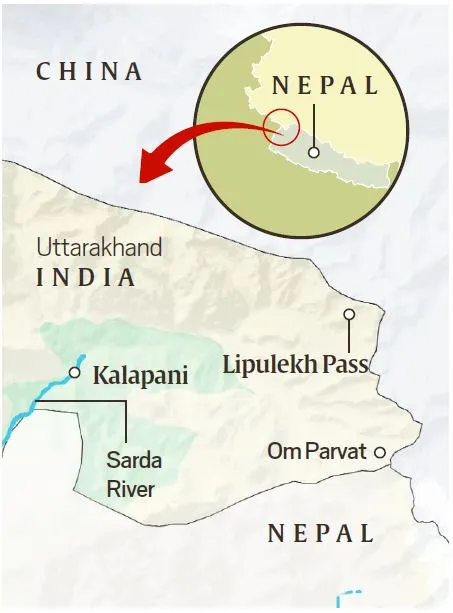
Context: India and China have decided to resume border trade through Lipulekh Pass (Uttarakhand) from June 2026 after a 7-year suspension (since 2019–20) due to COVID-19 and border tensions.
| About Lipulekh Pass |
|
India-China Trade Relations via Lipulekh Pass: Key Developments
- Diplomatic Engagement: Decision followed talks between the NSA-level India–China dialogue (2025).
- Government Clearance: Approved through MEA No Objection Certificate (NOC) with concurrence from Home and Commerce Ministries.
- Administrative Preparedness: Local authorities setting up transit camps, banking, medical and communication facilities.
- Other Routes Reopening: Along with Lipulekh, Nathu La (Sikkim) and Shipki La (Himachal Pradesh) are also being revived.
Significance
- Economic Revival: Provides livelihood support to border communities affected since 2020.
- Confidence Building Measure (CBM): Signals gradual normalisation of India–China relations.
- Strategic Connectivity: Enhances border infrastructure and presence in sensitive Himalayan regions.
- Cultural Linkages: Revives traditional trans-Himalayan trade networks and people-to-people ties.
India-China Trade Relations
- Bilateral Trade: Bilateral trade between India and China reached US$136.2 billion in 2023
- Both countries have expanded economic ties, with India becoming one of the largest markets for “project exports” from China.
- Investments: According to the Ministry of Commerce & Industry, China stands at 20th position with only 0.43% share or $2.45 billion total FDI equity inflow into India from April 2000 to December, 2021.
- Chinese investments in India and Indian investments in China have been increasing, particularly in sectors like IT, pharmaceuticals, and automobiles.
- Economic Potential: With a combined market of over 2.7 billion people and a GDP representing 20% of the world’s total, there is immense potential for further economic cooperation between India and China.
Concerns Related to India-China Relations
Border Disputes
- Western Sector: The Aksai Chin region is a territorial dispute where both countries claim it as part of their own territory.
- Middle Sector: China stakes a claim over an area in Uttarakhand, creating a border dispute.
- Eastern Sector: The McMahon Line, the boundary between India and Tibet, is disputed by China.
- Johnson Line vs. McDonald Line: India and China hold different positions on the demarcation of the border.
- Doklam Standoff: The Doklam/Doka La region dispute between China and Bhutan, with India’s military and diplomatic support to Bhutan, has led to tensions in the area.
- Galwan Valley Standoff: The deadly clash between Indian and Chinese troops in the Galwan Valley, resulting in casualties, highlights the ongoing border tensions and the need for de-escalation efforts.
- Water Dispute: China’s construction of dams in the upper reaches of the Brahmaputra River (Tsangpo) without a formal water-sharing treaty poses a threat to India, leading to concerns over water availability and flooding.
- Dalai Lama and Tibet: China accuses India of fomenting trouble in Tibet due to the presence of the Dalai Lama and protests staged by Tibetans against China in India and other countries.
- Arunachal Pradesh and Stapled Visa: China issuing stapled visas to residents of Arunachal Pradesh questions India’s sovereignty and territorial integrity.
- Bhutan and Nepal: China criticises India’s role and relationship with Bhutan and Nepal, attempting to influence their ties and play the “China card” against India.
- Belt and Road Initiative: India opposes China’s Belt and Road Initiative (BRI), particularly the China-Pakistan Economic Corridor (CPEC), which passes through Indian territory claimed by Pakistan.
- China-Pakistan Nexus: China’s support to Pakistan in military, nuclear, and missile capabilities, along with blocking India’s efforts at the UN, creates concerns for India’s security.
- Indian Ocean Region: China’s increasing presence, including military outposts, port acquisitions, and economic influence in countries like Sri Lanka, Bangladesh, and Myanmar, raises concerns for India’s traditional influence in the region.
- String of Pearls: China’s strategic presence and infrastructure development in various countries surrounding India, such as Sri Lanka, Pakistan, the Maldives, Bangladesh, and Myanmar, raise concerns about encirclement.

 India-China Border Tensions 2026: LAC, I...
 Career247 Rebrands as Adda247 Skills to ...
 GRAP Stage I Explained: AQI Limits, Meas...














 WhatsApp