Table of Contents
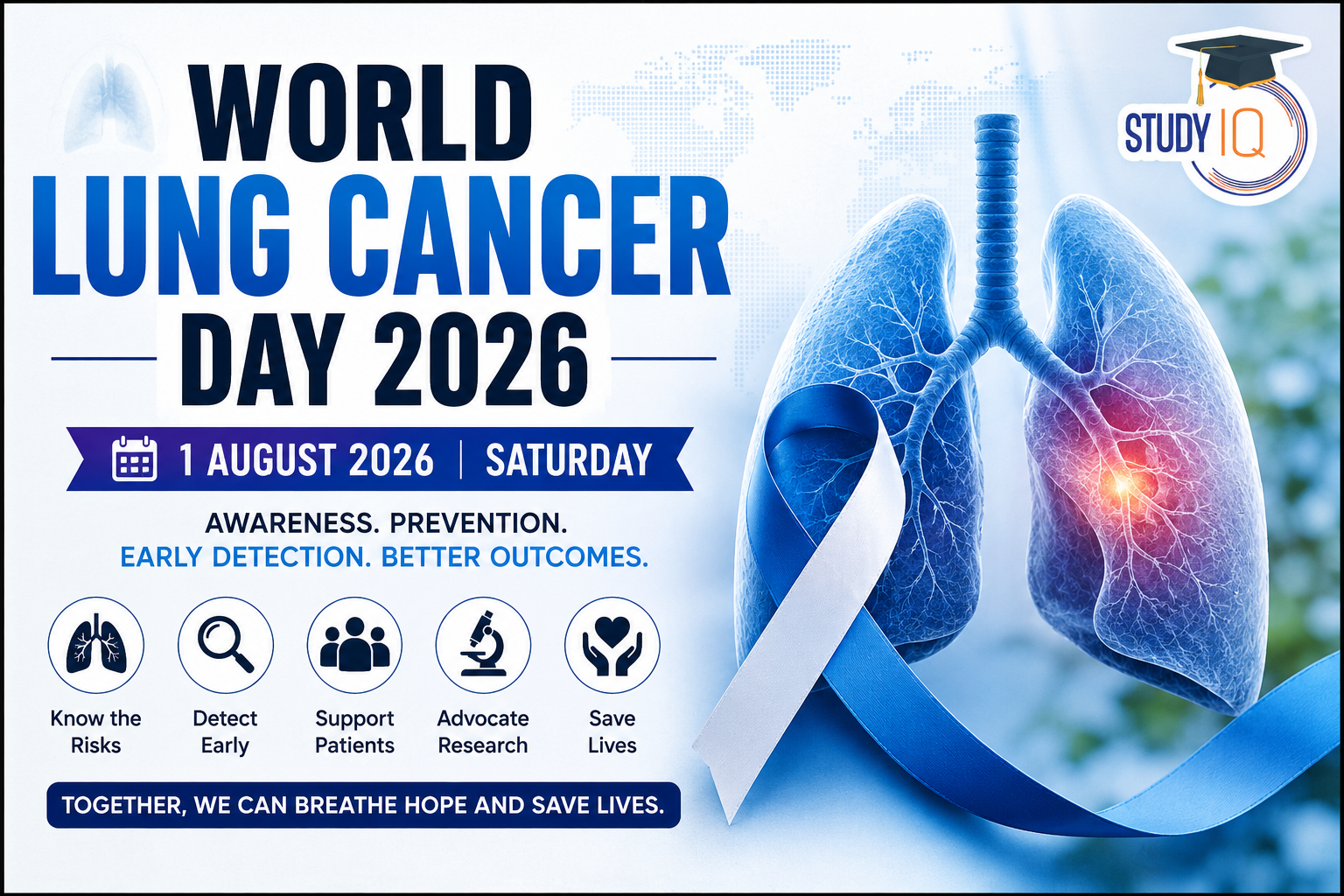
World Lung Cancer Day 2026 is observed on Saturday, August 1, 2026, to raise awareness about lung cancer, one of the leading causes of cancer-related deaths worldwide. The annual observance encourages early detection, timely treatment, continued medical research, and support for patients and caregivers. It also aims to reduce the stigma associated with lung cancer and promote equitable access to quality healthcare.
Lung cancer can affect both smokers and non-smokers, making awareness and early diagnosis crucial for improving survival rates. Governments, healthcare institutions, research organizations, and patient advocacy groups organize awareness campaigns, health check-ups, educational programs, and screening initiatives on this day.
World Lung Cancer Day 2026 Overview
| Particular | Details |
|---|---|
| Event | World Lung Cancer Day 2026 |
| Date | 1 August 2026 |
| Day | Saturday |
| Observed | Every year on 1 August |
| Objective | Raise awareness about lung cancer, promote prevention, early diagnosis, treatment, and patient support |
| First Observed | 2012 |
| Organized By | International respiratory and cancer organizations including IASLC, FIRS, CHEST, and partner organizations |
World Lung Cancer Day 2026 Theme
As of August 1, 2026, no officially confirmed global theme has been announced by the International Association for the Study of Lung Cancer (IASLC) or the Forum of International Respiratory Societies (FIRS).
Many organizations may run independent awareness campaigns using different slogans and messages. Readers should refer to official announcements for any theme released later.
History of World Lung Cancer Day
World Lung Cancer Day was first observed in 2012 through the collaborative efforts of leading international respiratory and cancer organizations to increase public awareness about lung cancer and encourage timely diagnosis and treatment.
The initiative was supported by organizations such as:
- International Association for the Study of Lung Cancer (IASLC)
- Forum of International Respiratory Societies (FIRS)
- American College of Chest Physicians (CHEST)
- Other national and international cancer organizations
Since then, the observance has become a global health campaign involving hospitals, research institutes, governments, NGOs, healthcare professionals, and patient advocacy groups.
Significance of World Lung Cancer Day
World Lung Cancer Day plays an important role in educating people about one of the deadliest forms of cancer. The observance highlights that many lung cancer deaths can be prevented or treated more effectively through early diagnosis and improved healthcare access.
The day aims to:
- Spread awareness about lung cancer symptoms and risk factors.
- Promote early detection and screening for high-risk individuals.
- Encourage smoking cessation and tobacco control.
- Support ongoing research for better treatments.
- Eliminate misconceptions and stigma associated with lung cancer.
- Provide emotional and social support to patients and caregivers.
- Advocate equitable access to diagnosis, treatment, and palliative care.
What is Lung Cancer?
Lung cancer is a disease in which abnormal cells grow uncontrollably in the lungs. Over time, these cells can form tumors and spread (metastasize) to other organs if left untreated.
There are two major types:
1. Non-Small Cell Lung Cancer (NSCLC)
- Accounts for nearly 85% of cases.
- Usually grows more slowly than small-cell lung cancer.
2. Small Cell Lung Cancer (SCLC)
- Less common but highly aggressive.
- Often linked with heavy smoking.
- Tends to spread rapidly.
Risk Factors of Lung Cancer
Although cigarette smoking remains the leading cause of lung cancer, several other factors can increase the risk.
Major risk factors include:
- Active smoking
- Second-hand smoke exposure
- Radon gas exposure
- Air pollution
- Asbestos exposure
- Silica and diesel exhaust
- Radiation exposure
- Family history of lung cancer
- Increasing age
- Certain inherited genetic mutations
- Chronic lung diseases
Symptoms of Lung Cancer
Lung cancer often shows no noticeable symptoms during its early stages. As the disease progresses, common symptoms include:
- Persistent cough
- Chest pain
- Shortness of breath
- Coughing up blood
- Unexplained weight loss
- Fatigue
- Hoarseness of voice
- Wheezing
- Frequent chest infections
- Bone pain (in advanced stages)
Anyone experiencing persistent respiratory symptoms should seek medical evaluation promptly.
How to Reduce the Risk of Lung Cancer
Although not every case of lung cancer can be prevented, adopting healthy lifestyle habits can significantly lower the risk.
Prevention measures include:
- Quit smoking and avoid tobacco products.
- Avoid exposure to second-hand smoke.
- Test homes for radon where appropriate.
- Reduce exposure to workplace carcinogens.
- Wear protective equipment in hazardous workplaces.
- Eat a balanced diet rich in fruits and vegetables.
- Exercise regularly.
- Limit alcohol consumption.
- Reduce exposure to air pollution whenever possible.
- Undergo screening if you are at high risk and meet medical eligibility criteria.
Global Burden of Lung Cancer
According to the World Health Organization (WHO):
- Lung cancer is the leading cause of cancer-related deaths worldwide.
- Approximately 2.5 million new cases were diagnosed globally in 2022.
- Around 1.8 million deaths occurred due to lung cancer in the same year.
- Tobacco smoking remains the single largest preventable cause of lung cancer.
These statistics highlight the importance of prevention, early detection, and effective treatment.
Interesting Facts About World Lung Cancer Day
- World Lung Cancer Day is observed every year on 1 August.
- The campaign began in 2012.
- Lung cancer is the world’s leading cause of cancer-related mortality.
- Lung cancer can occur in people who have never smoked.
- Early-stage lung cancer has significantly better treatment outcomes.
- Low-dose CT screening can help detect lung cancer earlier in eligible high-risk individuals.
- Advances in targeted therapy and immunotherapy have improved survival for many patients.
Key Messages of World Lung Cancer Day 2026
The observance encourages people to:
- Recognize early warning signs.
- Quit smoking and avoid tobacco exposure.
- Support individuals living with lung cancer.
- Promote equal access to quality healthcare.
- Encourage scientific research and innovation.
- Spread awareness to reduce stigma surrounding lung cancer.
Read Also: UPSC Daily Current Affairs 2026
 Species in News: Asian Wild Pig- Habitat...
 BRICS AI Open-Source Community: China’...
 India’s Artificial Sun: New 82.6 GHz G...














 WhatsApp