
Table of Contents
Context
India’s push towards a 100 GWe nuclear energy mission by 2047 have renewed focus on thorium-based nuclear energy for long-term energy security.
Read Also: UPSC Daily Current Affairs 2026
Importance of Thorium in Energy Security
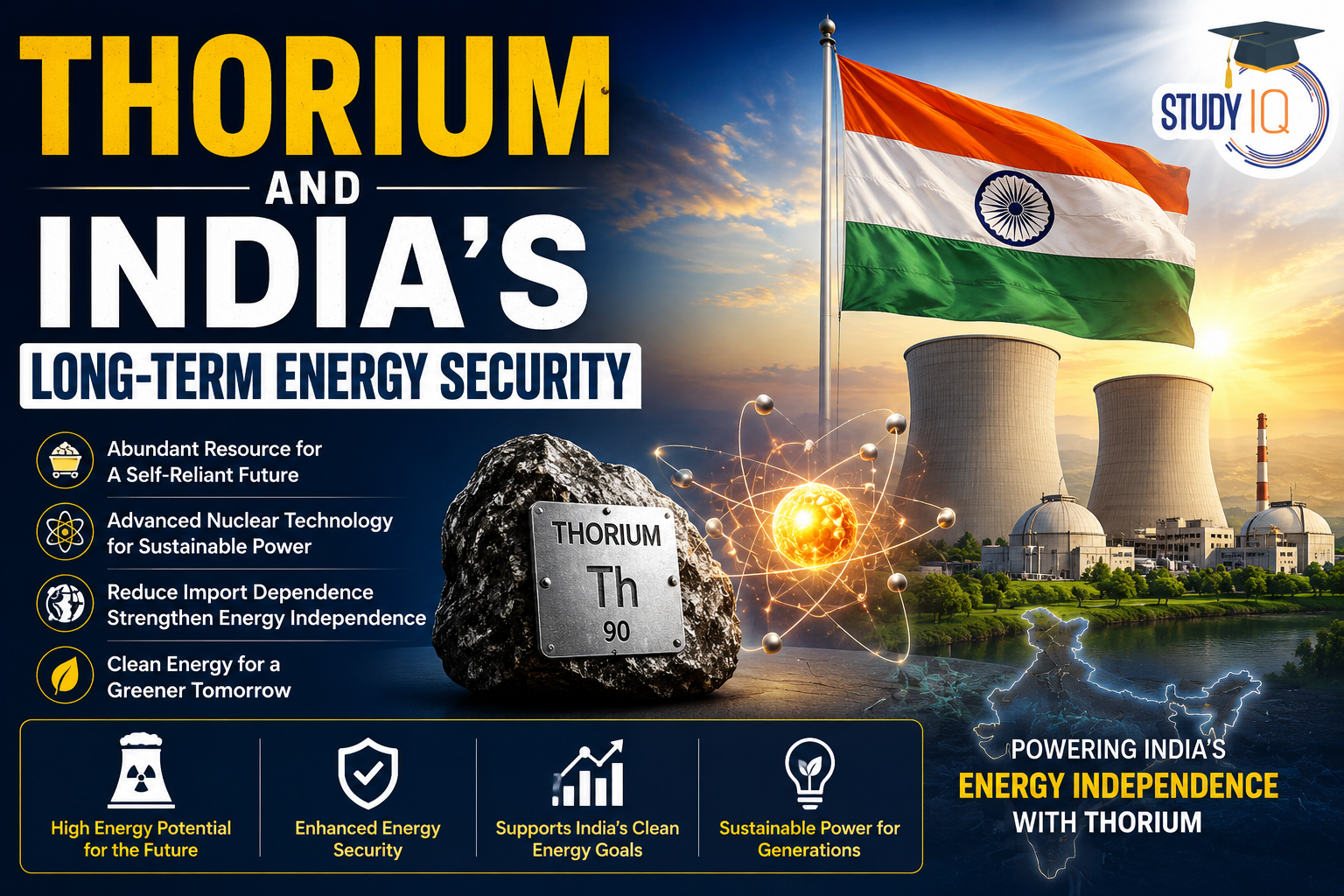
- Abundant Domestic Resource: India possesses nearly 25% of global thorium reserves, providing long-term indigenous fuel availability.
- Reducing Uranium Import Dependence: Rising global uranium demand and geopolitical uncertainties may create nuclear fuel-supply risks within 10–15 years.
- Thorium-HALEU Fuel Pathway: Thorium-HALEU fuel can improve fuel efficiency, safety, waste minimisation and proliferation resistance while accelerating thorium utilisation.
- Thorium Molten Salt Reactor (TMSR): TMSRs are considered ideal Stage-III reactors for sustainable thorium-based electricity generation.
- Higher Fuel Utilisation: Thorium-U-233 fuel cycle offers significantly higher energy extraction compared to conventional uranium fuel cycles.
- Long-Term Strategic Advantage: Thorium-based systems can help India transition from a major energy importer to a long-term clean-energy producer.
|
Current Nuclear Power Landscape in India |
| ● Installed Capacity: India’s nuclear capacity is 8.78 GW; generation 56,681 million units in 2024–25.
● Electricity Share: Nuclear contributes 3% of India’s electricity (3.1% in 2024–25). ● Expansion Plans: Capacity projected to reach 22.38 GW by 2031–32 (fleet deployment of 700 MW PHWRs + ~1000 MW reactors via international cooperation). ● International Cooperation: India has civil nuclear cooperation agreements with 18 countries, supporting fuel supply and reactor technology partnerships. Long-Term Mission ● 100 GW Target: India aims for 100 GW nuclear capacity by 2047 under the Nuclear Energy Mission (Budget 2025–26), supporting net-zero emissions by 2070. ● Financial Support: Nuclear Energy Mission allocates ₹20,000 crore for Small Modular Reactor (SMR) design and deployment. ● SMR Deployment: Target of ≥5 indigenous SMRs operational by 2033. ● BARC Innovations: Development of next-generation reactors (BSMR-200(with 200 MWe capacity), SMR-55, high-temperature gas-cooled reactor 5 MWth for hydrogen production). ● SHANTI Act 2025: New legal framework enabling regulated private participation and investment in the nuclear sector. |
|
Read More Notes |
|
| Environment Notes | Art and Culture Notes |
| Science and Tech | History Notes |
| Geography Notes | Indian Polity Notes |
| General Knowledge | International Relation |
|
Explore StudyIQ Courses |
|
 Circular Economy in India: Benefits, Cha...
 EPFO Wage Ceiling Hike 2026: Social Secu...
 Daily Mains Articles 2026 – Updated Da...














 WhatsApp





