
Table of Contents
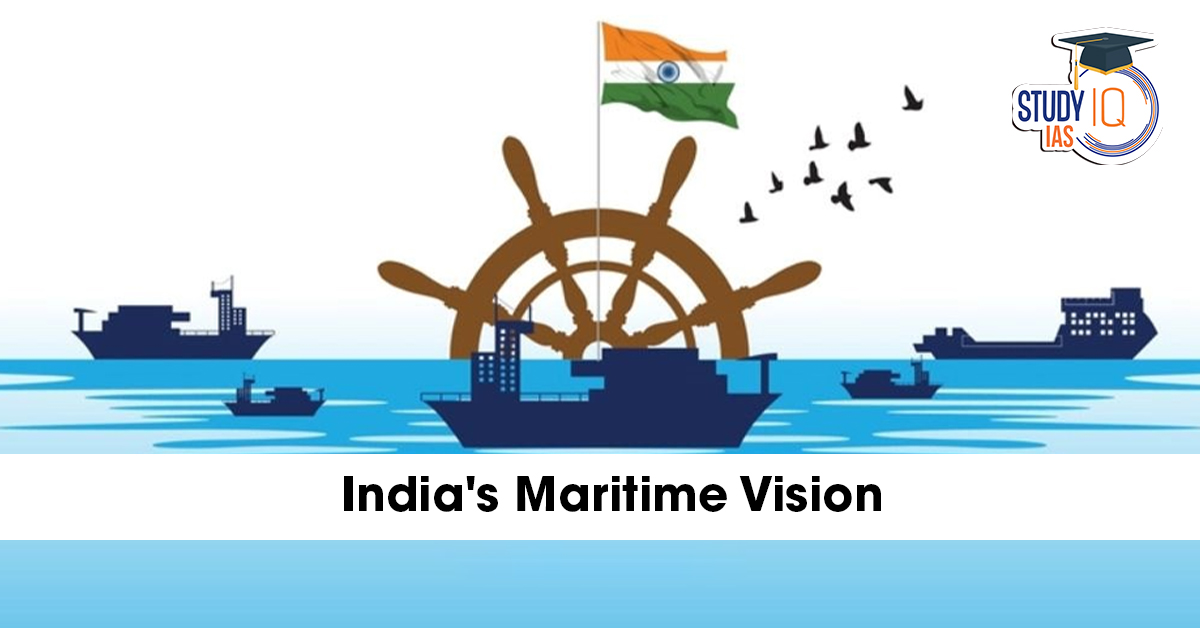
India, a nation blessed with a vast 7,500 km coastline, is rewriting its maritime destiny with two landmark initiatives — the Maritime India Vision 2030 (MIV 2030) and the Maritime Amrit Kaal Vision 2047. Together, these visionary programs are propelling India toward becoming a global maritime and shipbuilding leader, aligning with the nation’s economic, sustainability, and Atmanirbhar Bharat goals.
With nearly 95% of India’s trade by volume and 70% by value passing through its ports, the maritime sector is not just vital for trade — it’s the very backbone of India’s economy. Backed by investments exceeding ₹80 lakh crore, these visions promise to modernize ports, expand shipping, and make India a global maritime powerhouse by 2047.
Maritime India Vision 2030: Blueprint for a Modern Maritime Nation
Launched to revolutionize India’s maritime infrastructure, MIV 2030 comprises over 150 strategic initiatives focusing on port modernization, logistics efficiency, and digital transformation.
Key Highlights of MIV 2030
-
Investment: ₹3–3.5 lakh crore across 150+ projects
-
Port Capacity: Doubled from 1,400 MMTPA to 2,762 MMTPA
-
Cargo Handling: Rose from 972 MMT to 1,594 MMT
-
Turnaround Time: Reduced from 93 hours to 48 hours
-
Operating Ratio: Improved from 73% to 43%, increasing profitability
This transformation has made Indian ports more competitive globally, significantly enhancing cargo throughput and operational efficiency.
Shipping and Inland Waterways: Green and Efficient Growth
India’s shipping industry has recorded unprecedented expansion in the last decade.
Shipping Sector Achievements
-
Indian-flagged vessels: Increased from 1,205 to 1,549
-
Gross tonnage: Grown from 10 million to 13.52 million
-
Coastal shipping: Cargo doubled from 87 MMT to 165 MMT
-
Inland waterways: Cargo rose 710%, from 18 MMT (2014) to 146 MMT (2025)
The number of operational waterways has expanded from 3 to 29, promoting low-emission transport. Passenger ferry and Ro-Pax services carried over 7.5 crore passengers in 2024–25, making water-based transport more accessible and eco-friendly.
Financing the Maritime Transformation
India’s maritime revival is powered by innovative financial mechanisms designed to fuel growth and attract private investment.
Major Financial Schemes
-
Maritime Development Fund: ₹25,000 crore for long-term shipbuilding and port projects
-
Shipbuilding Financial Assistance Scheme: ₹24,736 crore to overcome cost disadvantages
-
Shipbuilding Development Scheme: ₹19,989 crore for greenfield clusters and expansions
-
Indian Ship Technology Centre, Visakhapatnam: ₹305 crore R&D hub for ship design and skill development
Additionally, over ₹1,000 crore has been invested in developing inland waterways in Northeast India, with major projects like the Haldia Multi-Modal Terminal boosting logistics in the region.
Sagarmala Programme: The Backbone of Port-led Development
The Sagarmala Programme, a cornerstone of MIV 2030, is reshaping India’s coastal economy by creating integrated port-based infrastructure.
Sagarmala Progress Overview
-
Total Projects: 840 projects worth ₹5.8 lakh crore
-
Completed: 272 projects worth ₹1.41 lakh crore
-
Under Implementation: 217 projects worth ₹1.65 lakh crore
The programme aims to cut logistics costs, enhance port efficiency, and generate millions of jobs through sustainable development along India’s coastline.
Maritime Amrit Kaal Vision 2047: The Road to Global Leadership
Building on the success of MIV 2030, the Maritime Amrit Kaal Vision 2047 envisions India as one of the top five maritime and shipbuilding nations by 2047.
Key Focus Areas
-
Investment: Nearly ₹80 lakh crore till 2047
-
Green Ports: Hydrogen bunkering, methanol-fueled vessels, and renewable energy integration
-
Digital Corridors: AI-driven port management and smart logistics
-
Global Partnerships: Strengthening India’s maritime diplomacy
The “Samudra Se Samriddhi” 2025 event marked a major milestone, with 27 MoUs worth ₹66,000 crore signed to create 1.5 lakh jobs.
Prominent projects under Vision 2047 include:
-
Greenfield Port at Bahuda (Odisha): ₹21,500 crore; capacity 150 MTPA
-
Patna Water Metro Project: ₹908 crore; electric ferry network
-
Luxury River Cruise Ships (Kolkata): ₹250 crore project under Cruise Bharat Mission
-
New Mangalore Port Projects: Dedicated cruise terminal and ₹107 crore multi-specialty hospital
India Maritime Week 2025: Showcasing Global Ambitions
The upcoming India Maritime Week 2025, scheduled from October 27–31 at Mumbai’s NESCO Exhibition Centre, will spotlight India’s maritime resurgence.
-
Delegates: 100,000+ from over 100 countries
-
Exhibitors: 500+ including global maritime leaders
-
Themes: Port-led development, digital corridors, shipbuilding clusters, and sustainability
The event will serve as a platform for technology demonstrations, global collaborations, and investment discussions, reaffirming India’s maritime ambitions.
Empowering India’s Seafarers: The Human Engine of Growth
India has emerged as a leading provider of maritime talent to the global shipping industry.
-
Seafarers: Increased from 1.25 lakh to over 3 lakh
-
Global Share: 12% of the world’s seafaring workforce
This growing pool of skilled professionals strengthens India’s maritime standing and supports global trade operations.
Conclusion
India’s Maritime Vision 2030 and Amrit Kaal Vision 2047 are not just policies—they are the blueprint for a new maritime era. From doubling port capacity to embracing green technologies, India is charting a course toward sustainable prosperity.
As India moves toward its Amrit Kaal, the maritime sector stands as a beacon of economic growth, environmental stewardship, and global leadership—turning the nation’s coastline into a corridor of opportunity and resilience for generations to come.
 India–Poland Relations 2026: Strategic...
 Supreme Court on Children's Right to Int...
 Daily Current Affairs PDF 2026: Download...













 WhatsApp





