
Table of Contents
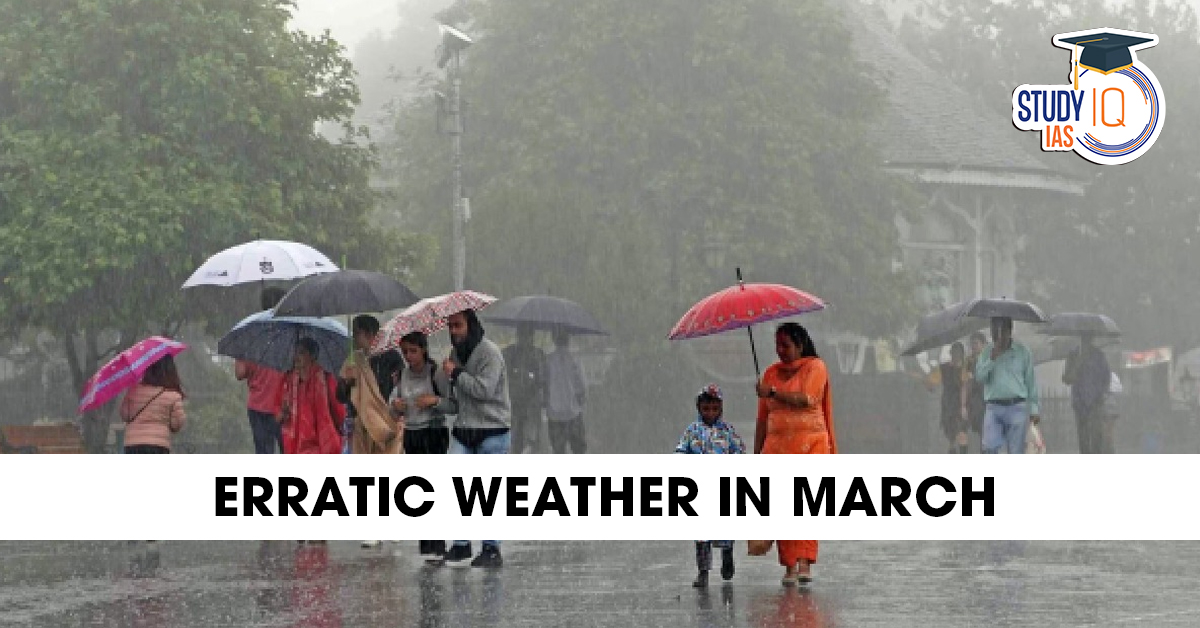
Context: The month of March 2026 has witnessed a sharp “weather seesaw.”
Cause of Erratic Weather in March
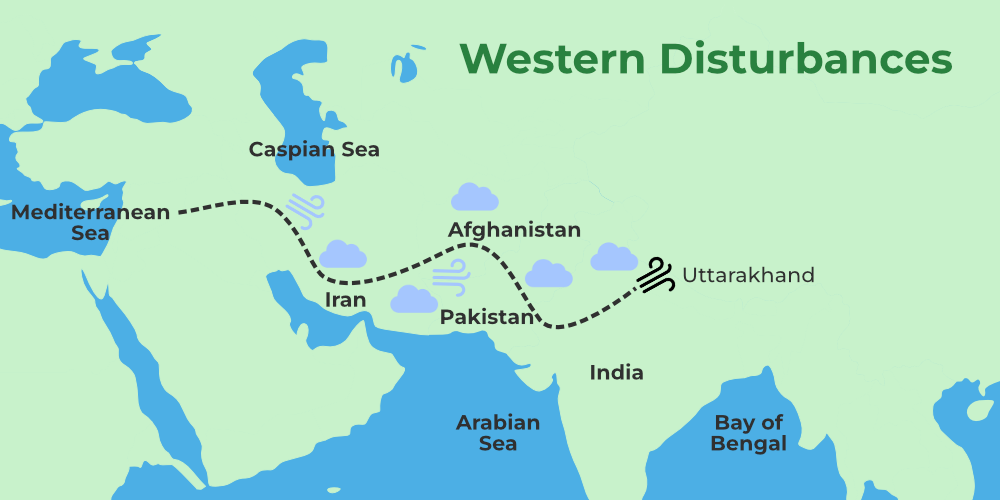
Western Disturbance Anomaly
- Phase 1 (The Dry Heat): From November 2025 to early March 2026, WDs were subdued in frequency and intensity, causing a “snow drought” and record-high early March temperatures.
- Phase 2 (The Break): This trend broke abruptly on March 13 and 18, when two successive, high-intensity WDs struck the region, clashing with the pre-existing heat.
Confluencing Factors
- Lower Tropospheric Cyclonic Circulation: A prolonged low-pressure system existed over the region.
- Moisture Incursion: Strong south-westerly winds pumped in massive amounts of moisture from the Bay of Bengal.
- Wind Confluence: The meeting of these moist, warm winds with cold winds from the Western Disturbances over Central and Northwest India led to high instability, resulting in hail and lightning.
Impact of Erratic Weather
- North & Northwest: Heavy snowfall in the Himalayas and hailstorms in Punjab/Haryana.
- East & Northeast: Activation of Kalbaisakhi (Nor’westers)—local thunderstorms that intensified due to the WD-Bay of Bengal confluence.
- South Peninsula: Rare hailstorms in districts like Raichur (Karnataka), where moisture from the Arabian Sea met the southward extent of the WD influence.
Impact on Agriculture
- Wheat Crop: While the rain has provided a “rescue” for the wheat crop in Punjab by cooling down the temperatures during the grain-filling stage, excessive hail remains a threat to standing crops.
- Horticulture: In Himachal and Uttarakhand, the early heat followed by sudden hail can damage stone fruits (peaches, plums) and apple blossoms.
| Western disturbances |
Check here for Western disturbances in India in detail! |
|
Read More Notes |
|
| Environment Notes | Art and Culture Notes |
| Science and Tech | History Notes |
| Geography Notes | Indian Polity Notes |
| General Knowledge | International Relation |
|
Explore StudyIQ Courses |
|

 Delhi’s Smog-Eating Road Initiative: T...
 Punjab–Rajasthan River Dispute: Raviâ€...
 List of Military Exercises of India 2026...













 WhatsApp





