
Table of Contents
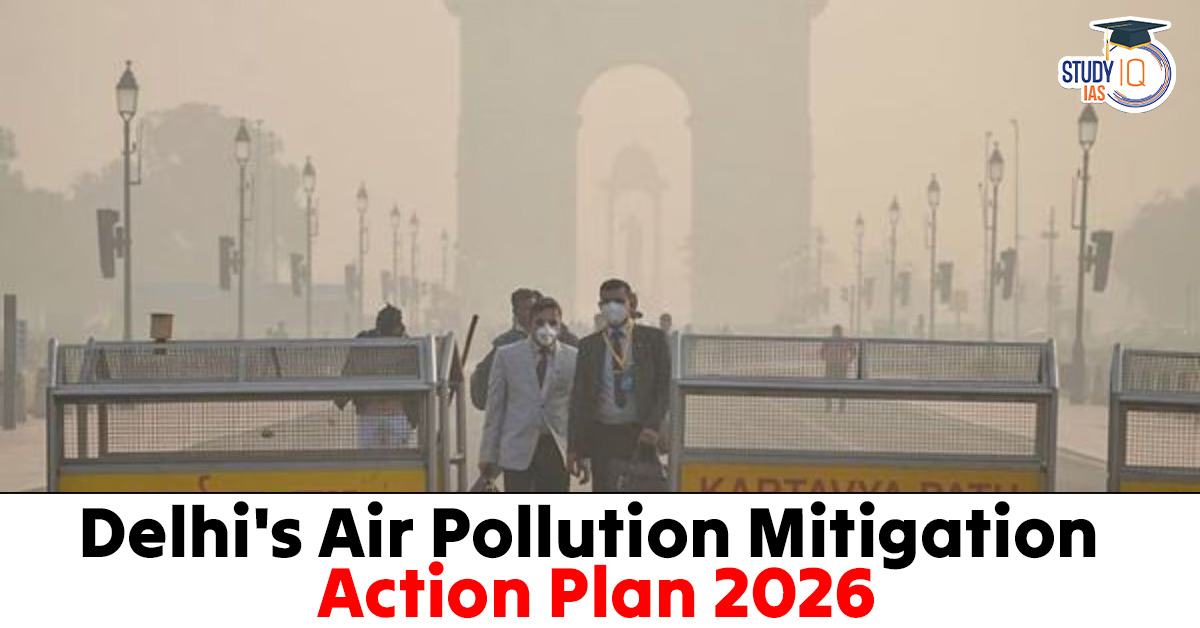
Context: The Delhi government has announced its Air Pollution Mitigation Action Plan 2026.
Key Pillars of Delhi’s Air Pollution Mitigation Action Plan 2026
The plan shifts away from “band-aid” measures (like smog towers or mist sprays) toward tackling pollution at its origin:
- Transport & Mobility: * Targeting a bus fleet of 13,760 by 2028-29, primarily electric.
- Installing 32,000 EV charging points over the next four years.
- Restricting entry to low-emission BS6/CNG goods vehicles and EVs from November 1.
- Strict enforcement of Pollution Under Control (PUC) certificates for fuel access.
- Infrastructure & Dust Control: Redeveloping 3,500 km of roads with paved surfaces and green buffers to mitigate road dust.
- Implementing a scientific Road Asset Management System for time-bound pothole repairs.
- Waste Management: Setting deadlines to clear legacy landfills: Okhla (July 2026), Bhalswa (December 2026), and Ghazipur (December 2027).
- Industrial Monitoring: Deploying Online Emission Monitoring Systems (OCEMS) for industrial units to track discharge in real-time.
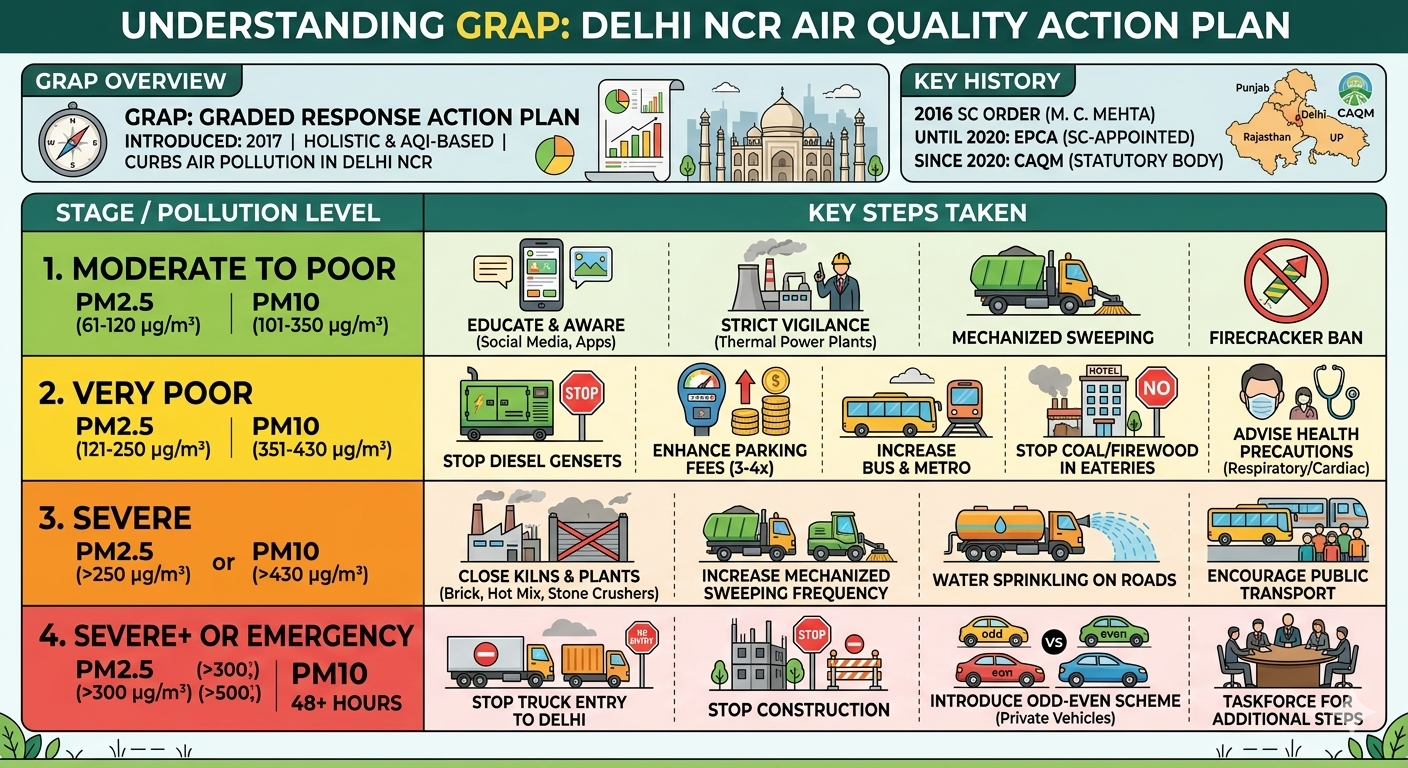
Critical Challenges to Tackle Delhi’s Air Pollution
- The Firecracker Silence: A significant omission is the lack of a clear, long-term ban on firecrackers from October to March. Experts argue that without this, winter pollution peaks remain unavoidable.
- Landfill Displacement: Critics point out that “clearing” landfills currently involves ferrying waste to other sensitive zones, such as the Yamuna floodplain, rather than true scientific flattening and processing.
- Enforcement vs. Corruption: While geo-tagging and automated monitoring are proposed for construction sites, the system’s success depends on bypassing local-level corruption and ensuring “no exceptions” for violators.
- Lack of Specific Targets: The plan currently lacks a public dashboard with quarterly emission targets and measurable year-on-year reduction goals from a stated baseline.
Way Forward
- Transparency: Shifting to an open-source dashboard to track emissions and implementation progress in real-time.
- Last-Mile Connectivity: Integrating the Delhi Metro and RRTS with e-autos and shared mobility to make public transport a viable alternative to private vehicles.
- Public Cooperation: Scientific plans require social compliance. The government must foster a sense of “systemic belief” to ensure citizens adhere to tough measures like the PUC mandates and construction bans.

 CAG Report on Jammu and Kashmir's Vanish...
 US-Israel-Iran Conflict 2026: Causes, Ir...
 Illegal Sand Mining in National Chambal ...









 WhatsApp





