
Table of Contents
World Mental Health Day 2026 is observed on 10 October 2026 to raise awareness about mental health, promote psychological well-being and encourage access to inclusive and affordable mental healthcare services. The day highlights the importance of reducing stigma, improving public awareness and ensuring that people experiencing mental health challenges receive appropriate support.
In India, major initiatives such as Tele-MANAS, the National Mental Health Programme (NMHP) and the District Mental Health Programme (DMHP) aim to improve access to mental healthcare.
Read Also: UPSC Daily Current Affairs 2026
World Mental Health Day 2026: Key Highlights
- Date: 10 October 2026
- Observance: Annual global mental health awareness day
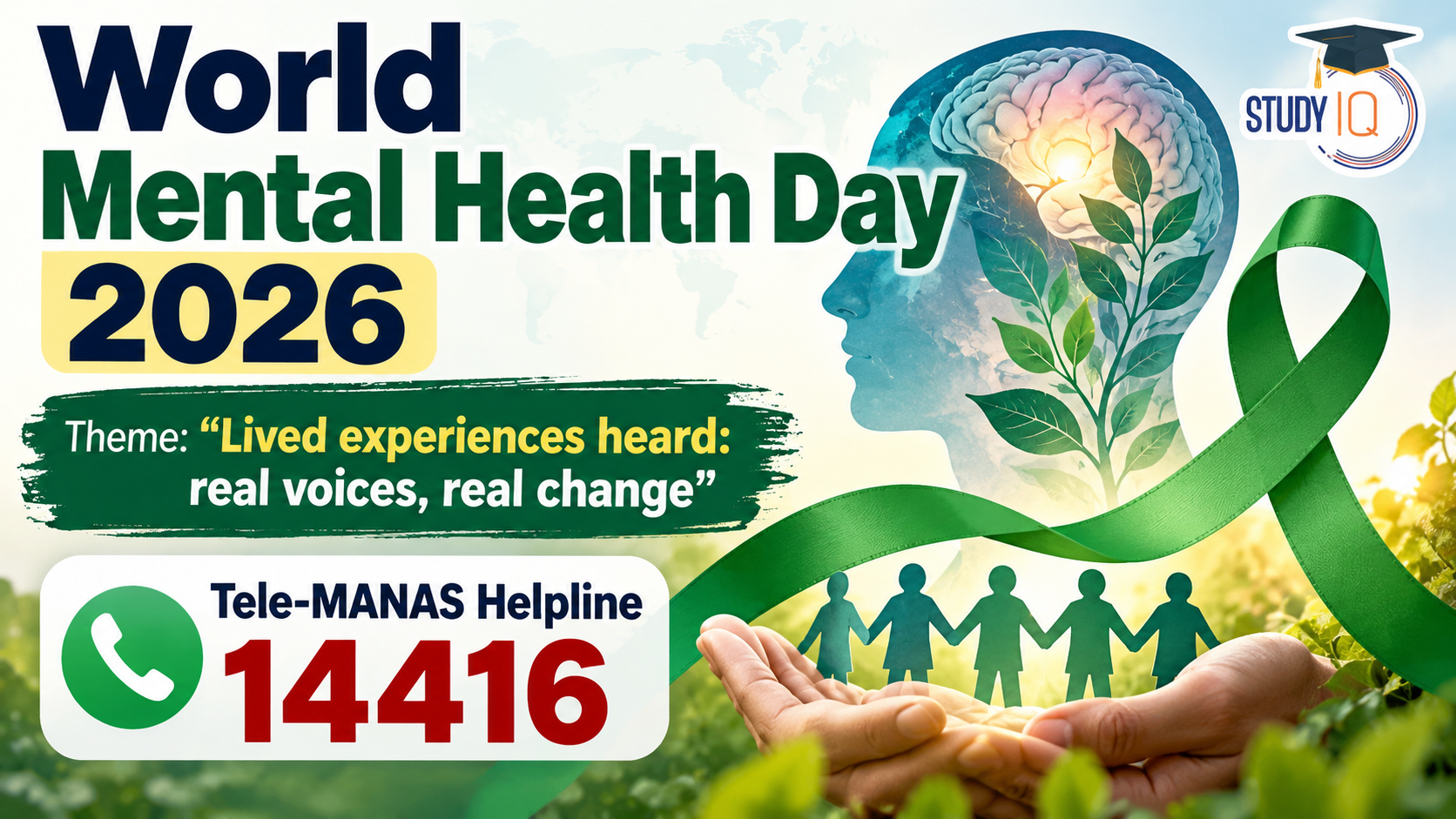
- Theme: “Lived experiences heard: real voices, real change” (as reported in the supplied article; verify against the official announcement)
- Tele-MANAS Helpline: 14416
- Nodal Ministry in India: Ministry of Health and Family Welfare
- Key Initiatives: Tele-MANAS, NMHP and DMHP
Theme of World Mental Health Day 2026
The theme reported for World Mental Health Day 2026 is “Lived experiences heard: real voices, real change.”
It emphasises the importance of listening to people who have experienced mental health conditions and incorporating their perspectives into healthcare policies and services.
The theme highlights three key priorities:
- Reducing stigma: Encouraging open conversations about mental health.
- Promoting inclusion: Ensuring that people with mental health conditions are treated with dignity and respect.
- Improving healthcare delivery: Using lived experiences to identify barriers and improve the quality of mental health services.
What Is World Mental Health Day?
World Mental Health Day is observed annually on 10 October to promote awareness of mental health issues and mobilise efforts to support mental well-being.
The observance provides an opportunity for governments, healthcare professionals, educational institutions and civil society organisations to discuss mental health challenges and promote accessible support systems.
It also encourages individuals to seek professional help when necessary and challenges the misconceptions surrounding mental illness.
Tele-MANAS Helpline 14416
Tele-MANAS stands for Tele Mental Health Assistance and Networking Across States. It was launched by the Government of India on 10 October 2022 to expand access to mental health support through telephone-based services.
Key features include:
- Toll-free helpline: 14416.
- 24×7 availability: Mental health assistance is accessible around the clock.
- Confidential support: Provides an accessible channel for discussing mental health concerns.
- Multilingual services: Helps people access support in different languages.
- Referral services: Callers can be directed to appropriate mental health professionals and healthcare facilities when required.
The initiative helps address geographical barriers and provides an important connection between tele-counselling and the broader public healthcare system.
Major Mental Health Initiatives in India
1. National Mental Health Programme (NMHP)
The National Mental Health Programme aims to improve the availability and accessibility of mental healthcare services, particularly for vulnerable and underserved populations.
It supports the development of mental health services and promotes awareness, early identification and appropriate treatment.
2. District Mental Health Programme (DMHP)
The District Mental Health Programme operates under the broader framework of the NMHP and seeks to provide mental healthcare at the district level.
Its services include counselling, outpatient care, medication, psychosocial interventions, follow-up services, community outreach and referrals.
The programme helps integrate mental healthcare into local health services.
3. MANN Jaagriti
MANN Jaagriti is described in the supplied report as a community-based mental health awareness and engagement initiative. It focuses on reducing stigma, encouraging help-seeking behaviour and increasing public understanding of mental health.
Community participation involving schools, colleges, workplaces, families and civil society organisations can help promote a supportive environment for people experiencing mental health challenges.
Why Is Mental Health Important?
Mental health is an essential component of overall health and well-being. Mental health conditions can affect an individual’s relationships, education, employment and everyday activities.
Improving mental healthcare requires more than clinical treatment. It also involves social support, awareness, early intervention and the removal of discrimination.
Key priorities include:
- Integrating mental healthcare into primary healthcare services.
- Expanding access to trained mental health professionals.
- Improving awareness in schools, colleges and workplaces.
- Strengthening community-based counselling and referral systems.
- Ensuring affordable, accessible and confidential care.
- Encouraging respectful participation by people with lived experience.
Challenges in Mental Healthcare in India
Despite improvements in public awareness and service delivery, several challenges remain:
- Stigma and discrimination: Fear of social judgement can discourage people from seeking help.
- Workforce shortages: Unequal distribution of trained mental health professionals limits access to treatment.
- Unequal access: Rural, remote and economically disadvantaged communities may face additional barriers.
- Limited awareness: Misconceptions about mental illness can delay diagnosis and treatment.
- Continuity of care: Effective treatment requires follow-ups, referrals and sustained support.
Addressing these challenges requires coordinated action by governments, healthcare institutions, educational organisations and communities.

 Daily Current Affairs PDF 2026: Download...
 Circular Economy in India: Benefits, Cha...
 EPFO Wage Ceiling Hike 2026: Social Secu...














 WhatsApp





