Table of Contents
Context
The Agriculture Ministry has proposed a complete ban on carbosulfan, citing risks to human health and the environment, based on expert recommendations under the Insecticides Act, 1968.
Read Also: UPSC Daily Current Affairs 2026
About Carbosulfan
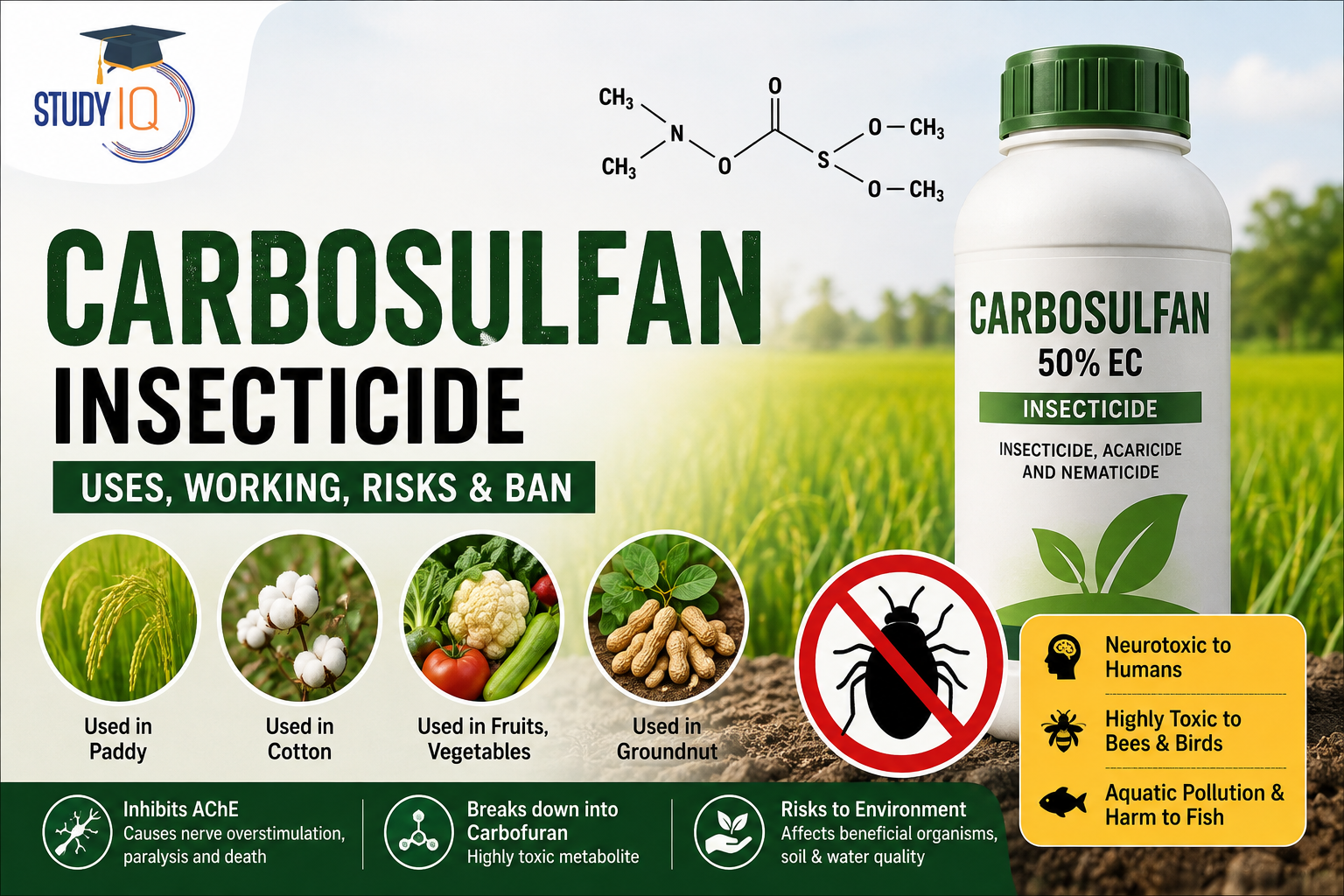
- Nature: Broad-spectrum carbamate insecticide, acaricide and nematicide with systemic and contact action.
- Uses: Used against pests in paddy, cotton, fruits, vegetables, sugarcane and groundnut.
- Formulations: Available mainly as emulsifiable concentrates (ECs) and granules.
Working Mechanism
- AChE Inhibition: Carbosulfan inhibits acetylcholinesterase (AChE), an enzyme needed to regulate nerve signals.
- Neurotoxicity: AChE inhibition causes acetylcholine accumulation, resulting in continuous nerve stimulation, paralysis and death of target pests.
- Systemic Action: It can be absorbed by plant roots and leaves and transported within the plant.
Why Is Carbosulfan Being Banned?
- Carbofuran Formation: Carbosulfan can break down into carbofuran, a highly toxic metabolite, raising concerns over its overall toxicity.
- Human Health: Exposure through inhalation, skin contact or contaminated food can cause serious neurological effects.
- Non-Target Species: It is highly toxic to birds, bees and other beneficial organisms, creating risks to agricultural biodiversity.
- Aquatic Pollution: Runoff from agricultural fields can contaminate surface water and groundwater and harm fish and aquatic invertebrates.

 India–Poland Relations 2026: Strategic...
 Supreme Court on Children's Right to Int...
 Daily Current Affairs PDF 2026: Download...













 WhatsApp