Table of Contents
Context
The Ministry of External Affairs (MEA) denied political clearance for Telangana Chief Minister A. Revanth Reddy’s proposed US visit, leading to the cancellation of that part of his foreign tour.
Read Also: UPSC Daily Current Affairs 2026
About Political Clearance
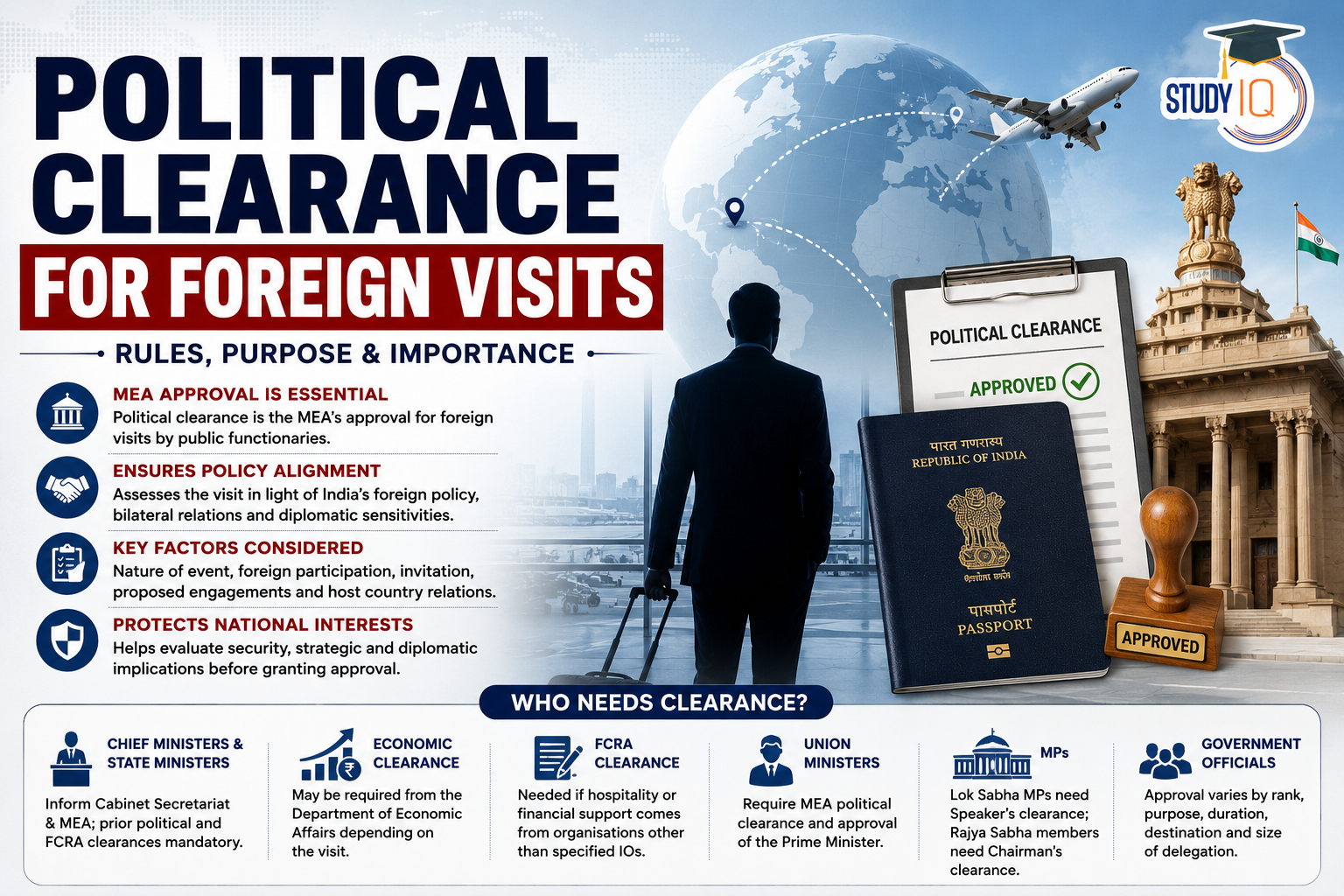
- Meaning: Political clearance is the MEA’s approval for foreign visits by public functionaries, particularly where the visit may have diplomatic or foreign-policy implications.
- Purpose: Ensures that official foreign engagements are assessed in light of India’s foreign policy, bilateral relations and diplomatic sensitivities.
- Assessment Factors: MEA considers the nature of the event, level of foreign participation, invitation, proposed engagements and India’s relations with the host country.
- Application: Political-clearance requests are processed through the MEA’s designated system and coordinated among relevant divisions.
Foreign Travel Rules for CMs & Ministers
- Prior Clearance: Chief Ministers and State Ministers must keep the Cabinet Secretariat and MEA informed of official as well as private foreign visits; prior political and FCRA clearances are mandatory.
- Economic Clearance: State-level officials may also require clearance from the Department of Economic Affairs, depending on the nature of the visit.
- FCRA Clearance: Required where the foreign visit involves hospitality or financial support from organisations other than specified international organisations, subject to applicable rules.
- Union Ministers: Require political clearance from MEA and additional approval of the Prime Minister for foreign visits.
- MPs:Lok Sabha MPs require clearance from the Speaker for official foreign travel, while Rajya Sabha members require clearance from the Chairman.
- Government Officials: Approval requirements vary according to rank, purpose, duration, destination and delegation size.
Why Political Clearance Matters?
- Diplomatic Coordination: Prevents foreign engagements by public officials from creating uncoordinated diplomatic commitments.
- Foreign Policy Consistency: Ensures that official visits remain consistent with India’s external-policy priorities.
- Protocol Management: Helps assess the appropriate level of Indian participation and diplomatic representation.
- National Interest: Allows the government to consider security, strategic and bilateral sensitivities before approving a visit.

UPSC IAS Live GS P2I Foundation 2027 Pratigya August Evening Batch 2 (Basic)
 Child Marriage in India: Causes, Impacts...
 World Development Report 2026: The Promi...
 US Suspension of PERM Filings by Major I...










 WhatsApp