
Table of Contents
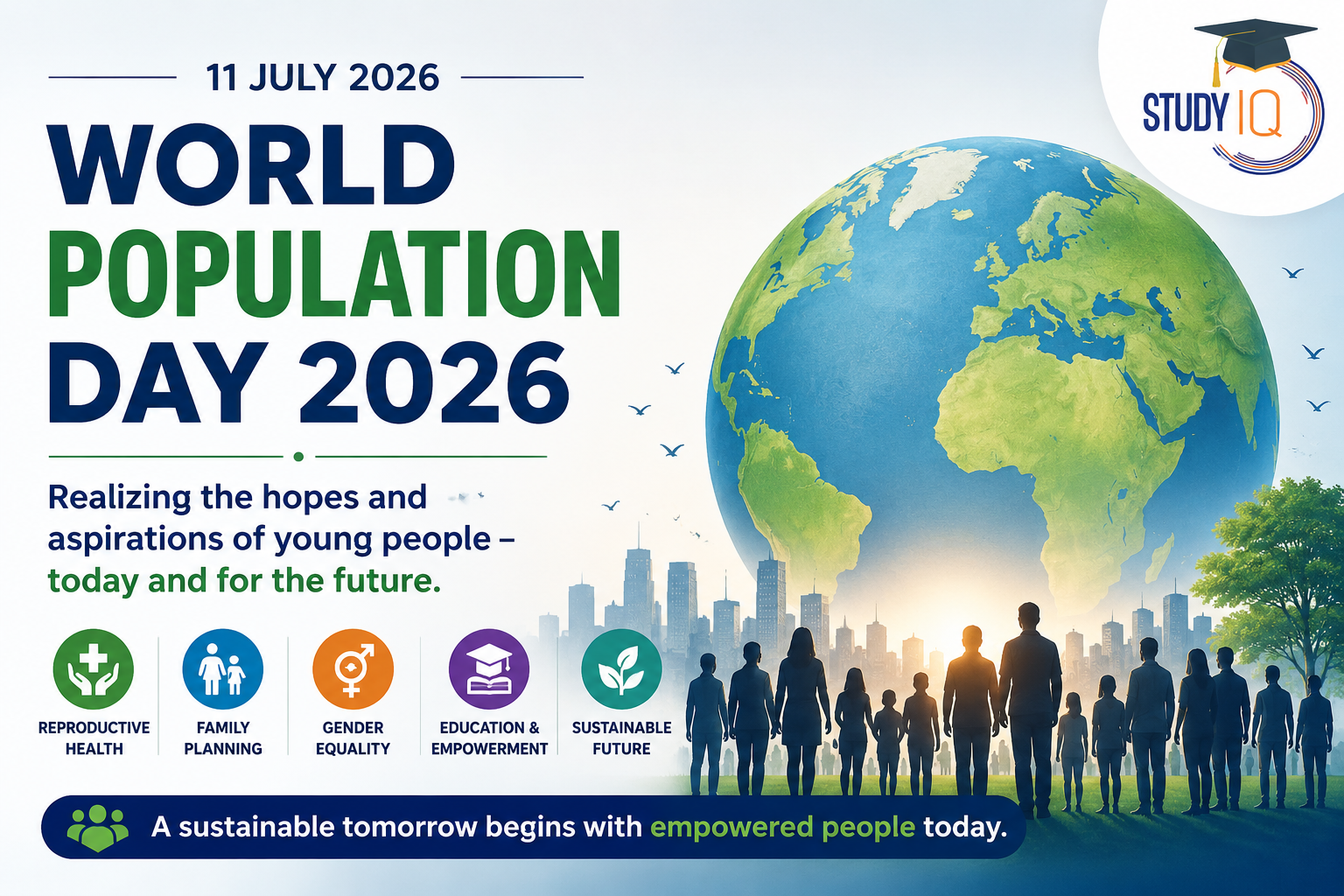
World Population Day 2026 is observed on 11 July 2026 (Saturday) to raise awareness about population-related issues, including population growth, reproductive health, family planning, gender equality, youth empowerment, maternal healthcare, and sustainable development. The annual observance encourages governments, international organizations, policymakers, and citizens to work together to address demographic challenges while ensuring equal opportunities and a better quality of life for all.
With the global population estimated to exceed 8.3 billion in 2026, the observance emphasizes the importance of balanced population policies, responsible resource management, and investments in education, healthcare, and employment to achieve sustainable development.
World Population Day 2026 Overview
| Particular | Details |
|---|---|
| Event | World Population Day 2026 |
| Date | 11 July 2026 |
| Day | Saturday |
| Observed By | United Nations (UN), United Nations Population Fund (UNFPA), Governments, NGOs, Educational Institutions |
| Theme 2026 | “Realizing the hopes and aspirations of young people – today and for the future.” |
| Established By | United Nations Development Programme (UNDP) |
| Established In | 1989 |
| First Observed | 11 July 1990 |
| Origin | Inspired by the “Day of Five Billion” (11 July 1987) |
| Objective | Raise awareness about population issues and sustainable development |
World Population Day 2026 Theme
The official World Population Day 2026 theme is:
“Realizing the hopes and aspirations of young people – today and for the future.”
The 2026 theme focuses on empowering young people by ensuring access to quality education, healthcare, reproductive rights, employment opportunities, and equal participation in decision-making. It highlights that investing in youth today is essential for building inclusive societies and achieving sustainable development.
The theme encourages governments and communities to:
- Improve access to education.
- Strengthen healthcare systems.
- Protect reproductive rights.
- Promote gender equality.
- Increase youth participation in policymaking.
- Create employment opportunities.
- Build resilient and sustainable societies.
History of World Population Day
World Population Day traces its origin to 11 July 1987, when the world’s population reached approximately 5 billion, an event popularly known as the “Day of Five Billion.”
Concerned about the implications of rapid population growth, the United Nations Development Programme (UNDP) established World Population Day in 1989. The first official observance took place on 11 July 1990.
Since then, the day has become a global platform for discussing population dynamics, reproductive health, gender equality, family planning, environmental sustainability, and inclusive development.
Population Milestones
| Year | Milestone |
| 1987 | World population reached 5 billion |
| 1989 | UNDP established World Population Day |
| 1990 | First official observance |
| 2011 | Population crossed 7 billion |
| 2022 | Population reached 8 billion |
| 2026 | Population estimated to exceed 8.3 billion |
Objectives of World Population Day 2026
World Population Day aims to encourage informed discussions and policy actions related to population and development.
The major objectives include:
- Raise awareness about global population issues.
- Promote reproductive health and reproductive rights.
- Encourage informed family planning.
- Improve maternal and child healthcare.
- Promote gender equality.
- Empower women and girls.
- Support youth development.
- Encourage responsible parenthood.
- Improve access to education.
- Promote environmental sustainability.
- Ensure equitable access to healthcare.
- Support achievement of the Sustainable Development Goals (SDGs).
Significance of World Population Day
World Population Day is significant because population trends directly influence economic growth, employment, healthcare, education, food security, urbanization, and environmental sustainability.
Promotes Sustainable Development
The observance highlights the need to balance population growth with the sustainable use of natural resources.
Supports Reproductive Health
It advocates universal access to reproductive healthcare, family planning services, and maternal healthcare.
Encourages Gender Equality
Equal opportunities for women and girls improve education outcomes, economic participation, and community well-being.
Empowers Young People
Young people represent the future workforce. Investing in education, skills, and employment can help countries realize their demographic dividend.
Raises Environmental Awareness
Population growth increases demand for land, water, food, and energy, making environmental conservation and climate action increasingly important.
Global Population Statistics 2026
The world’s population continues to grow, although the annual growth rate has slowed compared to previous decades.
| Indicator | Statistics |
| Estimated Global Population | Over 8.3 billion |
| Annual Growth Rate | Approximately 0.83% |
| Annual Population Increase | Around 68.9 million people |
| Projected Population by 2037 | Around 9 billion |
| Most Populous Country | India |
| Second Most Populous Country | China |
| Third Most Populous Country | United States |
| Most Populous Continent | Asia (around 4.85 billion people) |
Challenges of Rapid Population Growth
Rapid population growth presents numerous social, economic, and environmental challenges.
Pressure on Natural Resources
Increasing demand for freshwater, agricultural land, forests, and energy places enormous stress on natural resources.
Food Security
Meeting the nutritional needs of a growing population requires sustainable agricultural practices and efficient food distribution.
Urbanization
Rapid migration to cities contributes to overcrowding, housing shortages, traffic congestion, and pressure on public infrastructure.
Healthcare
Population growth increases demand for hospitals, healthcare professionals, medicines, and maternal healthcare services.
Education
Governments need greater investment in schools, teachers, higher education, and digital learning.
Employment
Millions of young people enter the workforce every year, making job creation essential for economic stability.
Climate Change
Higher population levels increase energy consumption, greenhouse gas emissions, and environmental degradation.
Waste Management
Growing populations generate larger amounts of solid waste, plastic waste, and wastewater, requiring improved recycling and waste disposal systems.
How is World Population Day Celebrated?
World Population Day is observed through awareness programmes and community engagement activities across the world.
Major celebrations include:
- Seminars and conferences
- Public awareness campaigns
- School and college competitions
- Poster-making and essay-writing contests
- Health camps
- Family planning counselling
- Social media campaigns
- Youth leadership programmes
- Community outreach initiatives
- Government policy discussions
Role of UNFPA
The United Nations Population Fund (UNFPA) is the lead UN agency responsible for promoting reproductive health and population development.
Its key priorities include:
- Universal access to reproductive healthcare
- Family planning services
- Maternal health
- Gender equality
- Prevention of gender-based violence
- Youth empowerment
- Population data and research
- Support for national population policies
Way Forward
As the global population continues to grow, governments must adopt people-centric policies that prioritize education, healthcare, employment generation, women’s empowerment, and environmental sustainability. Investing in young people, ensuring universal access to reproductive health services, strengthening social protection systems, and promoting responsible resource management will help transform demographic changes into opportunities for inclusive and sustainable development.
Latest UPSC Updates
| Resource | Link |
|---|---|
| UPSC Prelims Result 2026 | Check Here |
| UPSC Exam Calendar 2027 | View Calendar |
| UPSC Question Paper 2026 | Download PDF |
| UPSC Prelims Answer Key 2026 | Check Answer Key |
| UPSC Cut Off 2026 | View Cut Off |
| UPSC Syllabus 2026 | Read Syllabus |
| Daily Current Affairs 2026 | Read Updates |
| StudyIQ UPSC IAS Foundation 2027 (English) | Join Course |
| StudyIQ UPSC IAS Foundation 2027 (Hindi) | Join Course |
| StudyIQ UPSC IAS Foundation 2027 (Bilingual) | Join Course |
 Child Marriage in India: Causes, Impacts...
 World Development Report 2026: The Promi...
 US Suspension of PERM Filings by Major I...














 WhatsApp





