Table of Contents
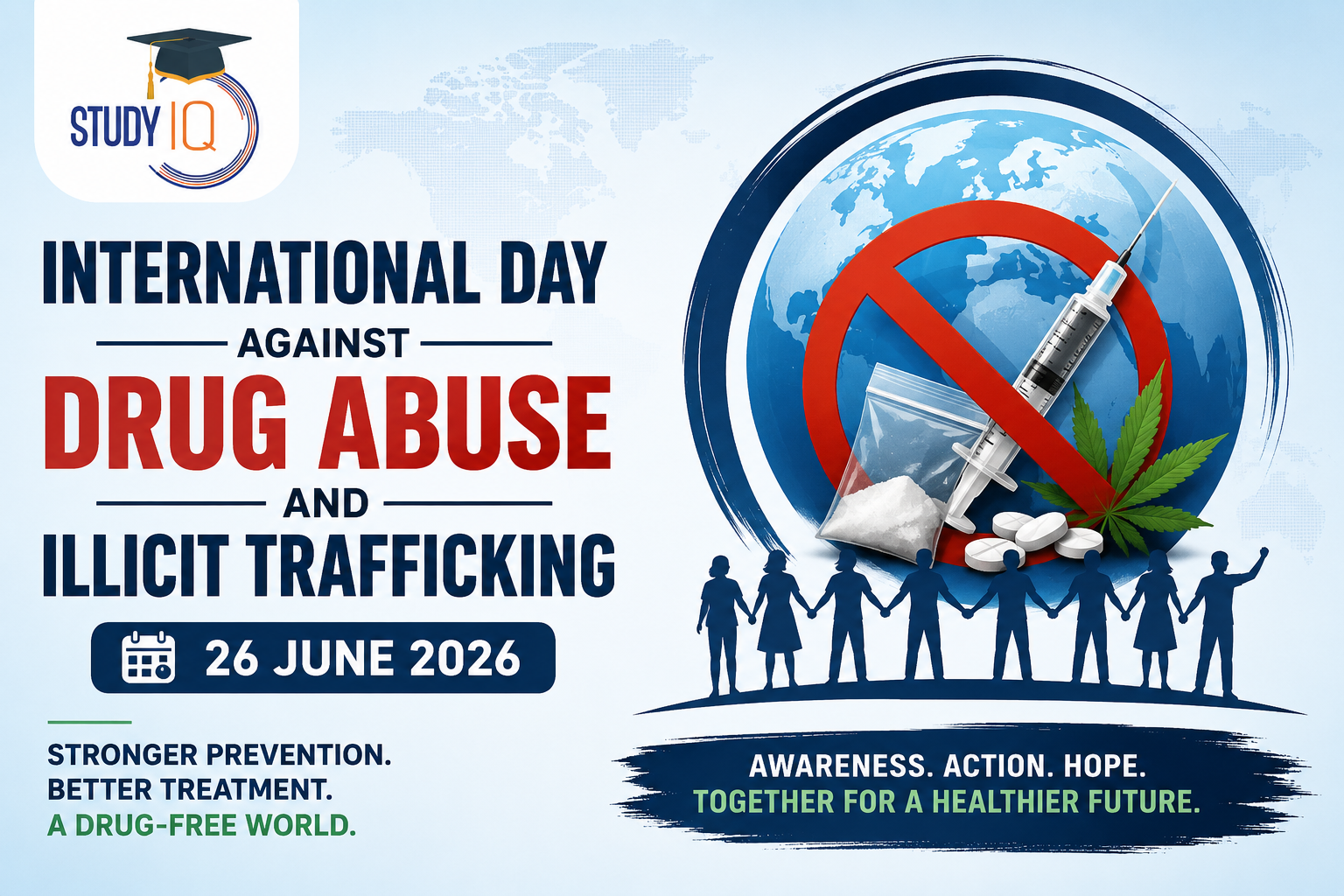
The International Day Against Drug Abuse and Illicit Trafficking is observed every year on 26 June to strengthen global action against drug abuse, substance addiction, and illicit drug trafficking. Established by the United Nations, the observance promotes international cooperation to combat drug-related crimes while encouraging prevention, treatment, rehabilitation, and recovery.
Drug abuse continues to pose a serious threat to public health, social stability, and global security. The rapid expansion of synthetic drugs, opioid misuse, cocaine trafficking, and transnational criminal networks has made coordinated international efforts more important than ever. The day serves as a reminder that governments, healthcare institutions, educators, communities, and individuals all have a role in building healthier and safer societies.
International Day Against Drug Abuse and Illicit Trafficking 2026: Overview
| Particulars | Details |
|---|---|
| Event Name | International Day Against Drug Abuse and Illicit Trafficking |
| Date | 26 June 2026 |
| Declared By | United Nations General Assembly |
| Resolution | UN General Assembly Resolution 42/112 |
| Resolution Date | 7 December 1987 |
| First Observed | 1988 |
| Coordinated By | United Nations Office on Drugs and Crime (UNODC) |
| Objective | Raise awareness about drug abuse and strengthen international cooperation against illicit drug trafficking |
What is the International Day Against Drug Abuse and Illicit Trafficking?
The International Day Against Drug Abuse and Illicit Trafficking is a global awareness campaign dedicated to preventing drug abuse, reducing illegal drug trafficking, and promoting evidence-based treatment and rehabilitation.
The observance encourages countries to strengthen their policies on drug prevention, improve access to healthcare for people suffering from addiction, and disrupt international drug trafficking networks through enhanced cooperation.
Every year, governments, educational institutions, civil society organizations, law enforcement agencies, healthcare professionals, and youth organizations conduct awareness campaigns, seminars, community outreach programmes, and educational initiatives to highlight the dangers of substance abuse.
Why is International Day Against Drug Abuse Observed?
The day is observed to:
- Raise awareness about the harmful effects of illicit drug use.
- Prevent substance abuse, particularly among children and young people.
- Promote healthy lifestyles and informed decision-making.
- Strengthen international cooperation against drug trafficking and organized crime.
- Encourage prevention, treatment, rehabilitation, and social reintegration.
- Support evidence-based policies to address the global drug problem.
The campaign also emphasizes that drug abuse is both a public health challenge and a criminal justice issue requiring balanced, people-centred responses.
History of International Day Against Drug Abuse and Illicit Trafficking
The United Nations General Assembly adopted Resolution 42/112 on 7 December 1987, officially proclaiming 26 June as the International Day Against Drug Abuse and Illicit Trafficking.
The first observance took place in 1988, reflecting the international community’s commitment to creating a world free from drug abuse and illegal drug trafficking.
Since then, the day has become one of the UN’s major global awareness observances, encouraging countries to strengthen prevention strategies, improve access to treatment, and enhance international cooperation against drug-related crimes.
International Day Against Drug Abuse and Illicit Trafficking 2026 Theme
The 2026 campaign focuses on strengthening global partnerships to address the evolving challenges of the international drug problem through:
- Prevention and awareness
- Early intervention
- Treatment and rehabilitation
- Recovery support
- International cooperation
- Law enforcement
- Evidence-based public policies
The campaign underscores that reducing both the demand for illicit drugs and the supply of illegal substances requires coordinated action involving governments, international organizations, civil society, healthcare professionals, families, and communities.
Global Challenges of Drug Abuse and Illicit Trafficking
The international drug landscape has changed significantly in recent decades. Several emerging challenges continue to threaten global public health and security.
Rising Drug Consumption
Millions of people worldwide continue to use illicit substances, increasing the burden on healthcare systems and communities.
Expansion of Synthetic Drugs
Synthetic drugs such as methamphetamine and fentanyl are being produced in increasing quantities because they can be manufactured using relatively inexpensive chemical precursors.
Growing Cocaine Production
Global cocaine production and trafficking have expanded, contributing to higher levels of organized crime and cross-border smuggling.
Opioid Crisis
The misuse of opioids continues to cause significant public health emergencies in many countries, resulting in overdose deaths and long-term addiction.
Digital Drug Markets
Criminal organizations increasingly use encrypted communication platforms, cryptocurrencies, social media, and darknet marketplaces to facilitate illegal drug trade.
Organized Crime and Money Laundering
Drug trafficking remains one of the largest sources of income for transnational organized criminal networks, often linked with money laundering, corruption, and violence.
Objectives of International Day Against Drug Abuse 2026
The key objectives of the observance include:
- Creating awareness about the dangers of substance abuse.
- Preventing drug addiction among young people.
- Promoting healthy lifestyles and mental well-being.
- Supporting treatment, rehabilitation, and recovery programmes.
- Strengthening global cooperation against drug trafficking.
- Encouraging scientific, evidence-based approaches to drug policy.
- Reducing the social and economic impact of drug abuse.
- Building safer and healthier communities.
Significance of International Day Against Drug Abuse and Illicit Trafficking
Drug abuse affects individuals, families, and entire communities. Beyond addiction, it contributes to numerous social and economic problems, including:
- Mental health disorders
- Infectious diseases
- Family breakdown
- Crime and violence
- Unemployment
- Reduced productivity
- Social exclusion
- Increased healthcare expenditure
Observing this day helps spread awareness about prevention, early intervention, treatment, and rehabilitation while encouraging compassion and support for individuals recovering from substance use disorders.
The observance also supports the achievement of the United Nations Sustainable Development Goals (SDGs), particularly those related to:
- Good Health and Well-being (SDG 3)
- Peace, Justice and Strong Institutions (SDG 16)
- Partnerships for the Goals (SDG 17)
Role of UNODC in Combating Drug Abuse
The United Nations Office on Drugs and Crime (UNODC) coordinates the global campaign for the International Day Against Drug Abuse and Illicit Trafficking.
UNODC works with governments worldwide to:
- Prevent drug abuse through awareness programmes.
- Strengthen criminal justice systems.
- Combat international drug trafficking.
- Improve border security.
- Promote treatment and rehabilitation services.
- Support research and data collection on global drug trends.
Its initiatives help countries develop comprehensive and balanced approaches to addressing drug-related challenges.
How Can Individuals Contribute?
Everyone can play a role in preventing drug abuse by:
- Educating young people about the risks of drug use.
- Supporting awareness campaigns in schools and communities.
- Encouraging healthy lifestyles and mental well-being.
- Promoting early intervention and counselling.
- Supporting individuals undergoing rehabilitation.
- Reporting illegal drug-related activities to authorities.
- Fighting stigma associated with addiction and recovery.
Key Facts About International Day Against Drug Abuse and Illicit Trafficking
- It is observed every year on 26 June.
- The day was established by the United Nations General Assembly in 1987.
- The first observance took place in 1988.
- It is coordinated globally by the United Nations Office on Drugs and Crime (UNODC).
- Drug trafficking is among the world’s largest forms of organized crime.
- Synthetic drugs are becoming one of the fastest-growing challenges in global drug control.
- Modern technologies, including encrypted messaging platforms and cryptocurrencies, are increasingly exploited by criminal networks.
- The observance promotes prevention, treatment, rehabilitation, recovery, and international cooperation rather than punishment alone.
Latest UPSC Updates
| Resource | Link |
|---|---|
| UPSC Prelims Result 2026 | Check Here |
| UPSC Exam Calendar 2027 | View Calendar |
| UPSC Question Paper 2026 | Download PDF |
| UPSC Prelims Answer Key 2026 | Check Answer Key |
| UPSC Cut Off 2026 | View Cut Off |
| UPSC Syllabus 2026 | Read Syllabus |
| Daily Current Affairs 2026 | Read Updates |
| StudyIQ UPSC IAS Foundation 2027 (English) | Join Course |
| StudyIQ UPSC IAS Foundation 2027 (Hindi) | Join Course |
| StudyIQ UPSC IAS Foundation 2027 (Bilingual) | Join Course |
 US Treasury Yields at 25-Year High: Impa...
 National Coastal Mission 2.0 (NCM 2.0): ...
 New CAFE Norms 2027–32: Key Features, ...













 WhatsApp