Table of Contents
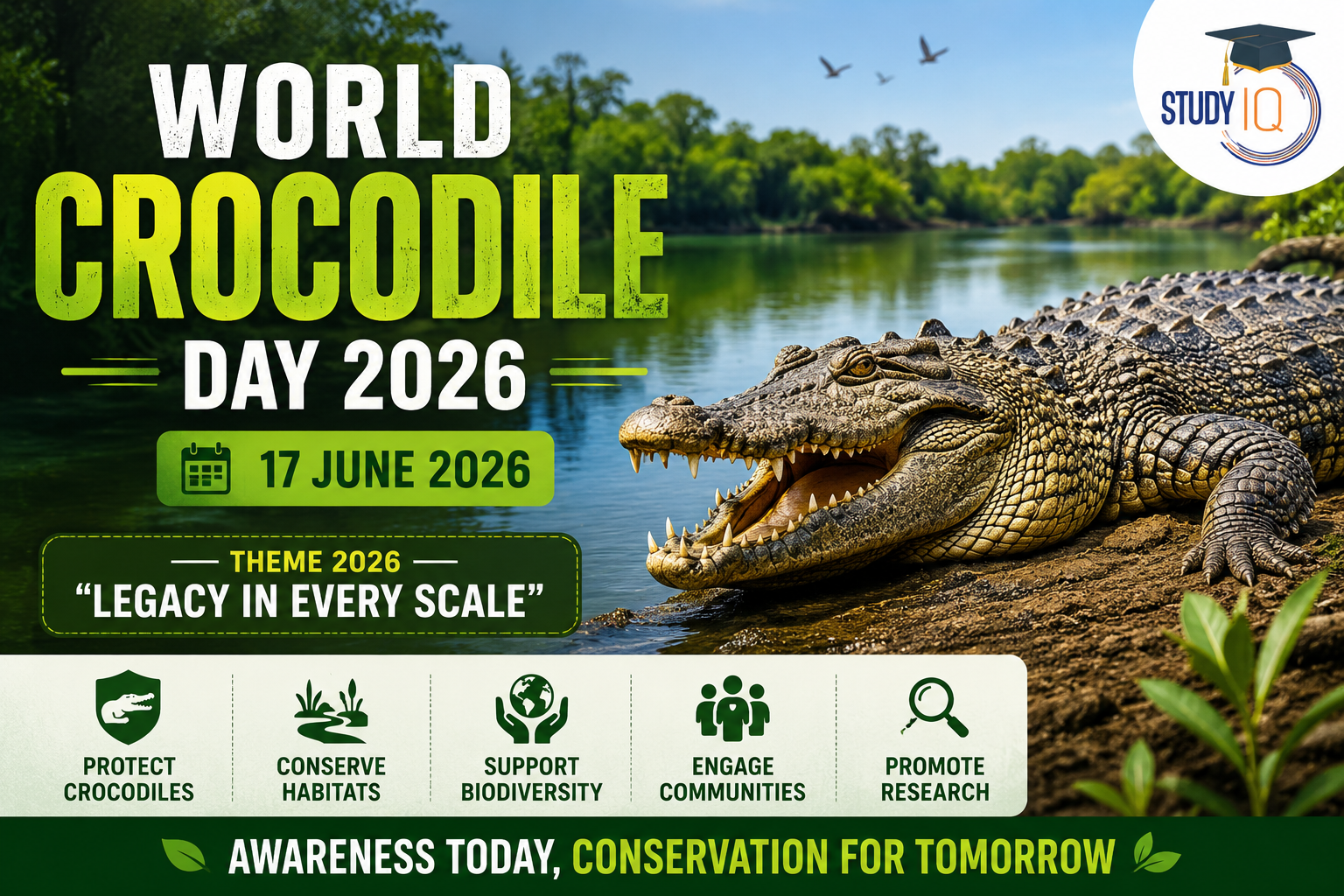
World Crocodile Day is observed every year on 17 June to raise awareness about crocodiles and the urgent need to protect these ancient reptiles and their habitats. The day highlights the importance of conserving crocodiles, gharials, alligators, and caimans, which play a vital role in maintaining healthy aquatic ecosystems.
As one of the oldest surviving groups of reptiles, crocodilians have existed on Earth for over 200 million years. However, habitat destruction, pollution, climate change, and human-wildlife conflicts continue to threaten their survival. World Crocodile Day serves as a reminder that protecting these species is essential for maintaining biodiversity and ecological balance.
World Crocodile Day 2026 Overview
| Particulars | Details |
|---|---|
| Event | World Crocodile Day 2026 |
| Date | 17 June 2026 |
| Theme | Legacy in Every Scale |
| Purpose | Awareness and conservation of crocodilian species |
| Celebrated By | Wildlife organizations, conservationists, governments, and environmental groups |
| Focus Species | Crocodiles, Gharials, Alligators, and Caimans |
World Crocodile Day 2026 Theme
The theme of World Crocodile Day 2026 is:
“Legacy in Every Scale”
This theme celebrates the incredible evolutionary journey of crocodilians, which have survived for millions of years despite dramatic changes in Earth’s environment. It also highlights our responsibility to preserve these remarkable creatures and ensure their survival for future generations.
The theme encourages governments, scientists, conservation organizations, and local communities to work together to protect crocodile habitats and strengthen conservation efforts worldwide.
Why is World Crocodile Day Important?
World Crocodile Day is more than just a wildlife awareness event. It focuses on educating people about the ecological significance of crocodiles and the importance of conserving aquatic ecosystems.
Key Objectives
- Raise awareness about crocodile conservation.
- Protect endangered crocodilian species.
- Promote wetland and river ecosystem conservation.
- Encourage scientific research and wildlife monitoring.
- Reduce human-crocodile conflicts.
- Inspire community participation in conservation activities.
- Strengthen environmental education among students and youth.
About Crocodiles
Crocodiles belong to the order Crocodylia, which includes crocodiles, alligators, caimans, and gharials. They are often referred to as living fossils because they have remained largely unchanged for millions of years.
Interesting Facts About Crocodiles
- Crocodiles have existed for more than 200 million years.
- They are found in tropical and subtropical regions across Asia, Africa, Australia, and the Americas.
- Crocodiles are cold-blooded reptiles.
- They possess one of the strongest bite forces in the animal kingdom.
- Their eyes, ears, and nostrils are located on top of their heads, allowing them to stay submerged while observing prey.
- They are excellent swimmers and can remain underwater for long periods.
- Female crocodiles protect their eggs and even carry hatchlings to water.
Largest Crocodile Species
The Saltwater Crocodile (Crocodylus porosus) is the world’s largest living reptile. Adult males can grow over 7 meters in length and weigh more than 1,000 kilograms.
Ecological Importance of Crocodiles
Crocodiles are considered apex predators and keystone species, meaning they play a crucial role in maintaining ecosystem health.
Their Ecological Contributions Include:
- Regulating fish and prey populations.
- Maintaining balance in aquatic food chains.
- Supporting biodiversity.
- Preventing overpopulation of certain species.
- Contributing to healthy river, wetland, and mangrove ecosystems.
Without crocodiles, many aquatic ecosystems could become imbalanced and less resilient.
Major Threats Faced by Crocodiles
Despite their resilience, crocodiles face numerous threats across the world.
1. Habitat Loss
Urbanization, agricultural expansion, dam construction, and industrial development continue to destroy wetlands and river systems.
2. Pollution
Plastic waste, industrial chemicals, and water pollution degrade crocodile habitats and impact their health.
3. Illegal Hunting and Poaching
Crocodiles are often hunted for their skin, meat, and other body parts.
4. Human-Crocodile Conflict
Increasing human encroachment into crocodile habitats has led to conflicts, often resulting in retaliatory killings.
5. Climate Change
Changing rainfall patterns, rising temperatures, and extreme weather events affect nesting and breeding success.
6. Loss of Nesting Sites
Riverbank erosion, sand mining, and habitat disturbance reduce suitable nesting areas.
7. Overfishing
Declining fish populations can reduce food availability for crocodiles.
Crocodile Conservation Efforts in India
India is recognized globally for its successful crocodile conservation initiatives. The country has made remarkable progress in protecting its native crocodilian species.
Crocodilian Species Found in India
India is home to three crocodilian species:
- Mugger Crocodile (Crocodylus palustris)
- Saltwater Crocodile (Crocodylus porosus)
- Gharial (Gavialis gangeticus)
Crocodile Conservation Project
The Government of India launched the Crocodile Conservation Project in 1975 to reverse declining crocodile populations.
Major Components of the Project
- Captive breeding programs
- Habitat protection
- Scientific monitoring
- Population surveys
- Rehabilitation and reintroduction
- Community awareness initiatives
Key Conservation Areas in India
Bhitarkanika National Park, Odisha
Known for one of the largest populations of Saltwater Crocodiles in the world, Bhitarkanika is a major conservation success story.
National Chambal Sanctuary
This sanctuary is one of the most important habitats for the critically endangered Gharial and supports numerous aquatic species.
Conservation Success in India
India’s crocodile conservation strategy has produced significant results:
- Increase in Saltwater Crocodile populations.
- Improved protection of Gharial habitats.
- Restoration of wetland ecosystems.
- Better scientific monitoring and research.
- Enhanced community participation in conservation efforts.
Legal protection under the Wildlife (Protection) Act, 1972 has further strengthened crocodile conservation across the country.
Conclusion
World Crocodile Day 2026, observed on 17 June, highlights the importance of protecting one of Earth’s oldest reptile groups. With the theme “Legacy in Every Scale,” the day reminds us that crocodiles are not only fascinating survivors from prehistoric times but also essential guardians of aquatic ecosystems.
India’s conservation achievements demonstrate that dedicated protection efforts, scientific research, habitat restoration, and public participation can successfully safeguard crocodilian species for future generations.
FAQs
When is World Crocodile Day celebrated?
World Crocodile Day is celebrated every year on 17 June.
What is the theme of World Crocodile Day 2026?
The theme for 2026 is “Legacy in Every Scale.”
Why are crocodiles important to ecosystems?
Crocodiles regulate prey populations, maintain ecological balance, and support biodiversity as apex predators.
Which is the largest crocodile species in the world?
The Saltwater Crocodile is the largest living reptile on Earth.
When was India’s Crocodile Conservation Project launched?
The project was launched in 1975 to protect and restore crocodile populations across the country.
Latest UPSC Updates
| Resource | Link |
|---|---|
| UPSC Prelims Result 2026 | Check Here |
| UPSC Exam Calendar 2027 | View Calendar |
| UPSC Question Paper 2026 | Download PDF |
| UPSC Prelims Answer Key 2026 | Check Answer Key |
| UPSC Cut Off 2026 | View Cut Off |
| UPSC Syllabus 2026 | Read Syllabus |
| Daily Current Affairs 2026 | Read Updates |
| StudyIQ UPSC IAS Foundation 2027 (English) | Join Course |
| StudyIQ UPSC IAS Foundation 2027 (Hindi) | Join Course |
| StudyIQ UPSC IAS Foundation 2027 (Bilingual) | Join Course |
 Species in News: Cheetah | Project Cheet...
 Quantum Computing: RRI Scientists Demons...
 Artificial Intelligence in Warfare: How ...













 WhatsApp