
Table of Contents
Surha Tal Wetland in Uttar Pradesh Achieves Global Recognition as India Reaches a Historic Milestone in Wetland Conservation
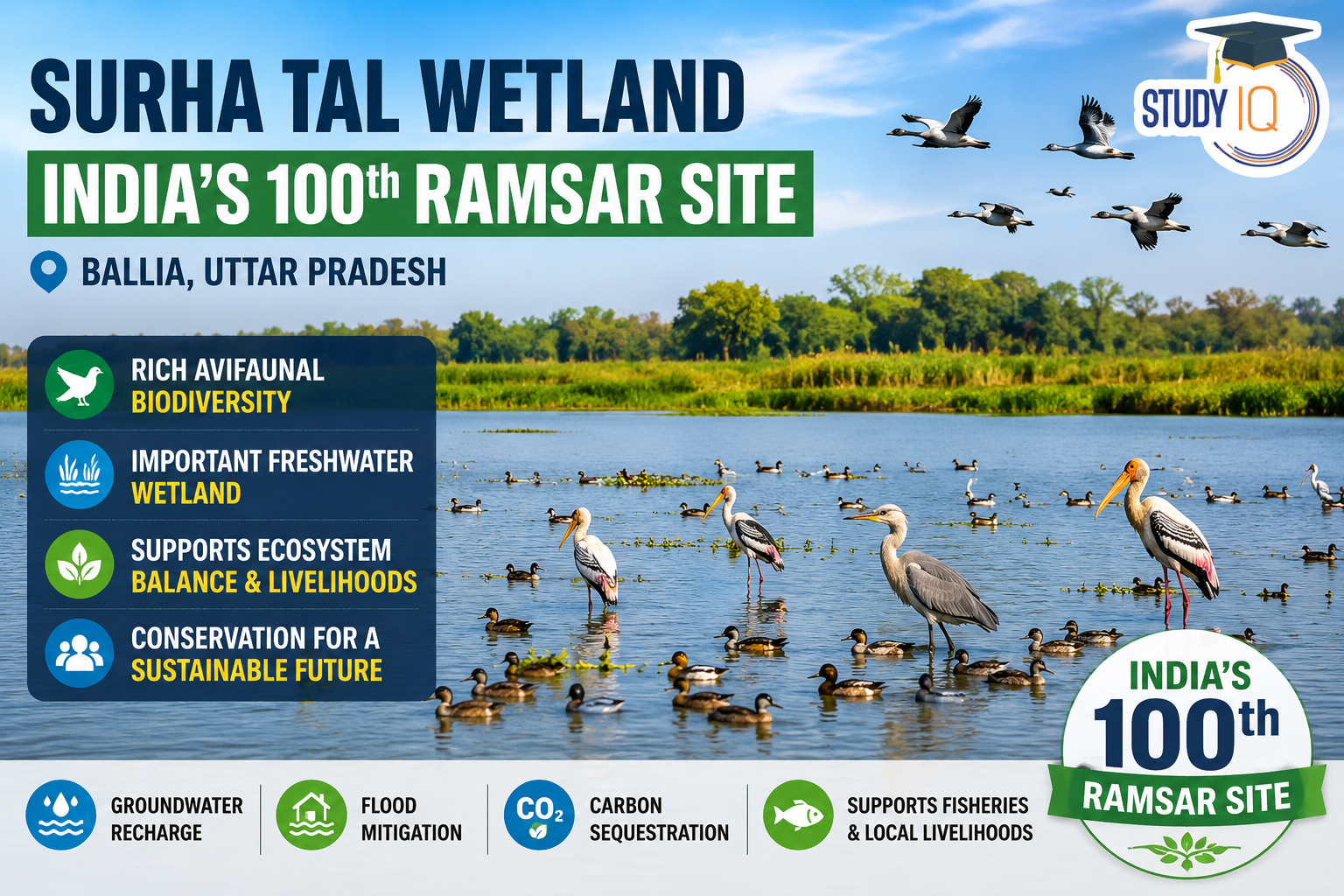
India has achieved a landmark environmental milestone with the designation of the Jai Prakash Narayan Bird Sanctuary (Surha Tal) in Uttar Pradesh as the country’s 100th Ramsar Site. The announcement was made on World Environment Day 2026, highlighting India’s growing commitment to wetland conservation, biodiversity protection, and climate resilience.
Prime Minister Narendra Modi welcomed the development, describing it as a reflection of India’s unwavering efforts to protect wetlands and preserve ecological balance for future generations.
Read Also: UPSC Daily Current Affairs 2026
India Reaches 100 Ramsar Sites
With the inclusion of Jai Prakash Narayan Bird Sanctuary, India has now reached a century of Ramsar Sites, making it one of the countries with the largest network of internationally recognized wetlands.
The Ramsar designation is awarded under the Ramsar Convention on Wetlands, an international treaty adopted in 1971 for the conservation and sustainable use of wetlands worldwide.
The latest addition further strengthens India’s position as a global leader in environmental conservation and sustainable ecosystem management.

What is Jai Prakash Narayan Bird Sanctuary (Surha Tal)?
Located in Ballia district of Uttar Pradesh, the Jai Prakash Narayan Bird Sanctuary, popularly known as Surha Tal, is one of eastern Uttar Pradesh’s most important freshwater wetlands.
The wetland is connected to the Ganga river system and serves as a critical habitat for numerous migratory and resident bird species. Its ecological significance extends beyond biodiversity conservation, playing an important role in flood mitigation, groundwater recharge, and climate adaptation.
Key Facts About Surha Tal
- Location: Ballia, Uttar Pradesh
- Type: Freshwater wetland
- Ecosystem: Wetland and bird habitat
- International Status: Ramsar Site
- Designation Date: June 5, 2026
- Significance: India’s 100th Ramsar Site
Rich Avifaunal Biodiversity Makes Surha Tal Unique
Surha Tal is widely recognized for its rich avifaunal diversity. Every year, thousands of migratory birds arrive from Central Asia, Siberia, and other regions, transforming the wetland into a biodiversity hotspot.
Some commonly observed bird species include:
- Bar-headed Goose
- Northern Pintail
- Common Teal
- Eurasian Wigeon
- Purple Heron
- Black-headed Ibis
- Openbill Stork
- Various species of ducks, egrets, and kingfishers
The wetland also supports diverse fish species, amphibians, reptiles, aquatic vegetation, and invertebrates, making it an ecologically rich ecosystem.
PM Modi Hails India’s Wetland Conservation Success
Reacting to the announcement, Prime Minister Narendra Modi stated that reaching 100 Ramsar Sites demonstrates India’s commitment to environmental protection and sustainable development.
He emphasized that conservation efforts have been strengthened through:
- Community participation
- Scientific wetland management
- Technological innovation
- Awareness campaigns
- Biodiversity conservation initiatives
According to the Prime Minister, these efforts are helping secure ecological balance while creating a greener future for coming generations.
Why Ramsar Sites Matter
Wetlands are among the most productive ecosystems on Earth and provide several ecological services essential for human well-being.
Benefits of Wetlands
Biodiversity Conservation
Wetlands support a wide variety of flora and fauna, including endangered and migratory species.
Climate Change Mitigation
Wetlands act as natural carbon sinks and help reduce greenhouse gas emissions.
Flood Control
They absorb excess rainfall and reduce the impact of floods.
Groundwater Recharge
Wetlands replenish underground water reserves and support water security.
Livelihood Support
Millions of people depend on wetlands for fisheries, agriculture, tourism, and other economic activities.
India’s Growing Ramsar Network
India has significantly expanded its Ramsar network over the past decade through focused conservation policies and increased awareness about the importance of wetlands.
The achievement of 100 Ramsar Sites reflects:
- Strong environmental governance
- Improved wetland mapping and restoration
- Enhanced biodiversity protection measures
- Community-based conservation approaches
- Greater international cooperation
Environmental experts believe the milestone will encourage further conservation efforts across the country.
Challenges Facing Indian Wetlands
Despite the growing number of protected wetlands, several challenges remain:
- Urban encroachment
- Water pollution
- Illegal land conversion
- Agricultural runoff
- Invasive species
- Climate change impacts
Experts emphasize that Ramsar designation must be accompanied by effective management plans and sustained conservation action to ensure long-term ecological health.
Significance for Climate Action and Sustainable Development
The designation of Surha Tal comes at a time when countries across the world are strengthening climate adaptation and biodiversity conservation efforts.
Healthy wetlands contribute directly to:
- Climate resilience
- Water security
- Disaster risk reduction
- Sustainable development goals (SDGs)
- Ecosystem restoration targets
As India works toward its environmental and climate commitments, Ramsar Sites are expected to play a crucial role in safeguarding natural ecosystems.
|
Read More Notes |
|
| Environment Notes | Art and Culture Notes |
| Science and Tech | History Notes |
| Geography Notes | Indian Polity Notes |
| General Knowledge | International Relation |
|
Explore StudyIQ Courses |
|
 Why Do Stampedes Occur in India? Crowd P...
 Strategic Disinvestment in India: IDBI B...
 Women’s Livelihoods in India: Challeng...














 WhatsApp





