
Table of Contents
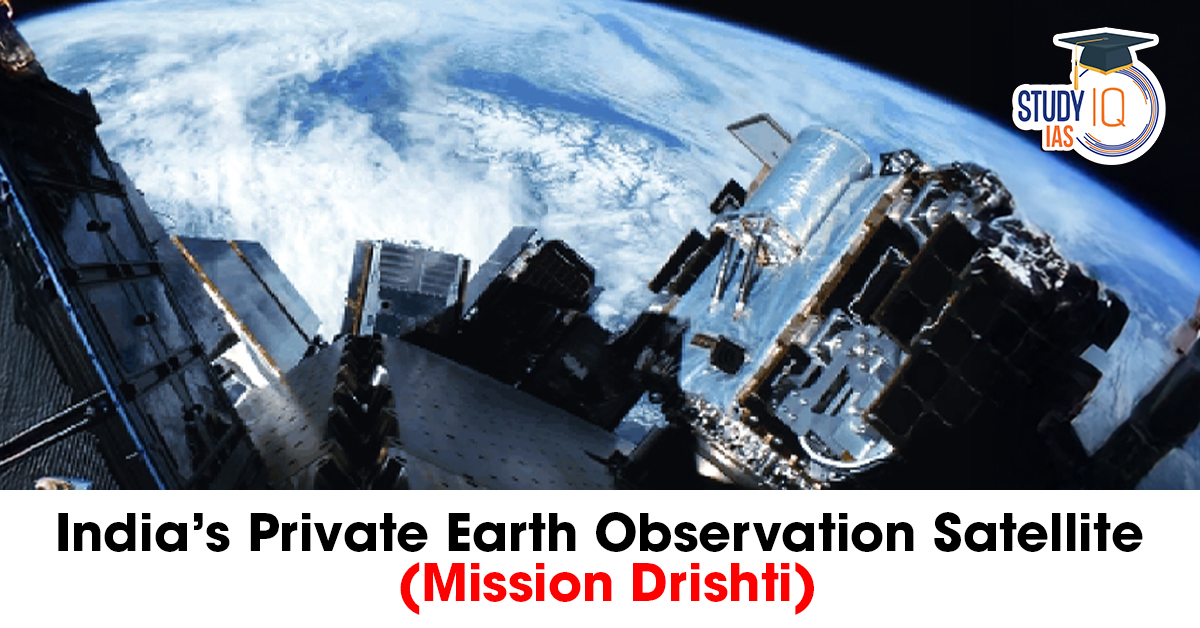
India’s private space sector has achieved another milestone with the launch of Mission Drishti, an advanced Earth Observation Satellite developed by Bengaluru-based startup GalaxEye. The satellite represents a major leap in India’s growing commercial space capabilities and highlights the increasing role of private companies in strengthening the country’s strategic and technological infrastructure.
Mission Drishti is especially significant because it introduces the world’s first OptoSAR technology, integrating Electro-Optical (EO) imaging and Synthetic Aperture Radar (SAR) capabilities into a single satellite platform. This innovation allows uninterrupted Earth observation in all weather conditions and during both day and night.
UPSC Daily Current Affairs 2026
What is Mission Drishti?
Mission Drishti is a next-generation Earth Observation Satellite designed for both civilian and defence applications. Developed by GalaxEye and launched through SpaceX, the satellite weighs around 190 kg and is equipped with advanced remote sensing technologies.
The mission aims to provide reliable, high-frequency Earth observation data for sectors such as agriculture, disaster management, defence surveillance, maritime security, and infrastructure monitoring.
Key Features of Mission Drishti
| Feature | Details |
|---|---|
| Satellite Type | Earth Observation Satellite |
| Developer | GalaxEye |
| Launch Partner | SpaceX |
| Weight | Approximately 190 kg |
| Technology | OptoSAR (EO + SAR Integration) |
| Applications | Civilian and Defence |
| Imaging Capability | All-weather, Day and Night |
What is OptoSAR Technology?
The most unique aspect of Mission Drishti is its OptoSAR technology, which combines:
1. Electro-Optical (EO) Sensors
EO sensors capture high-resolution optical imagery similar to conventional satellite photographs. These sensors are highly effective during daylight and clear weather conditions.
2. Synthetic Aperture Radar (SAR)
SAR technology uses radar signals instead of visible light, enabling satellites to capture images through clouds, rain, fog, and even during nighttime.
By integrating EO and SAR into one system, Mission Drishti can provide continuous and accurate Earth observation without interruptions caused by weather or darkness.
Advantages of Mission Drishti
All-Weather Monitoring
Unlike conventional optical satellites that struggle during cloudy or rainy conditions, Mission Drishti can operate effectively in all weather situations.
Day-and-Night Imaging
SAR technology allows uninterrupted observation even in complete darkness, improving surveillance and monitoring capabilities.
Reliable High-Frequency Data
The satellite can generate consistent and reliable imaging data, useful for real-time monitoring and rapid decision-making.
Multi-Sector Utility
Mission Drishti can support a wide range of sectors including defence, agriculture, environmental monitoring, and disaster response.
Applications of Mission Drishti
Defence and National Security
Mission Drishti can strengthen India’s border surveillance, maritime domain awareness, and strategic monitoring capabilities.
Agriculture Monitoring
Farmers and policymakers can use satellite data for crop health assessment, irrigation planning, and yield prediction.
Disaster Management
The satellite can assist in flood mapping, cyclone tracking, forest fire monitoring, and damage assessment during natural disasters.
Maritime Tracking
It can help monitor illegal fishing, shipping routes, and coastal security operations.
Infrastructure Planning
Urban planners and government agencies can use the data for smart city projects, transport networks, and land-use planning.
Strategic Importance for India
The launch of Mission Drishti reflects the rapid growth of India’s private space ecosystem under reforms introduced by IN-SPACe.
Rise of India’s Private Space Sector
Private startups are increasingly contributing to satellite development, launch services, and space-based applications.
Support to ISRO’s Capabilities
Mission Drishti complements the work of Indian Space Research Organisation, which already operates around 29 Earth observation satellites.
Global Commercial Potential
Advanced Earth observation data services are witnessing growing demand worldwide, opening new commercial opportunities for Indian startups.
Boost to Space-Based Economy
The mission supports India’s goal of expanding its share in the global space economy through innovation and private participation.
Importance of Earth Observation Satellites
Earth Observation Satellites play a critical role in modern governance, environmental monitoring, and national security. They help governments and organizations collect real-time data about the Earth’s surface, climate, oceans, and atmosphere.
Their importance includes:
- Weather forecasting
- Climate monitoring
- Resource mapping
- Border surveillance
- Disaster preparedness
- Agricultural planning
- Urban development
Mission Drishti enhances these capabilities by ensuring uninterrupted data collection under all conditions.
Conclusion
Mission Drishti marks a transformative moment for India’s private space industry. By successfully integrating EO and SAR technologies into a single satellite platform, GalaxEye has demonstrated India’s growing technological capabilities in advanced Earth observation systems.
The mission not only strengthens India’s strategic and commercial space ambitions but also showcases how private startups can complement national space programmes. As demand for real-time Earth observation data continues to rise globally, Mission Drishti positions India as an emerging leader in next-generation satellite technology.
Sharing is caring!
 Kathakali Festival 2026: Theme, History ...
 Kohat Attack 2026: What Happened in Khyb...
 World Bamboo Day 2026: Date, Theme, Hist...














 WhatsApp





