Table of Contents
Context: The legality of the U.S. seizure of an Iranian ship (Touska) depends on whether the situation is treated as peacetime (ceasefire) or wartime (ongoing armed conflict), since different international legal regimes apply.
More about the News
- U.S. Position (Wartime Interpretation): The United States argues that the conflict with Iran remains an active armed conflict as a ceasefire is only a temporary pause; therefore, actions like naval blockade and seizure of vessels are justified (under Law of Armed Conflict (LOAC).
- Iran’s Position (Peacetime Interpretation): Iran contends that the ceasefire is a peacetime condition, making U.S. actions like blockade and ship seizure, an act of “piracy” or ceasefire breach.
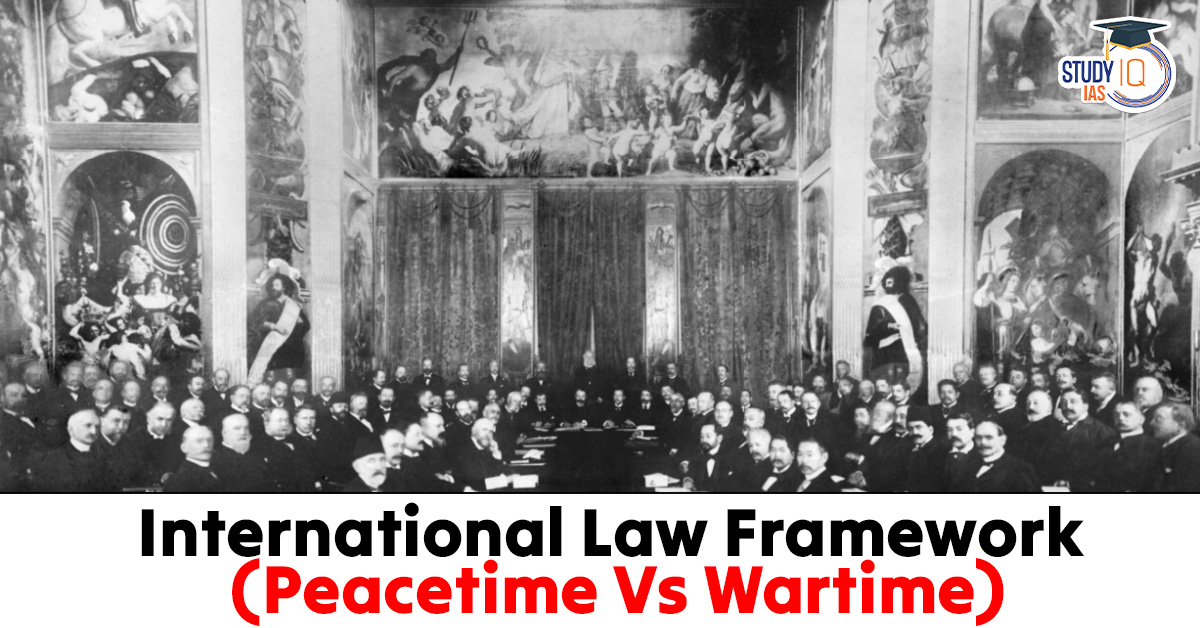
International Law Framework (Peacetime vs Wartime)
| Situation | Legal Framework / Doctrine | Explanation |
| Peacetime
|
UNCLOS (United Nations Convention on the Law of the Sea, 1982) | Ensures freedom of navigation on high seas and restricts use of force, meaning foreign navies cannot board or seize ships to enforce unilateral sanctions, making such actions a violation of maritime law. |
| UN Charter (Article 2(4)) | Prohibits threat or use of force against any state, allowing exceptions only in self-defence or with UN Security Council approval, thus restricting unilateral military actions. | |
| Wartime
|
San Remo Manual (1994 Naval Warfare Rules) | Paragraphs 118 and 135 of the manual grant ‘belligerent’ warships the right to visit and search merchant vessels while providing provisions for the capture of enemy-flagged vessels. |
| Prize Law | Allows capture and legal adjudication of enemy ships and cargo, enabling transfer of ownership through courts during wartime. It is, though, rarely used today. | |
| US Naval Doctrine (Commander’s Handbook) | Allows targeting and capture of enemy vessels beyond neutral waters, and if a ship resists or ignores warnings, it may be treated as a legitimate military target. | |
| Geneva Convention Principles | Mandates proportionality and precaution, requiring minimisation of civilian harm and ensuring military actions are necessary and not excessive. |
Way Forward
- Clarifying Conflict Status: Clearly define whether situations are ceasefire or active conflict, as legal ambiguity leads to misuse of both peacetime and wartime laws.
- Developing Clear Maritime Norms: Update and codify laws like the San Remo Manual to address modern conflicts (hybrid warfare, blockades during ceasefires).
- Enhancing Dispute Resolution Mechanisms: Use international platforms like the ICJ and arbitration tribunals for resolving maritime disputes instead of unilateral enforcement.

 Skyroot Vikram-1 Mission Aagaman: India'...
 Oor Pare Prehistoric Site: Location, Roc...
 Assam Election 2026: Exit Poll, Result D...













 WhatsApp