Table of Contents
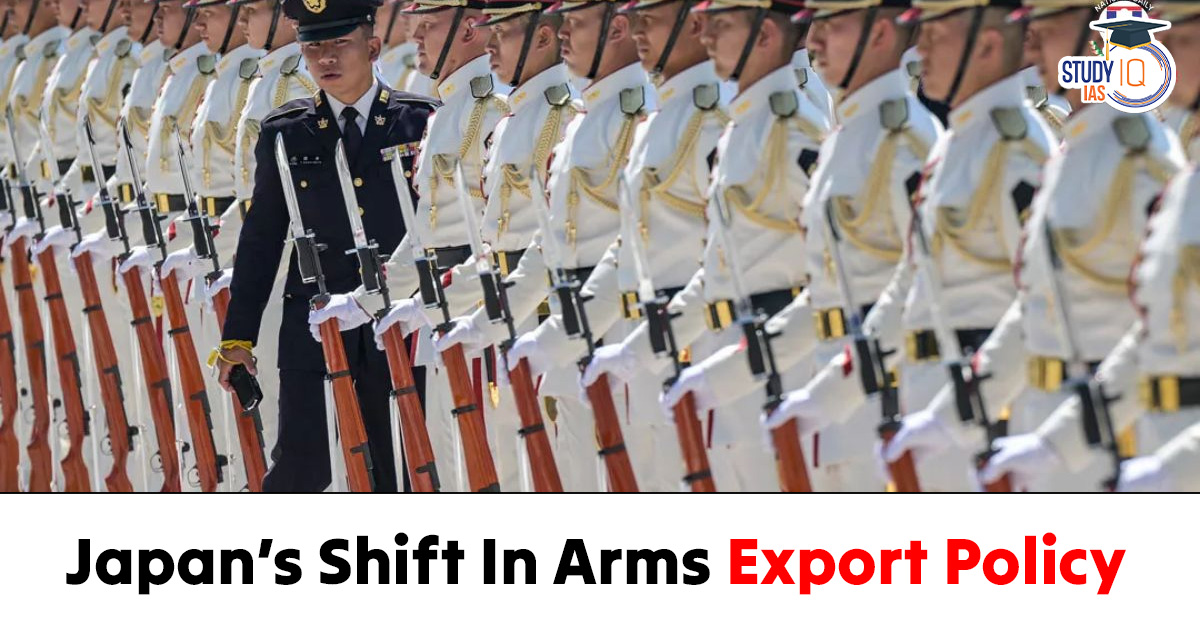
Context: Japan has removed its long-standing ban on exporting lethal weapons amid rising regional threats and global security demands.
Japan’s Shift in Arms Export Policy
- End of Export Restrictions: Japan is allowing the sale of advanced weapons like warships, missiles and fighter jets (earlier limited to non-lethal categories like rescue, transport, surveillance).
- From Pacifism to Proactive Security: Japan is moving to a more proactive defence posture, focusing on deterrence (earlier emphasis on minimal military role under pacifist constitution).
- Case-by-Case Approval System: Instead of blanket restrictions, exports will now be evaluated individually with approval by the National Security Council (earlier, rigid categorical bans).
- Partner Base: Arms exports allowed to select partner countries (≈17 nations with defence agreements) to strengthen alliances (earlier, highly restricted transfers).
- Retention of Safeguards: Japan will continue strict controls, such as no exports to conflict zones and monitoring of usage, though exceptions may be allowed for national security (earlier stricter non-negotiable bans).
Implications of this Shift
- Strengthening Defence Industry: Boosts domestic defence manufacturing by increasing production scale and reducing costs (e.g. firms like Mitsubishi Heavy Industries gaining export markets).
- Enhanced Strategic Partnerships: Deepens military cooperation with allies like the USA, Philippines, Australia, and Europe, contributing to collective security.
- Regional Deterrence: Aims to counter rising threats from China and North Korea, enhancing Indo-Pacific security balance.
- Geopolitical Significance: Reflects Japan’s shift towards a more assertive security role in global affairs and reduced reliance on the US security umbrella.
- Economic Opportunities: Opens new markets for defence exports, creating growth in one of the 17 strategic sectors targeted by Japan.
Concerns & Criticism
- Faces opposition domestically and from China, with fears of remilitarisation and violation of the pacifist constitution, potentially increasing regional tensions.

 Skyroot Vikram-1 Mission Aagaman: India'...
 Oor Pare Prehistoric Site: Location, Roc...
 Assam Election 2026: Exit Poll, Result D...














 WhatsApp