Table of Contents
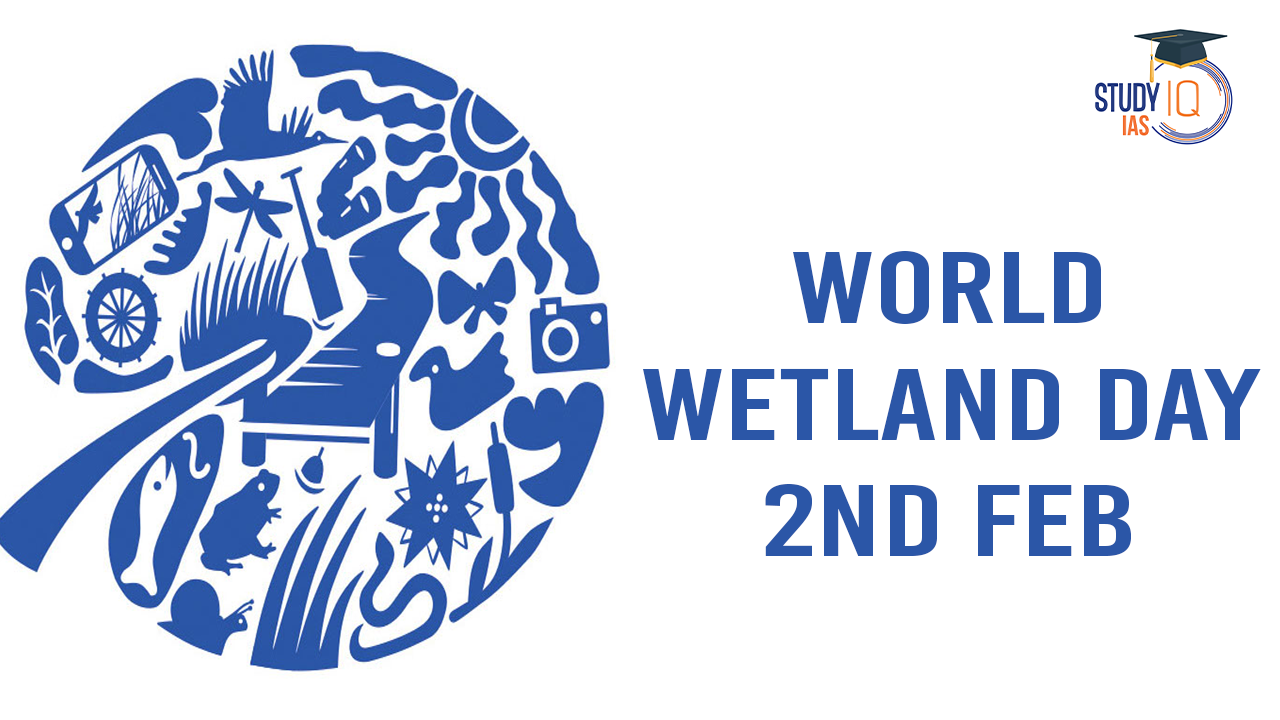
World Wetland Day 2026 is observed globally on 2 February 2026 to raise awareness about the importance of wetlands in sustaining biodiversity, climate balance, and human livelihoods. The 2026 observance highlights the role of traditional knowledge systems in protecting these fragile ecosystems.
Wetlands are among the most productive ecosystems on Earth, yet they are disappearing at an alarming rate due to climate change, pollution, and rapid urbanisation.
World Wetland Day 2026: What Are Wetlands?
Wetlands are land areas where water covers the soil either permanently or seasonally. These include:
- Lakes
- Rivers and floodplains
- Mangroves
- Marshes and swamps
- Peatlands
- Coastal lagoons
They act as natural buffers against disasters and support millions of species and human communities.
History of World Wetlands Day – Timeline
An annual celebration of World Wetland Day is on February 2, aimed at raising. This day aims to raise global awareness of wetlands’ crucial role in maintaining biodiversity, regulating climate, and supporting human livelihoods. The day commemorates the adoption of the Ramsar Convention on Wetlands on February 2, 1971, in the Iranian city of Ramsar.
| Year | Event |
|---|---|
| 1971 | The Ramsar Convention on Wetlands was adopted on February 2 in Ramsar, Iran, to promote wetland conservation and sustainable use. |
| 1996 | The 19th Meeting of the Ramsar Convention’s Standing Committee decided to observe World Wetlands Day annually on February 2. |
| 1997 | First celebration of World Wetlands Day, with events organized worldwide to raise awareness about wetland conservation. |
| 2001 | The Ramsar Wetland Conservation Awards were introduced to recognize outstanding contributions to wetland protection. |
| 2015 | The United Nations acknowledged World Wetlands Day as an important global awareness day for wetland conservation. |
| 2021 | 50th anniversary of the Ramsar Convention was celebrated with renewed commitments to wetland preservation. |
| 2022 | The United Nations General Assembly officially adopted a resolution recognizing February 2 as World Wetlands Day and urged global action for wetland conservation. |
World Wetlands Day 2026 Theme
Theme 2026:
“Wetlands and Traditional Knowledge: Celebrating Cultural Heritage”
What the Theme Means
The theme highlights:
-
Indigenous ecological knowledge
-
Community-led conservation
-
Cultural and spiritual links with wetlands
-
Sustainable resource management
For centuries, local communities have protected wetlands through practices like seasonal fishing bans, sacred water bodies, and sustainable harvesting.
Wetlands in India: Status and Significance
India has one of the largest wetland networks in Asia.
Key Facts
-
98 Ramsar Sites (Highest in South Asia)
-
Over 1.3 million hectares wetland coverage
-
Strong cultural and livelihood linkages
Wetlands in India support:
-
Traditional fishing communities
-
Agriculture and irrigation
-
Religious and cultural activities
Iconic Wetlands Around the World
| Wetland | Location | Significance |
|---|---|---|
| Mont-Saint-Michel and its Bay | France | Ramsar & UNESCO site; supports migratory birds and fisheries; features a Gothic-style Benedictine abbey. |
| Wood Buffalo National Park | Canada | Home to one of the world’s largest inland deltas; provides fresh water and food security for Indigenous communities. |
| Banc d’Arguin National Park | Mauritania | Vital coastal wetland; supports fish stocks and migratory birds; sustains local fishing communities. |
| Itsukushima Shinto Shrine | Japan | Cultural and ecological site; protected wetlands enhance tourism and preserve spiritual heritage. |
| Sundarbans Mangrove Forest | India & Bangladesh | Largest mangrove forest; crucial for tiger conservation and coastal protection. |
| Kakadu National Park | Australia | UNESCO World Heritage site; rich in biodiversity; home to indigenous rock art and wetlands. |
| Everglades National Park | USA | Largest tropical wetland in the U.S.; crucial for water filtration and endangered species. |
| Okavango Delta | Botswana | A vast inland delta; rich in wildlife, supporting elephants, lions, and hippos. |
| Pantanal Wetlands | Brazil, Bolivia, Paraguay | Largest tropical wetland; a biodiversity hotspot with diverse aquatic and terrestrial species. |
| Danube Delta | Romania & Ukraine | Europe’s largest wetland; supports rare birds and freshwater fish species. |
Wetland Conservation Framework in India
Wetland (Conservation and Management) Rules, 2017
These rules aim to:
-
Identify and notify wetlands
-
Restrict harmful industrial and construction activities
-
Promote sustainable management
-
Encourage local community participation
Challenges
-
Weak enforcement
-
Urban encroachment
-
Pollution
-
Climate stress
Importance of Wetlands
Wetlands are one of the most productive ecosystems on Earth, offering numerous environmental, economic, and social benefits:
- Biodiversity Hotspots: Home to a variety of flora and fauna, including migratory birds, amphibians, and aquatic species.
- Climate Change Mitigation: Wetlands act as carbon sinks, reducing greenhouse gas emissions.
- Water Purification: Natural filtration systems that remove pollutants from water bodies.
- Flood Control: Absorb excess water during heavy rains and prevent soil erosion.
- Livelihood Support: Provide resources such as fish, timber, and medicinal plants for millions of people worldwide.
- Cultural and Spiritual Significance: Many wetlands have been integral to indigenous cultures and traditions.
Wetlands Under Threat
Despite their ecological significance, wetlands are among the most threatened ecosystems in the world. Over 35% of wetlands have been lost since 1970 due to urbanization, pollution, deforestation, and climate change. Protecting wetlands is crucial for sustaining biodiversity, human livelihoods, and climate resilience.
Major Threats to Wetlands Globally
-
Land conversion for cities and agriculture
-
Industrial discharge and plastic pollution
-
Climate change and sea-level rise
-
Over-extraction of water resources
Wetlands are disappearing three times faster than forests globally.
Conservation Efforts Worldwide
Global Level
-
Ramsar Convention implementation
-
Biodiversity conservation treaties
-
Climate agreements
National Level
-
Wetland mapping and restoration
-
Legal protection laws
-
Community-based conservation programs
Community Level
-
Traditional ecological knowledge
-
Sustainable fishing and farming
-
Cultural protection practices
How Individuals Can Help Protect Wetlands
-
Reduce water wastage
-
Avoid chemical pollution
-
Support eco-friendly products
-
Participate in conservation drives
-
Spread awareness about wetlands
Why Traditional Knowledge Matters in 2026
Traditional knowledge offers:
-
Low-cost conservation solutions
-
Long-term sustainability models
-
Deep local ecosystem understanding
Combining modern science + traditional wisdom is considered the future of conservation.
|
Read More Notes |
|
| Environment Notes | Art and Culture Notes |
| Science and Tech | History Notes |
| Geography Notes | Indian Polity Notes |
| General Knowledge | International Relation |
|
Explore StudyIQ Courses |
|

 UPSC EPFO APFC Result 2026 Out at upsc.g...
 Daily Mains Articles 2026 – Updated Da...
 Daily Current Affairs PDF 2026: Download...














 WhatsApp