Table of Contents
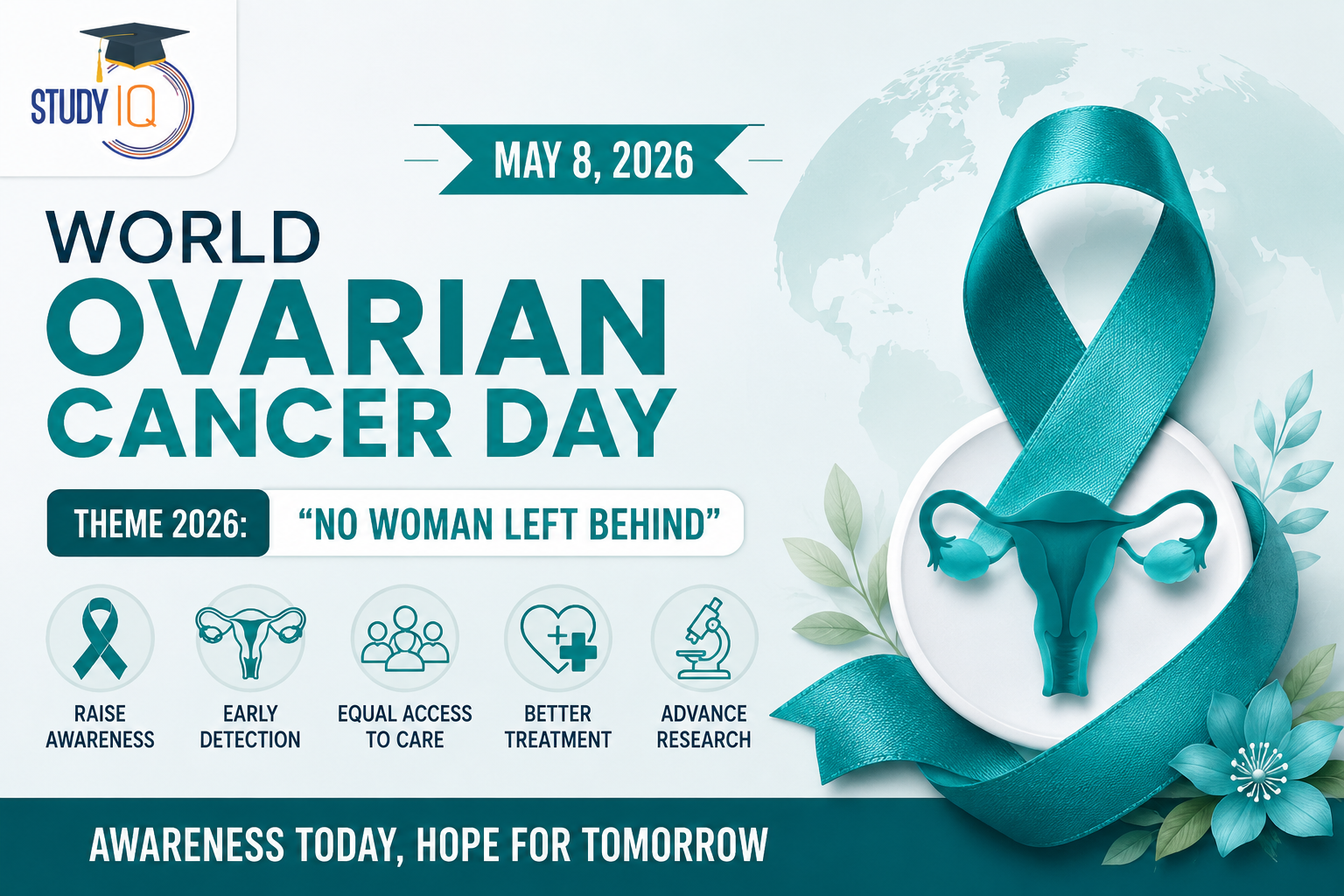
World Ovarian Cancer Day 2026 is observed every year on May 8 to spread awareness about ovarian cancer, encourage early diagnosis, and improve access to treatment for women worldwide. The day brings together healthcare professionals, cancer survivors, policymakers, and awareness organisations to educate people about one of the most dangerous cancers affecting women.
In 2026, the campaign continues to focus on reducing inequalities in ovarian cancer care and ensuring that women across all regions receive timely medical support.
UPSC Daily Current Affairs 2026
Key Facts About World Ovarian Cancer Day 2026
| Key Fact | Details |
|---|---|
| Observed On | May 8 |
| Theme 2026 | “No Woman Left Behind” |
| First Observed | 2013 |
| Main Objective | Awareness and early detection |
| Leading Organisation | World Ovarian Cancer Coalition |
| Major Concern | Late diagnosis |
World Ovarian Cancer Day 2026 Theme
The official theme for World Ovarian Cancer Day 2026 is:
“No Woman Left Behind”
The theme is part of a global awareness initiative led by the World Ovarian Cancer Coalition.
The campaign highlights the urgent need to improve:
- Early diagnosis
- Access to screening
- Affordable treatment
- Healthcare support systems
- Research and awareness programmes
The objective is to ensure that every woman receives equal access to ovarian cancer care, regardless of economic background or geographical location.
Why is World Ovarian Cancer Day Important?
Ovarian Cancer is one of the leading causes of cancer-related deaths among women globally. The disease is often diagnosed at an advanced stage because its symptoms can appear mild during the early stages.
According to global health estimates:
- More than 3 lakh women are diagnosed with ovarian cancer annually
- It is the 8th leading cause of cancer deaths among women worldwide
- Cases and deaths are expected to rise significantly by 2040
Healthcare experts say awareness and early diagnosis are the strongest tools to improve survival rates.
Common Symptoms of Ovarian Cancer
Ovarian cancer is often called a “silent disease” because early warning signs may look similar to common digestive or menstrual problems.
Symptoms Women Should Not Ignore
| Common Symptoms | Details |
|---|---|
| Persistent bloating | Swelling that continues for weeks |
| Pelvic or abdominal pain | Constant discomfort or pressure |
| Feeling full quickly | Difficulty eating normal meals |
| Frequent urination | Sudden urge to urinate often |
| Digestive problems | Indigestion and stomach discomfort |
| Fatigue | Constant tiredness |
Doctors advise women to consult a healthcare professional if these symptoms persist for more than two to three weeks.
Why Early Detection is Difficult
One of the biggest challenges with ovarian cancer is late diagnosis.
Many women ignore symptoms because they are commonly mistaken for:
- Acidity
- Gastric issues
- Hormonal changes
- Menstrual discomfort
- Stress-related problems
Studies show that only a small percentage of cases are diagnosed during the early stages when treatment is most effective.
History of World Ovarian Cancer Day
World Ovarian Cancer Day was first launched in 2013 by Target Ovarian Cancer.
The campaign aimed to:
- Increase awareness about ovarian cancer
- Promote research and early diagnosis
- Support women undergoing treatment
- Encourage global healthcare cooperation
Today, the initiative involves more than 100 organisations across over 30 countries.
Challenges in Developing Countries
Low- and middle-income countries face major barriers in ovarian cancer treatment due to:
- Limited healthcare infrastructure
- Lack of awareness
- Delayed diagnosis
- Poor access to screening facilities
- Expensive treatment procedures
Healthcare experts say rural awareness campaigns and affordable screening services are essential to reduce mortality rates.
Prevention and Risk Reduction
There is no guaranteed way to completely prevent ovarian cancer. However, certain factors may reduce the risk.
Factors Associated with Lower Risk
| Protective Factors | Possible Benefit |
|---|---|
| Long-term use of birth control pills | Reduced ovarian cancer risk |
| Breastfeeding | Hormonal protection |
| Pregnancy and childbirth | Lower lifetime risk |
| Tubal ligation or hysterectomy | Reduced chances in some cases |
Doctors recommend regular medical check-ups and awareness of family medical history.
Modern Treatment Options
Advances in oncology have significantly improved treatment for ovarian cancer.
Common Treatment Methods
- Surgery
- Chemotherapy
- Targeted therapy
- Robotic-assisted surgery
- HIPEC therapy (heated chemotherapy)
Early-stage diagnosis greatly increases survival rates and treatment success.
Awareness Activities on World Ovarian Cancer Day
Several programmes are organised worldwide on May 8, including:
- Awareness rallies
- Free health screening camps
- Educational seminars
- Survivor support sessions
- Social media awareness campaigns
Healthcare organisations also encourage women to discuss symptoms and seek timely medical advice openly.
 Nobel Prize in Chemistry 2026: Kagan and...
 India Demonstrates First Free-Space Quan...
 India–EFTA Trade and Economic Partners...














 WhatsApp