
Table of Contents
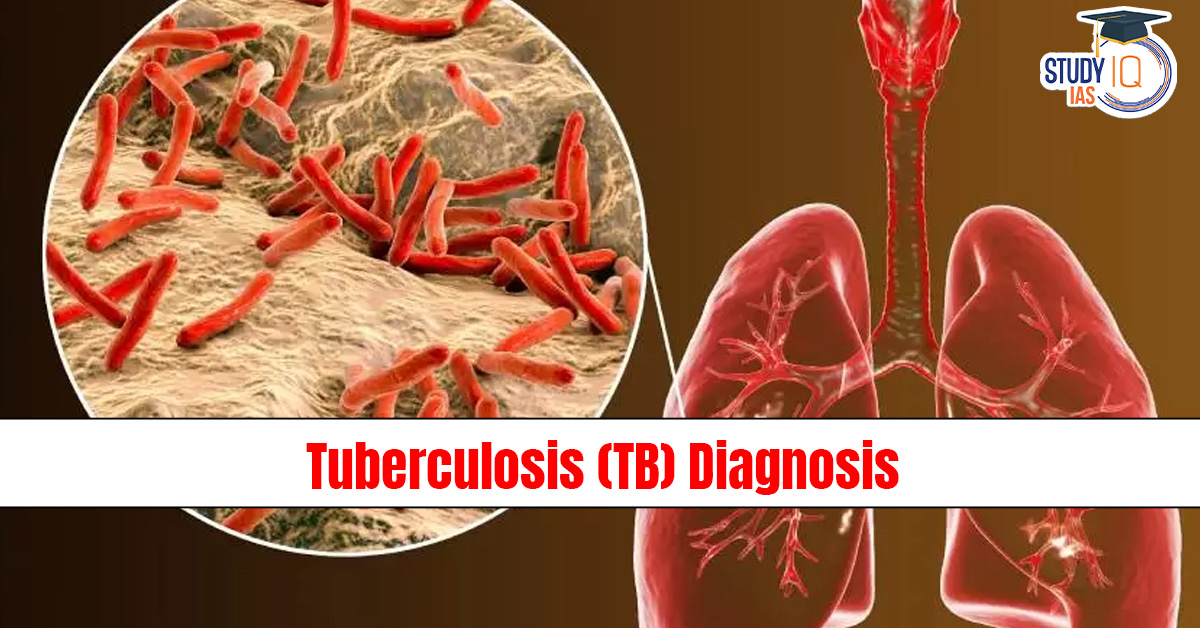
Context: The World Health Organization (WHO) recently recommended near point-of-care molecular tests, tongue swab samples, and sputum pooling strategies to improve tuberculosis (TB) diagnosis and testing efficiency.
New Tools Available for Tuberculosis (TB) Diagnosis
- Near Point-of-Care Molecular Tests (NPOC-NAAT): These rapid molecular tests detect Tuberculosis bacteria and drug resistance near the patient location, reducing delays in diagnosis and treatment initiation.
- Portable Chest X-ray with Artificial Intelligence: Portable CXR machines integrated with AI algorithms help detect TB-related lung abnormalities quickly, enabling mass screening in communities.
- Tongue Swab Testing: Using tongue swabs instead of sputum samples improves TB detection for children and patients unable to produce sputum.
- Sputum Pooling Strategy: Combining multiple sputum samples in a single test increases testing efficiency and reduces diagnostic costs during large-scale screening.
- Molecular Tests (CBNAAT and Truenat): CBNAAT (Cartridge-Based Nucleic Acid Amplification Test) and Truenat (indigenous Indian diagnostic platform) enable rapid detection of TB and drug-resistant strains.
- AI-Enabled Opportunistic Screening: Artificial intelligence integrated into digital X-ray systems can automatically identify suspected TB lesions during routine radiological examinations.
Shifting Diagnostic Landscape for Tuberculosis (TB)
- Transition from Microscopy to Molecular Testing: Earlier TB diagnosis relied on sputum smear microscopy, which had low sensitivity and could not detect drug resistance.
- Expansion of Molecular Diagnostics: India has expanded NAAT-based molecular testing, enabling early detection of TB bacteria and antibiotic resistance.
- Community-Based Screening Models: Programmes such as the Pradhan Mantri TB Mukt Bharat Abhiyaan deploy mobile vans with portable X-ray machines, bringing TB screening directly to communities.
- Decentralisation of Diagnostics: New tools enable testing at primary health centres and rural clinics, reducing dependence on large laboratories.
- Integration with Public Health Systems: Diagnostic networks are being optimised to ensure faster testing, sample transportation and rapid treatment initiation.
Also Read: Global TB Report 2025
Priorities in Research and Innovation
- Biomarkers for TB Infection Risk: Developing biomarkers to identify individuals at high risk of developing active TB, and improving preventive therapy strategies.
- Non-Sputum Diagnostic Tools: Research is focusing on saliva-based or other non-invasive tests to detect TB, especially for patients with low bacterial load.
- Improved Diagnosis for Children: Children often cannot produce sputum and have low bacterial counts, making diagnosis difficult; research is exploring stool-based and alternative testing methods.
- Detection of Extra-Pulmonary TB (EP-TB): EP-TB accounts for nearly one-quarter of TB cases in India, requiring better diagnostic tools such as AI-enabled ultrasound combined with molecular testing.
- Implementation Research: Large-scale field trials and operational studies are needed to evaluate the cost-effectiveness and real-world performance of new diagnostic tools.
- Community Engagement: Strengthening community awareness and participation can increase acceptance of screening programmes and preventive therapy
Also Read: World TB Day
Need for an Integrated Approach in for Tuberculosis (TB) Care
- Tuberculosis frequently coexists with conditions such as diabetes, chronic respiratory diseases (COPD, asthma), and undernutrition, requiring simultaneous diagnosis and treatment.
- TB–Diabetes Bidirectional Screening: Under the National TB Elimination Programme (NTEP), TB patients are screened for diabetes and diabetic patients are screened for TB, as diabetes increases TB risk and worsens treatment outcomes.
- Addressing Lifestyle Risk Factors: Smoking, alcohol use and poverty-related vulnerabilities worsen TB outcomes, requiring counselling and preventive interventions alongside treatment.
- Strengthening Primary Healthcare Platforms: Institutions such as Ayushman Arogya Mandirs can enable multi-disease screening and comprehensive care, using TB programmes as an entry point for detecting other diseases.
- High Prevalence of Depression and Anxiety: Studies in India show that at least one-third of TB patients experience depression or anxiety, while up to two-thirds of drug-resistant TB patients face mental health issues.
| Need for Integrated TB–Mental Health Care |
|
Role of Nutrition in for Tuberculosis (TB) Management
- Undernutrition as a Major Risk Factor: Undernutrition weakens immunity and is linked to nearly 40% of new TB cases in India, making nutritional support critical for prevention and recovery.
- Impact on Treatment Outcomes: Severely underweight TB patients face a higher risk of mortality, drug toxicity and disease recurrence if nutrition is not addressed.
- Evidence from the RATIONS Trial: The Reducing Activation of Tuberculosis by Improvement Of Nutritional Status (RATIONS) trial in Jharkhand showed that providing monthly food baskets (cereals, pulses, milk powder and oil) led to average weight gain of 4.5 kg among TB patients.
- Reduced Mortality through Early Weight Gain: Even a 5% weight gain in the first two months of treatment reduced the risk of death by over 60%, demonstrating the importance of nutritional interventions.
- Preventing TB in Vulnerable Families: Providing 5 kg pulses per family member per month in TB-affected households reduced new TB cases by nearly half, highlighting the preventive role of improved nutrition.
| About TB Champion |
TB Champions are individuals who have completed TB treatment and recovered, and voluntarily engage in community awareness, counselling, and advocacy.
How TB Champions Help Eliminate Stigma
|

 NASA’s CERES (Clouds and the Earth’s...
 WMO’s State of the Global Climate 2025...
 Agri-photovoltaics in India, Key Feature...













 WhatsApp





