
Table of Contents
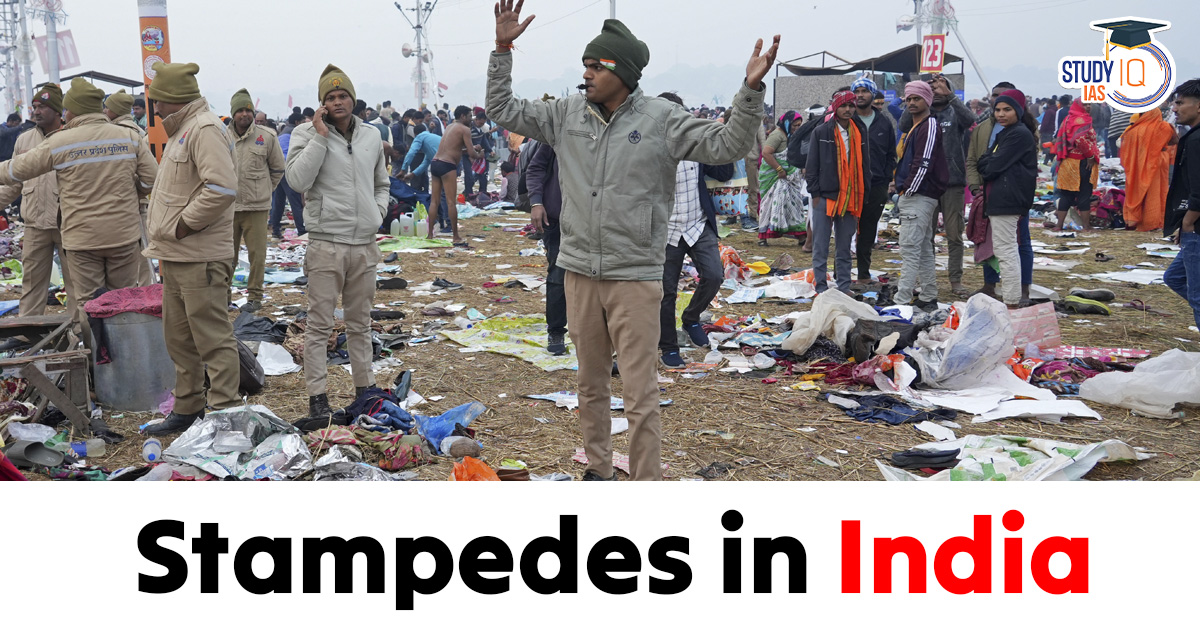
Context: The recent tragedy at the Sheetla Mata Temple in Nalanda (March 2026) serves as a grim case study in the failure of crowd management.
Status of Stampedes in India
- NCRB Data: Between 2001 and 2015, India recorded 3,550 incidents, resulting in 2,901 deaths.
- Religious Venues: A 2013 study (IJDRR) highlights that 79% of stampedes in India occur at religious gatherings and pilgrimages.
- Historical Precedents: Notable tragedies include the 2013 Ratangarh Temple (115 deaths), the 2022 Vaishno Devi incident (12 deaths), and the 2024 Hathras Satsang (100+ deaths).
Causes of Stampedes in India
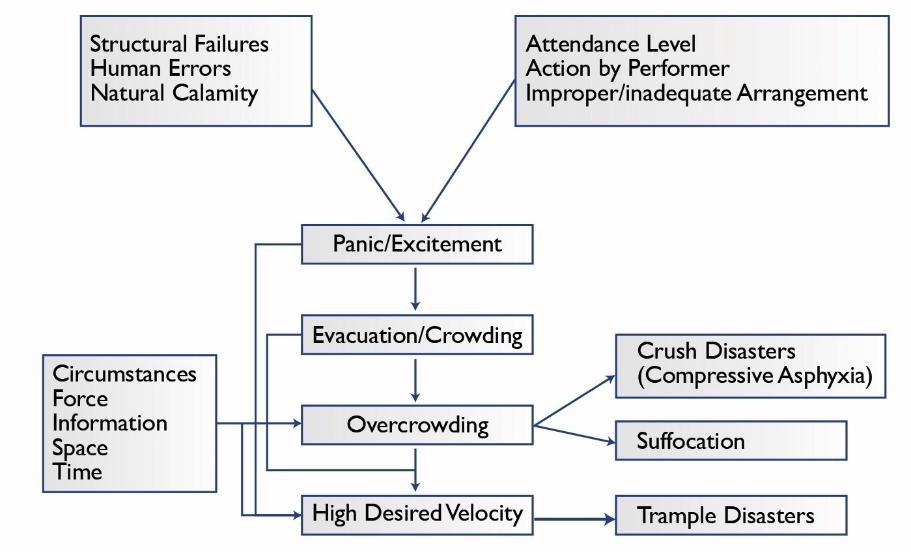
- Overcrowding:g., In 2022, 12 people died due to a stampede at the famous Mata Vaishno Devi shrine in Jammu and Kashmir, triggered by a heavy rush of devotees.
- Poor coordination and crowd management: Lack of coordination between event organisers and authorities, along with inadequate crowd management protocols, E.g., in 2024, over 100 people died in a stampede at a ‘satsang’ (prayer meeting) organised by self-styled godman Bhole Baba (Narayan Saakar Hari) in Hatras
- Panic and rushing behaviour:g., In 2017, panic after unfounded rumours of the foot overbridge collapsing resulted in a major stampede at Mumbai’s Elphinstone Railway Station.
- Fires:g., In 2023, 8 people sustained injuries in a stampede triggered by a fire at a slum in Delhi
- Structural issues: Collapse of temporary structures, steep stairs, narrow exits due to illegal constructions, or overcrowded spaces
- Safety hazards: Inappropriate use of firecrackers, faulty electrical wiring, or inadequate safety measures.
NDMA Guidelines- “Framework for Preparation of Crowd Management Plan for Events/Venues of Mass Gathering”
- Event organisers should discourage general admissions for VIPs or restrict entry if it compromises safety.
- Install loudspeakers at crowded points for real-time announcements and crowd management.
- Maintain a 3–4-meter gap between every 5-6 shops to allow safe evacuation during emergencies.
- Authorities should create dedicated paths for pedestrians and separate routes for ponies/mules to avoid congestion.
- Event managers must develop, review, and coordinate disaster response plans with local authorities and police.
- Law enforcement should assess venues, ensure preparedness, and guide crowd and traffic movements.
- Involve NGOs and civil defence in traffic control, medical aid, sanitation, and resource mobilisation.
- Set up first-aid rooms and emergency operation centres for post-disaster response.
Suggested Measures to Tackle Stampedes in India
- Understanding crowd dynamics: to predict crowd behaviour in normal and unexpected situations, and to control and contain their negative impact in terms of crowd risk situations.
- Use of Technology:
- Thermal and LiDAR sensors for real-time crowd density monitoring, using AI to predict surges and issue early warnings.
- RFID tags in tickets or wristbands to track movement, detect congestion, and enable targeted alerts via display screens.
- Drones with high-resolution cameras and thermal imaging for surveillance, anomaly detection, and projecting announcements.
- Intelligent lighting systems that adjust brightness and colour based on crowd density to guide movement and reduce panic.
- Bioluminescent materials in pathways to glow brighter during emergencies, providing clear evacuation routes in low-light conditions.
- A coordinated system that integrates independent agencies into the crowd management planning and command structure.
- Legislation: The Supreme Court, in its ruling on the Uphaar Cinema tragedy, emphasized the necessity for a well-defined legal framework addressing the state’s liability in cases of negligence.
- Stricter Compliance: To enhance compliance and safety, stringent penalties, including harsher punishments, license cancellations for violations related to construction and fire safety,
- Learning from Best Practices: g., Crowd Management During Hajj in Mecca, Saudi Arabia, Hold & release crowd-control method, Sabarimala, Kerala)

 Human Trafficking in India, Causes, Cons...
 Paternity Leave in India: Laws, Benefits...
 Racism Against the Northeastern Communit...











 WhatsApp





