Table of Contents
Context
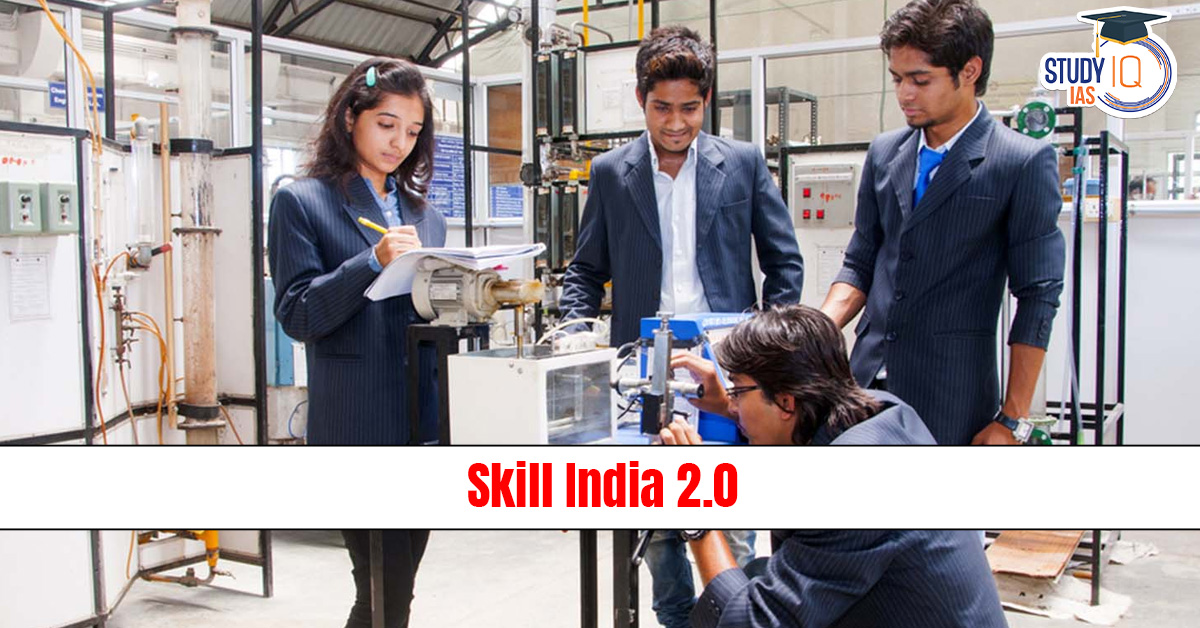
The Union Budget 2026–27 reflects a strategic policy emphasis on education and skilling as foundational pillars for employment generation, demographic dividend utilization, and long-term economic competitiveness. It aims to reduce the disconnect between formal education and labour market needs while expanding access to STEM education, vocational training, and innovation ecosystems.
Key Budget Highlights
Overall Allocation for Education Ministry
- ₹1.39 lakh crore allocated, marking a significant enhancement in public investment in the education sector.
- 14.21% increase over the Revised Estimates of the previous fiscal, indicating fiscal prioritisation of human capital formation.
- Policy focuses on strengthening school education, skilling frameworks, innovation platforms, and structured employability pathways.
School Education & Innovation
Samagra Shiksha Scheme
- Allocation increased by ₹4,100 crore, reinforcing the Centre’s commitment to universal and equitable school education.
- School infrastructure support aims to improve classrooms, sanitation, and digital facilities, especially in underserved regions.
- Teacher training focuses on enhancing pedagogical capacity and learning outcomes.
- Digital learning expansion seeks to bridge the digital divide and promote blended education models.
- Inclusion and access measures target disadvantaged and marginalized student populations.
Atal Tinkering Labs (ATL)
- Budget raised from ₹500 crore to ₹3,200 crore, reflecting a major push for innovation-led education.
- ₹2,700 crore jump underscores the government’s emphasis on nurturing a technology-oriented student ecosystem.
- Promotes innovation and problem-solving by providing hands-on exposure to robotics, AI, coding, and design thinking.
- Early exposure to emerging technologies helps align school education with future industry skill requirements.
Institutional Strengthening
Kendriya Vidyalaya Sangathan (KVS)
- ₹600 crore increase in allocation to strengthen the quality and reach of central government schools.
- Improves access and standardisation of education for children of transferable central government employees and defence personnel.
University Townships
- Five university townships were announced as integrated higher education and research clusters.
- Located near industrial and logistics corridors to enhance industry-academia collaboration.
- Aligns education with industry demand by promoting applied research, internships, and skill-based learning.
- Promotes job-readiness through exposure to real-world industrial and commercial ecosystems.
Skill Development & Employability
Ministry of Skill Development and Entrepreneurship
- The budget increased to ₹9,885.8 crore, strengthening India’s vocational and skill training framework.
- 62% rise over previous Budget Estimates highlights policy urgency in addressing youth unemployment.
- PM Skilling and Employability Transformation Programme focuses on market-aligned skill certification and placement support.
- Upgraded ITIs aim to modernize training infrastructure and improve the quality of technical education.
Creative Economy & Digital Skills
Content Creator Labs
- Set up in 15,000 secondary schools and 500 colleges to mainstream creative digital skills in formal education.
- Focus on AVGC sectors (Animation, Visual Effects, Gaming, Comics) to tap into high-growth creative industries.
- Promotes digital entrepreneurship and alternative career pathways beyond conventional employment.
- Supports India’s content economy by building a skilled workforce for global media and entertainment markets.
Gender & Inclusion Measures
Promotion of Girls in STEM
- Girls’ hostels in every district aim to reduce regional and socio-economic barriers to education.
- Enhances female participation in STEM fields by improving safety, mobility, and access to quality institutions.
- Reduces dropout rates among adolescent girls, especially in secondary and higher education stages.
Education-to-Employment Linkages
High-Powered Standing Committee
- Examines structured pathways from education to employment and entrepreneurship.
- Identifies high-growth service sub-sectors to guide skill development planning.
- Assesses AI and emerging technologies and their impact on jobs and workforce transformation.
- Recommends curriculum reforms to integrate future skills from school level onward.
Design & Research Institutions
National Institute of Design (NID)
- New NID proposed in Eastern India to ensure regional balance in access to design education.
- Supports creative industries such as manufacturing, fashion, and product design through skilled human resources.
Teacher Training & Research
- Strengthening SCERTs to improve curriculum development and state-level academic support systems.
- Upgrading Teacher Training Institutes to enhance professional competency and classroom effectiveness.
- Focus on pedagogical quality and adoption of modern, learner-centric teaching methods.
Fiscal & Policy Reforms
Tax Reforms for Education Abroad
- TCS reduced from 5% to 2% for students pursuing higher education overseas.
- Eases financial burden on middle-class families seeking international academic exposure.
- Encourages global skill acquisition and knowledge transfer back to India.
| PM Poshan Scheme |
|
|
Read More Notes |
|
| Environment Notes | Art and Culture Notes |
| Science and Tech | History Notes |
| Geography Notes | Indian Polity Notes |
| General Knowledge | International Relation |
|
Explore StudyIQ Courses |
|
 Gandhi Jayanti 2026: History, Significan...
 Right to Vote in India: Constitutional S...
 Daily Mains Articles 2026 – Updated Da...


 WhatsApp