
Table of Contents
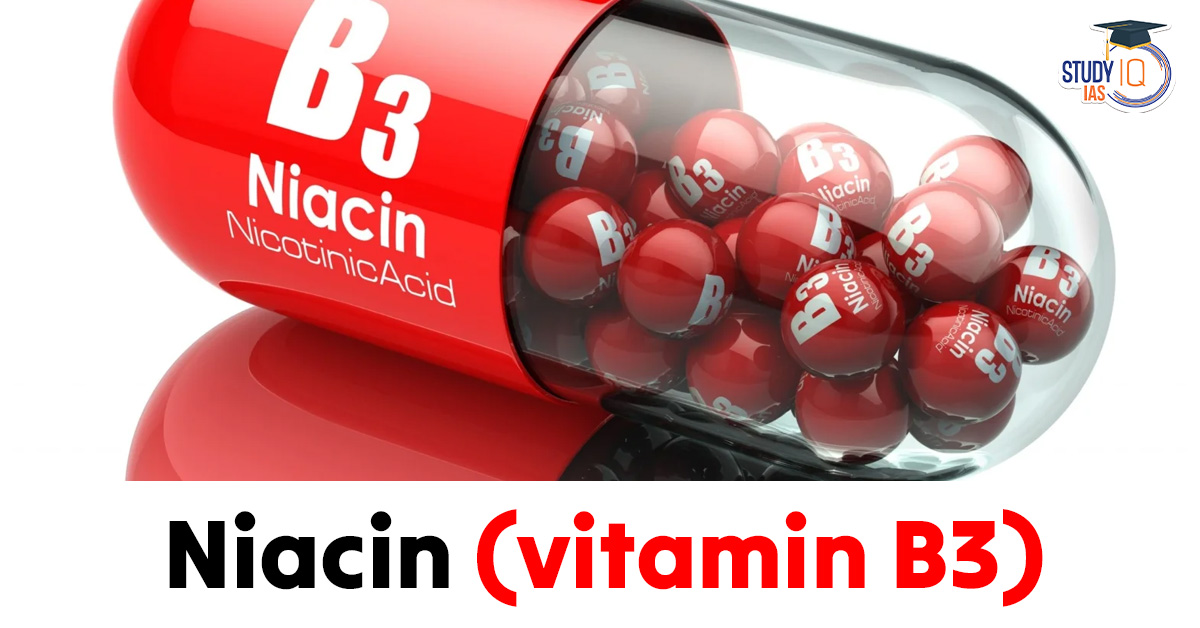
Context: A recent medical warning highlighted cases of niacin (vitamin B3) supplement toxicity causing liver injury, raising concerns about the growing use of high-dose supplements marketed for longevity, cholesterol control and wellness.
About Niacin (Vitamin B3) Supplement
- Definition: Niacin (vitamin B3) is a water-soluble B-complex vitamin essential for metabolism and energy production.
- Physiological Role: Helps convert food into energy and supports DNA repair, nervous system function and skin health.
- Forms: Occurs mainly as nicotinic acid and nicotinamide, both used in supplements and medicines.
- Dietary Requirement: Recommended intake for adults is about 14–16 mg/day, usually obtained from foods such as meat, fish, grains, and legumes.
Uses of Niacin
- Treatment of Dyslipidaemia: High-dose niacin is prescribed to lower LDL (“bad”) cholesterol and triglycerides while increasing HDL (“good”) cholesterol.
- Therapeutic Supplement: Used in the treatment of niacin deficiency (pellagra) and certain metabolic disorders.
- Wellness and Longevity Supplements: Niacin may increase NAD⁺ (Nicotinamide Adenine Dinucleotide) levels, a molecule linked to cellular energy metabolism and repair.
Thus, niacin supports energy metabolism, DNA repair, skin health and prevention of pellagra, but high-dose supplementation is not a proven longevity therapy
Issues in Overdose / Toxicity
- Flushing Reaction: High doses cause skin flushing, redness and burning sensation due to dilation of blood vessels.
- Metabolic Effects: Excess intake may increase uric acid levels (gout risk) and elevate blood sugar.
- Cardiovascular Effects: Overdose can cause rapid heartbeat, dizziness and low blood pressure.
- Liver Injury: High doses (especially >1,000 mg/day) may cause hepatotoxicity, hepatitis and even acute liver failure.

 Extracellular RNA (exRNA): Types, Functi...
 Drug Trademark in India: Legal Framework...
 NMC Advisory on Stem Cell Therapy for Au...













 WhatsApp





