

Table of Contents
Context: A study published in The Lancet highlights that India continues to rank among the countries with the highest number of maternal deaths worldwide.
Lancet Key Findings on Maternal Deaths in India
- After a period of steady decline, the reduction in maternal deaths has slowed since 2015.
- Globally, nearly 2.4 lakh women died in 2023 due to complications related to pregnancy and childbirth.
- India accounted for about 24,700 of these deaths, placing it alongside high-burden countries such as Nigeria, Pakistan, and Ethiopia.
- Since 1990, maternal mortality has decreased considerably due to improved awareness, increased institutional deliveries, and government interventions, though disparities persist across states.
- States like Kerala and Tamil Nadu are close to achieving global targets, whereas Uttar Pradesh, Bihar, and Madhya Pradesh continue to report higher mortality levels.
- Most maternal deaths in India arise from preventable causes, including haemorrhage, hypertension-related complications, infections, and issues linked to pre-existing health conditions.
Understanding Maternal Mortality
- Maternal Death: Death of a woman during pregnancy or within 42 days of termination, due to causes related to or aggravated by pregnancy, excluding accidental or incidental causes.
- Maternal Mortality Ratio (MMR): Number of maternal deaths per 1,00,000 live births.
- Maternal Mortality Rate: Number of maternal deaths among women aged 15–49 per lakh women in that age group, as per the Sample Registration System (SRS).
- SDG Target (3.1): Reduce global MMR to below 70 per 1,00,000 live births by 2030.
Persisting Challenges
- High Out-of-Pocket Expenditure (OOPE): Families still bear high costs for medicines, diagnostics, and emergency care.
- Sociocultural Barriers: Limited decision-making power of women, low awareness, and social stigma delay timely healthcare access.
- Increase in High-Risk Pregnancies: Factors such as late pregnancies, obesity, hypertension, diabetes, and short birth intervals add to complications.
- Weak Rural Infrastructure: Inadequate emergency obstetric services, transport, and blood storage facilities in remote areas.
Government Initiatives
- Janani Suraksha Yojana (JSY): Promotes institutional deliveries, especially among economically weaker sections.
- Pradhan Mantri Matru Vandana Yojana (PMMVY): Provides ₹5,000 maternity benefit for the first child, with additional incentives for a girl child under PMMVY 2.0.
- Pradhan Mantri Surakshit Matritva Abhiyan (PMSMA): Ensures free antenatal care on the 9th of every month.
- LaQshya Programme: Focuses on improving the quality of care in labour rooms and maternity operation theatres.
- Capacity Building Initiatives: Training MBBS doctors in anaesthesia and emergency obstetric care to address specialist shortages.
- Maternal Death Surveillance and Response (MDSR): Tracks and reviews maternal deaths to improve care quality.
- Village Health, Sanitation and Nutrition Day (VHSND): Provides outreach services for maternal and child health.
- Reproductive and Child Health (RCH) Portal: Enables digital tracking of pregnant women and newborns for better service delivery.
| Innovative Practices |
|
Way Forward
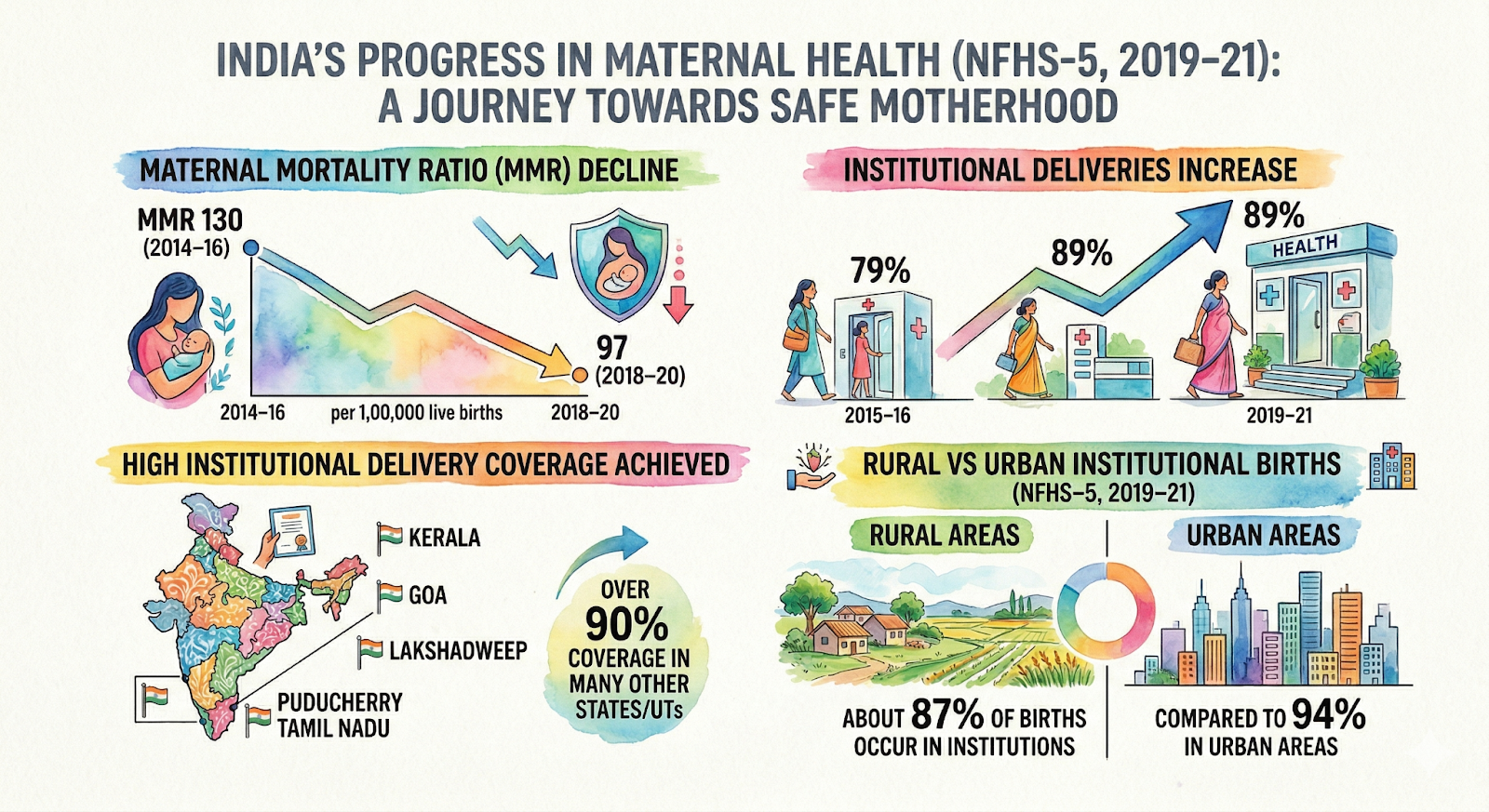
India has achieved notable success in reducing maternal mortality, meeting the National Health Policy target of an MMR below 100 by 2020. However, sustained efforts are essential to meet the SDG target by 2030. Strengthening healthcare infrastructure, expanding access to maternal health services, and addressing socioeconomic and regional disparities will be crucial to further reduce maternal deaths.

 RBI Extends Export Realisation Timeline:...
 India’s Census 2027: World's Largest a...
 US-Israel-Iran Conflict: Iran’s Assert...













 WhatsApp





