
Table of Contents
Context: March 20, 2026, marks the 99th anniversary of the Mahad Satyagraha
About Mahad Satyagraha
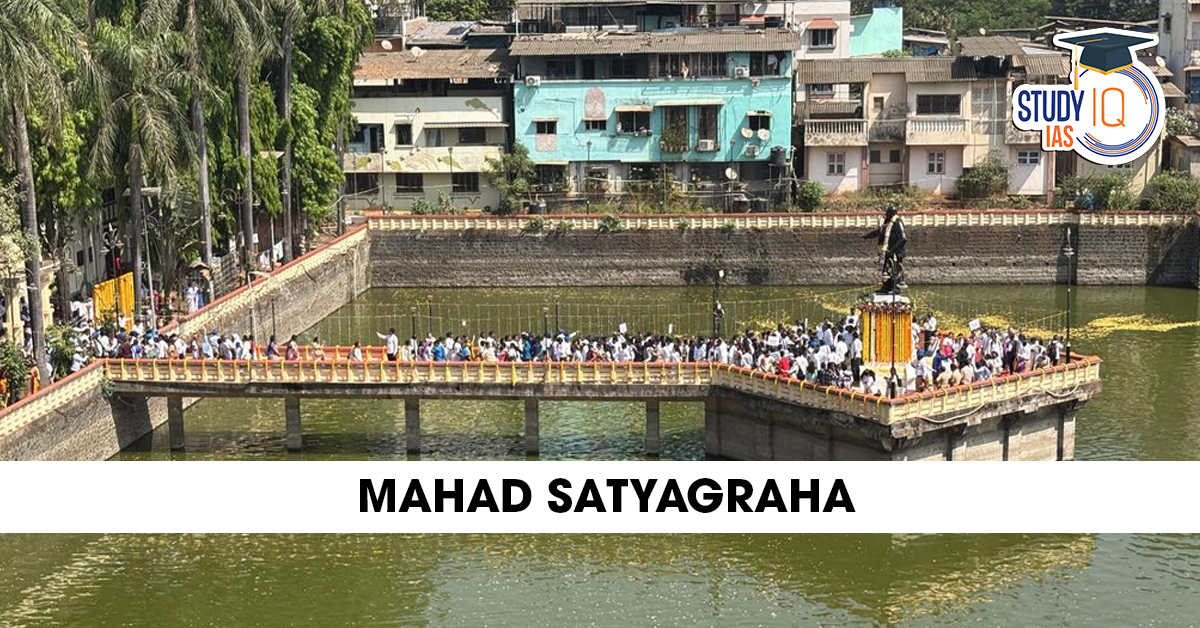
The Mahad Satyagraha (1927) was a landmark social movement led by B. R. Ambedkar to fight against untouchability and caste discrimination in India. It marked one of the earliest organised efforts by Dalits to assert their right to equality and access to public resources.
Key Information of Mahad Satyagraha
- Date: March 20, 1927.
- Location: Mahad, Raigad district, Maharashtra.
- Organised under the aegis of Bahishkrit Hitakarini Sabha (founded 1924).
- The Catalyst: In 1923, the Bole Resolution passed by the Bombay Legislative Council mandated that all public water places and wells be open to “Depressed Classes.” However, the Mahad Municipality failed to implement this due to upper-caste resistance.
- The Act: Ambedkar led thousands of followers to the Chavdar Tank (Tasty Water Tank) and drank water from it, symbolically breaking the “taboo” of untouchability.
- Second Phase: In December 1927, during a follow-up conference at Mahad, the satyagrahis were met with a court injunction.
- The Symbolic Protest: On December 25, 1927, Dr. Ambedkar and his associates burned the Manusmriti, a text they viewed as the theological basis for caste discrimination and inequality.
- Significance: This day is commemorated by many as Manusmriti Dahan Din.
Key Persons Involved
- R.B. More: A local Dalit leader who initially invited Ambedkar to Mahad.
- S.N. Shivtarkar: Secretary of the Bahishkrit Hitakarini Sabha.
- Anantrao Chitre: A CKP (Chandraseniya Kayastha Prabhu) community leader who stood firmly with the movement.
- Bapusaheb Sahasrabuddhe: A Brahmin associate of Ambedkar who participated in the burning of the Manusmriti.
Causes of Mahad Satyagraha
Social Inequality
The Mahad Satyagraha was caused by social inequality, particularly the deep-rooted discrimination based on caste, which prevented the basic rights of people.
Denial of Water Rights
Dalits were denied access to public water sources.
Rise of Dalit Consciousness
Rise of Dalit Consciousness Under Ambedkar’s guidance, those on the fringes of society started to assert their right to equality.
Significance of Mahad Satyagraha
Assertion of Human Rights
It was one of the first movements demanding equal access to public resources.
Beginning of the Dalit Movement
Marked the rise of organised struggle for Dalit rights in India.
Social Reform
Challenged orthodox caste practices and social norms.
Influence on Future Movements
Inspired later movements for:
- Temple entry
- Civil rights
- Social justice

 Punjab–Rajasthan River Dispute: Raviâ€...
 Approved List of Models and Manufacturer...
 RELIEF Scheme, Key Features, Need, Compo...











 WhatsApp





