
Table of Contents
Context: As the bicentenary year of Mahatma Jyotirao Phule begins, his legacy is increasingly viewed not just as social reform but as a foundational “constitutional project” that reimagined Indian society based on equality, dignity, and the redistribution of power.
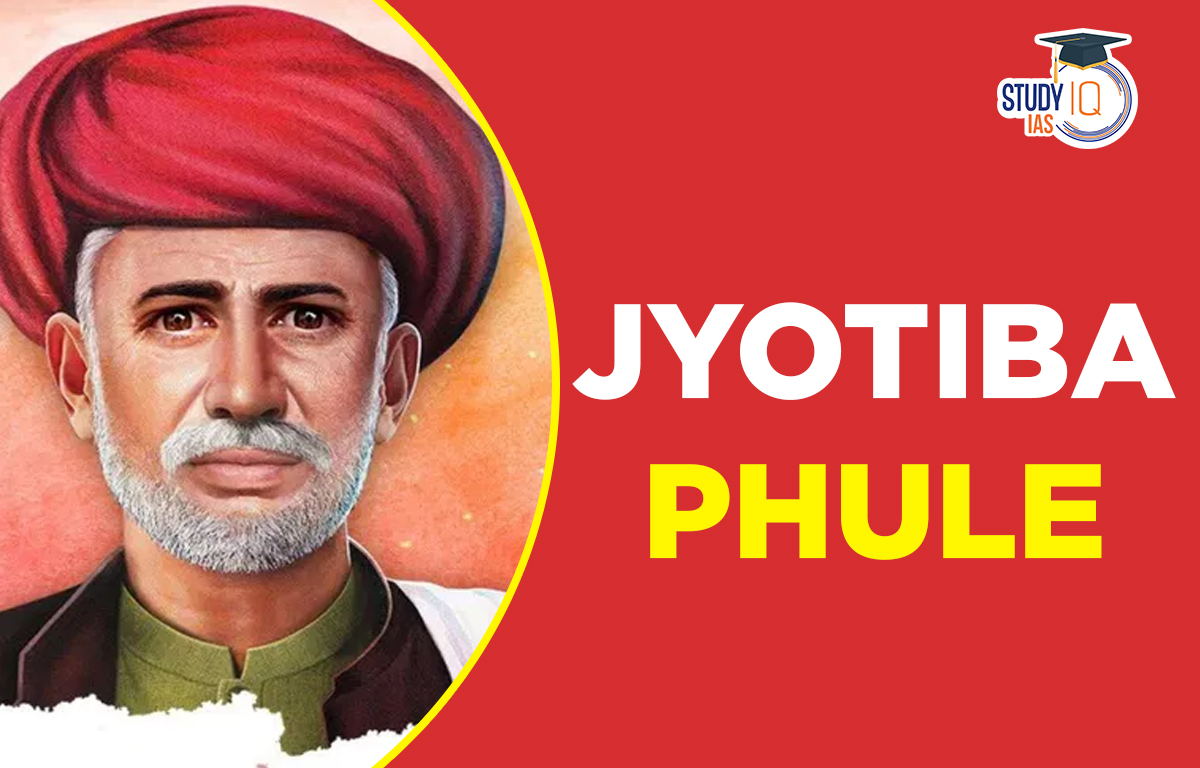
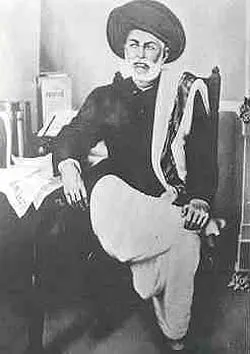
Jyotirao Govindrao Phule, often known as Jyotiba Phule, was a remarkable 19th-century social reformer, thinker, writer, and activist from Maharashtra. He dedicated his life to fighting against social discrimination and caste oppression. Phule’s work emphasized the principles of equality, human dignity, and justice, making him a pivotal figure in India’s social and educational reform movements.
Mahatma Jyotiba Phule Jayanti
- Mahatma Jyotiba Phule was born on 11th April, 1827 in Satara District, Maharashtra, in a Hindu Mali caste family.
- He was a prominent social reformer, thinker and activist in 19th-century India.
- He dedicated his life to fighting against caste-based discrimination and advocating for the rights of marginalised communities.
- Social reformer Vithalrao Krishnaji Vandekar honoured Jyotirao Phule with the title “Mahatma“.
Who was Jyotiba Phule?
In India during the 19th century, Jyotirao “Jyotiba” Govindrao Phule was a well-known social reformer and thinker. Jyotiba Phule served as the movement’s leader against India’s widespread caste system. Phule fought for the rights of peasants and other people from lower castes and revolted against the Brahmins’ rule.
According to Jyotiba Phule’s biographer Dhananjay Keer, Vithalrao Krishnaji Vandekar, a fellow reformer from Bombay, gave Phule the title of Mahatma. Throughout his life, Mahatma Jyotiba Phule battled for the education of girls and was a pioneer for women’s rights in India. He is credited with founding the first Hindu orphanage for unfortunate children.
We’re now on WhatsApp. Click to Join
Background
- Jyotirao Govindrao Phule was a social reformer who worked against social evils like untouchability and the caste system, and was a strong advocate of women’s empowerment and the education of the girl child.
- Born on April 11, 1827, in Katgun, Maharashtra, Jyotirao Govindrao Phule belonged to the Mali (gardener) community, categorised as Shudra in the traditional varna hierarchy.
- He was bestowed with the title of Mahatma on May 11, 1888, by a Maharashtrian social activist, Vithalrao Krishnaji Vandekar.
Jyotiba Phule Biography
Early Life and Education
- Birth: Jyotiba Phule was born on April 11, 1827, in Pune, Maharashtra, into a family belonging to the Mali caste, traditionally involved in gardening.
- Background: As a member of a lower caste, Phule experienced discrimination from a young age. His family was initially a part of the agrarian community, and his father supported his education despite the prevalent biases against educating lower castes.
- Education: Phule attended a Scottish Mission High School in Pune. His exposure to Western ideas on equality and rationalism played a crucial role in shaping his thoughts on social justice.
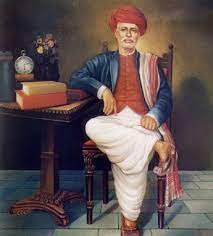
Jyotirao was a bright young man who had to give up on his education at a young age due to his family’s financial situation. He began by working on the family farm and assisting his father. A neighbour who saw the little prodigy’s talent encouraged his father to enrol him in school.
Mahatma Jyotirao Phule enrolled in the Scottish Mission High School in Poona in 1841 and graduated in 1847. He made a Brahmin acquaintance there named Sadashiv Ballal Govande, who remained a close buddy of his throughout his life. Jyotirao married Savitribai when he was just thirteen years old.
Ideology of Mahatma Jyotiba Phule
- A social revolution in Indian society began in 1848 as a result of an incident that motivated Jyotiba to fight against the social injustice of caste discrimination.
- Jyotirao received an invitation to a friend’s wedding who was from a high-caste Brahmin family. But when the bridegroom’s family learned about Jyotiba’s roots, they humiliated and tortured him at the wedding.
- Mahatma Jyotirao fled the ceremony because he was determined to oppose the existing caste system and social constraints.
- He made it his life’s mission to relentlessly push against social majoritarian dominance and worked toward the emancipation of all people who were affected by this social injustice.
- Thomas Paine’s beliefs had a big impact on Jyotirao after reading his well-known book, “The Rights of Man.” He thought that the only way to tackle social ills was to educate women and members of lower castes.
Jyotiba Phule’s Contribution to Education
Savitribai Phule, Jyotiba’s wife, backed his efforts to guarantee women and girls the right to an education. Savitribai, one of the few literate women of her day, learned to read and write from her husband Jyotirao. Jyotiba founded a ladies’ school in 1851 and invited his wife to instruct the students there. Later, he established two additional schools for girls as well as an indigenous school for people from lower castes, namely the Mahars and Mangs.
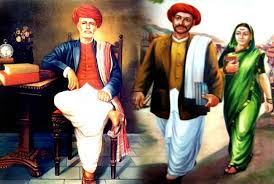
After realising the miserable conditions faced by widows, Jyotiba founded an ashram for young widows and finally came to support the concept of widow remarriage. His era’s society was patriarchal, and women’s status was especially appalling. Female infanticide and child marriage were both common occurrences, with minors occasionally becoming married to much older men.
Before they reached adolescence, these ladies frequently lost their husbands, leaving them without any familial support. Jyotiba, who was distressed by their situation, founded an orphanage in 1854 to protect these poor children from dying at the brutal hands of society.
Jyotiba Phule as Social Reformer
- Pioneer of Women’s Education: Recognising that “lack of education leads to lack of wisdom,” Phule opened India’s first school for girls at Bhide Wada, Pune, in 1848.
- He educated his wife, Savitribai Phule, making her the first female teacher in India.
- Abolition of Untouchability: In a radical act for the 19th century, he opened his own home’s water tank to “untouchables” in 1868, challenging the ritual purity laws that denied marginalised communities access to basic resources.
- Satyashodhak Samaj (1873): He founded the “Truth Seekers’ Society” to provide a platform for Shudras, Ati-Shudras, and Dalits.
- The society focused on rational thinking and rejected the need for priestly intermediaries in religious ceremonies.
- Widow Remarriage & Child Marriage: He was a vocal advocate for widow remarriage and established a home for pregnant widows (Balhatya Pratibandhak Griha) to prevent infanticide and provide them a life of dignity.
Important Literature of Jyotiba Phule
- Gulamgiri (Slavery, 1873): His most famous work, written in the form of a dialogue. He dedicated it to the American movement to abolish slavery, drawing a parallel between the plight of Black Americans and the oppressed castes in India.
- Shetkaryacha Asud (The Cultivator’s Whipcord, 1883): A scathing critique of how the alliance of the bureaucracy and the priestly class exploited the illiterate peasantry.
- Sarvajanik Satya Dharma (Universal Religion of Truth): Published posthumously, this book outlined his vision of a world where all humans are equal, regardless of birth or gender, under a single “Creator.”
Jyotiba Phule and Satya Shodhak Samaj
Jyotiba Phule founded the Satya Shodhak Samaj in the year 1873. (Society of Seekers of Truth). He conducted a methodical deconstruction of historical ideas and beliefs before rebuilding one that promoted equality. The Hindus’ ancient holy texts, the Vedas, were harshly denounced by Jyotirao.
He used several other ancient writings to trace the origins of Brahmanism. He accused the Brahmins of creating cruel and exploitative regulations to preserve their social supremacy by repressing the “Shudras” and “atishudras” in society. The Satya Shodhak Samaj’s mission was to rid society of caste prejudice and free the disadvantaged lower caste people from the stigmatisation brought on by the Brahmins.
The word “Dalits” was initially used by Jyotirao Phule to refer to everyone whom the Brahmins regarded as belonging to a lower caste and being untouchable. Everyone was welcome to join the Samaj, regardless of caste or class.
According to some documented accounts, they even encouraged Jews to join the Samaj. By 1876, the “Satya Shodhak Samaj” had 316 members. Jyotirao decided to build a communal bathing tank outside his home in 1868 to demonstrate his tolerant attitude toward all people and his desire to eat with anyone, regardless of caste.
Jyotiba Phule and Savitribai Phule
Jyotiba Phule and Savitribai Phule, a transformative Indian couple, were pivotal in the fight for women’s empowerment and education. As India’s first female teacher and a pioneering social reformer, Savitribai Phule courageously established the first school for girls, breaking societal norms.
Together, they confronted caste and gender discrimination, with Savitribai Phule leading efforts to expand educational opportunities for women amidst opposition. Their united front marked a revolutionary contribution to social reform in India, fostering change through education and advocacy.
First Girls’ School in India (1848): Founded with wife Savitribai Phule. He also opened night schools for Workers and Farmers.
Check Out: Savitribai Phule Biography
Jyotiba Phule Death Anniversary
Jyotiba Phule, a prominent social reformer, passed away on 28 November 1890. He was a pioneer of social justice, women’s empowerment, and education for the underprivileged in India. Phule, along with his wife Savitribai Phule, worked tirelessly to establish schools for girls and Dalits, challenging caste-based discrimination.
He is remembered for founding the Satyashodhak Samaj (Society of Seekers of Truth) in 1873 to promote equality and eradicate social evils like untouchability. Phule’s efforts laid the foundation for modern social reform movements in India. His death anniversary is observed to honour his contributions to creating a more equitable and inclusive society.
Legacy of Jyotiba Phule
Phule’s work laid the groundwork for social reform movements in India and has continued to inspire generations of reformers and leaders.
- Dalit Rights and Social Justice Movements: Phule is hailed as a champion of Dalit rights, and his teachings have influenced the Dalit movement and leaders like Dr. B.R. Ambedkar.
- Women’s Empowerment: Phule and Savitribai’s work for women’s education and rights is acknowledged as the foundation of women’s empowerment movements in India.
- Educational Reform: His vision for inclusive education led to the establishment of schools and educational programs for marginalized communities, setting a precedent for social inclusivity in education.
Phule’s Thought as a Constitutional Project
Long before the drafting of the Indian Constitution, Phule’s work functioned as a “constitutional project”, a structural reimagining of power and rights in India.
- Intellectual Foundations of Natural Rights: Influenced by Thomas Paine’s Rights of Man (1847), Phule viewed a constitution not merely as a legal document, but as a framework to ensure “the general happiness” and protect the natural rights of every individual.
- Universal Rights and Institutional Efforts: He moved beyond rhetoric to create structural responses to oppression, including the establishment of schools for women and opening public wells to those deemed “untouchable.”
- The Theory of Reinforcing Injustices: Phule was among the first to argue that social hierarchy, economic exploitation, and state indifference were mutually reinforcing.
- He realised that a marginalised farmer could not educate his children because the economic system was rigged to ensure his survival was always at stake.
- State Responsibility (Hunter Commission, 1882): In his submissions to the Education Commission, he demanded a proactive state role:
- Compulsory primary education for all children up to the age of 12.
- Targeted scholarships for communities where education had historically made no progress.
- Incentivizing female literacy through liberal government measures.
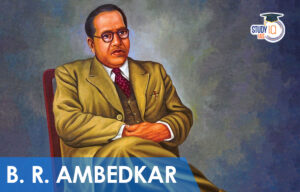
Phule’s vision was the direct precursor to the work of B.R. Ambedkar, who regarded Phule as one of his three “Gurus.” The modern constitutional guarantees, such as the Abolition of Untouchability (Article 17), Fundamental Rights, and affirmative action, are the concrete legal expressions of Phule’s 19th-century vision.

 BR Ambedkar: Biography, Contributions an...
 Veer Savarkar Biography: Ideology, Legac...
 Prithviraj Chauhan History: Biography, B...













 WhatsApp





