Table of Contents
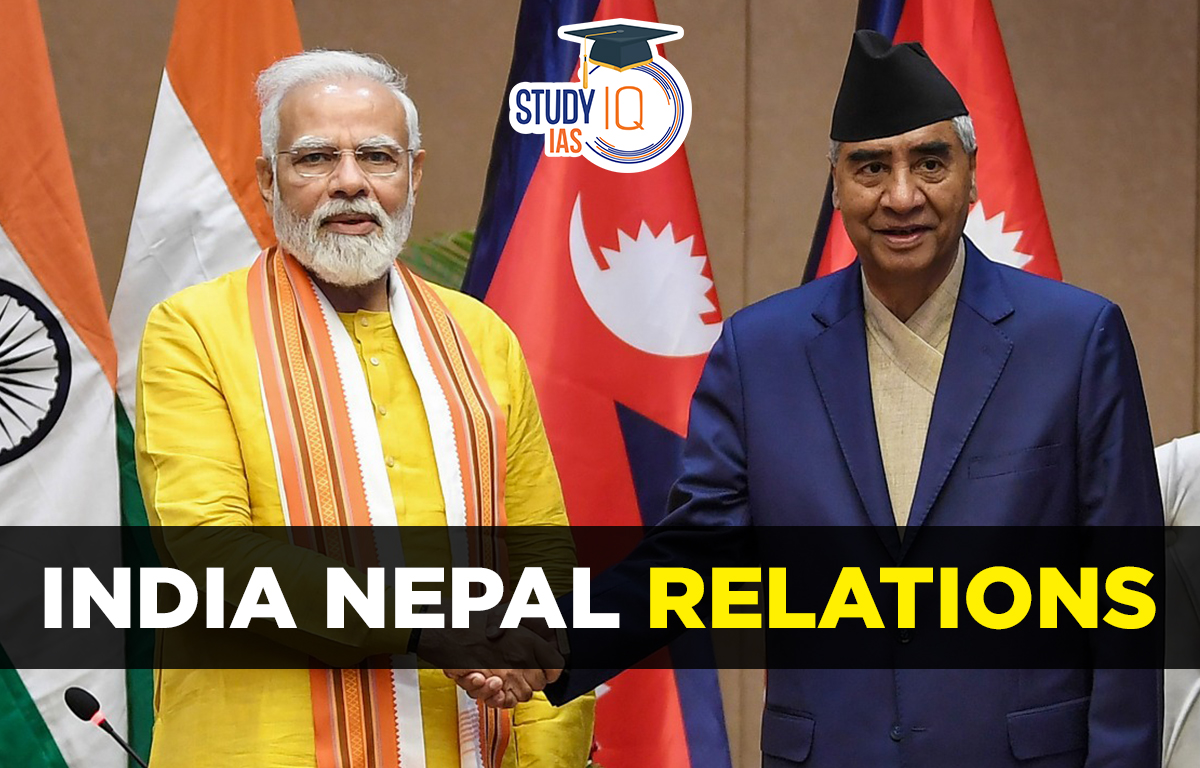
Context: Following the election of Nepal’s new Prime Minister Balendra “Balen” Shah (2026), both India and Nepal expressed willingness to strengthen bilateral ties (open border, deep cultural links, major trade dependence).
India Nepal Relations: Why India Should Invite Balen Shah
- Diplomacy: Early invitation signals India’s commitment to the “Neighbourhood First policy” (India’s primary regional diplomacy doctrine).
- Political Transition: Engaging new leadership helps India understand Nepal’s emerging Gen-Z political movement and evolving foreign policy orientation.
- Economic Interdependence: India remains Nepal’s largest trade partner and transit route (Nepal is landlocked; the majority of trade via Indian ports).
- Energy Cooperation: Nepal’s hydropower exports depend on India-led regional energy grid projects (India agreed to import 10,000 MW of power from Nepal over 10 years).
- Strategic Balance: Early engagement prevents strategic drift towards China or other external powers.
- Infrastructure Support: India can assist Nepal in overflight rights for new airports and energy market access (key Nepali demand).
- Crisis Assistance: Nepal may need help dealing with fuel and fertiliser disruptions from the West Asia conflict.
- People Links: Strong societal ties (open border; millions of Nepalis live/work in India).
- Economic Stability: Nepal’s economy relies heavily on remittances and tourism (≈14% population working abroad; ~3.5 million workers).
- Trust Building: An invitation would help address past tensions (2015 blockade perception, constitutional issues, border disputes).
Significance of India-Nepal Ties
Economic significance
- Trade: Nepal shares a border with 5 Indian states. Hence, an important point of trade and economic exchange.
- Energy security: India and Nepal share many transboundary Himalayan rivers with huge hydropower potential.
- Foreign exchange: Remittances sent from India are one of the major sources of foreign exchange.
Strategic significance
- Buffer state: Nepal acts as a buffer state between India and China. It prevents any future chances of aggression.
- Internal security: Cooperation of Nepal is necessary for curbing cross-border smuggling of weapons, fake currency and narcotics.
Cultural significance
- Pilgrimage sites: Many Hindu and Buddhist religious sites are in Nepal, making it an important pilgrimage site for Indian citizens.
- Common religion: The majority of citizens in India and Nepal are Hindus, forming a major civilisational link between the two nations.
Diaspora: Nepali diaspora in India and the Indian workforce in Nepal act as a people-to-people link.
Areas of Cooperation between India and Nepal
| Areas | Details |
| Trade and Economy |
|
| Connectivity |
|
| Defence cooperation |
|
| Cultural cooperation |
|
| Energy cooperation |
|
| Assistance |
|
| Multilateral Partnership |
Major Challenges in India–Nepal Relations
Relations between India and Nepal are historically close, based on cultural, economic, and geographical ties. However, several issues have created periodic tensions between the two neighbours.
Border Disputes
- Disagreements over territories like Kalapani, Lipulekh, and Susta
- Map controversies and differing interpretations of the boundary
Check here: India-Nepal Border Disputes in detail
Political Sensitivities and Trust Deficit
- Perception in Nepal of Indian interference in internal affairs
- Events like the 2015 blockade created resentment
- Frequent changes in Nepal’s political leadership affect continuity
China Factor
- Increasing influence of China in Nepal through infrastructure and investments
- Strategic competition between India and China in the region
Water Sharing and Hydropower Issues
- Disputes over river projects like the Kosi River and the Gandak River
- Concerns over unequal benefits and flood management
Open Border Management
- While the open border promotes trade and movement, it also raises issues like:
- Illegal trade
- Human trafficking
- Security concerns
Trade Imbalance
- Nepal has a large trade deficit with India
- Overdependence on Indian imports creates economic concerns
Treaty Concerns
- Debate over revising the India-Nepal Treaty of Peace and Friendship (1950)
- Nepal views it as outdated and unequal
Nationalism and Public Sentiment
- Rise of anti-India sentiment in Nepal at times
- Political leaders often use nationalism in domestic politics
Conclusion
India–Nepal relations are rooted in deep historical ties, but challenges like border disputes, political mistrust, and external influences need careful management. Strengthening mutual trust, respecting sovereignty, and enhancing economic cooperation are key to improving bilateral relations.

 War Powers Act: Origin, Purpose, Provisi...
 China–Pakistan Space Cooperation: Proj...
 Strait of Hormuz Crisis: Causes, History...














 WhatsApp