
Table of Contents
Incarceration Without Trial as Punishment: Undertrial Detention, Constitutional Safeguards, and Judicial Intervention in India
Context
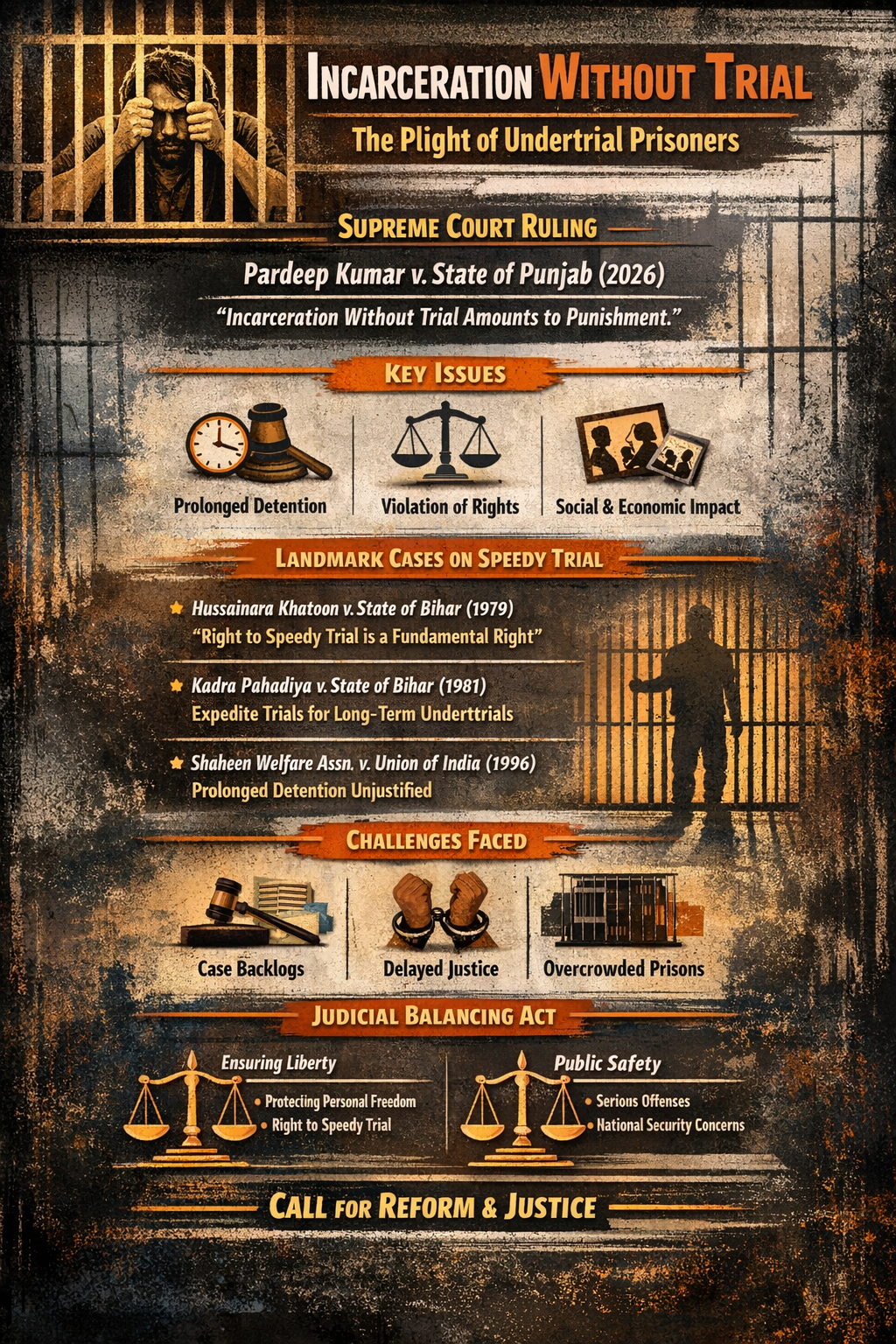
The problem of prolonged undertrial detention undermines constitutional democracy, eliciting critical issues regarding personal liberty, due process, and the rule of law. The recent ruling by the Supreme Court of India in Pardeep Kumar v State of Punjab reaffirms a fundamental principle: incarceration without trial is punishment. This observation indicates the judiciary’s growing apprehension about systemic delays in criminal cases and the resulting infringement on the rights of undertrial prisoners.
The Court’s decision not only granted bail to an accused who had been in detention for nearly two years without trial but also reiterated the constitutional requirement for a speedy trial as stipulated in Article 21. This case is part of a larger judicial discussion over the situation of undertrial prisoners in India.

Factual Background of the Case
The case was against an appellant, Pardeep Kumar, who was arrested on April 13, 2024, on charges including extortion, attempted murder, criminal intimidation, criminal conspiracy, and violations of the Arms Act. Notwithstanding the gravity of the allegations, the trial had yet to begin, even after almost two years of imprisonment.
A bench consisting of Justice Dipankar Datta and Justice Prasanna B Varale reviewed the appeal against the Punjab and Haryana High Court’s ruling dated July 11, 2025, which denied bail.
The Supreme Court noted that the prosecution aimed to examine 23 witnesses, but none had been examined by the time of the hearing. The Court observed that the trial was unlikely to commence or conclude in the near future. Upon comprehensive evaluation, the court concluded that ongoing imprisonment was unwarranted and granted bail, contingent upon conditions set by the trial court.
The Court’s remark that “incarceration without trial constitutes punishment” emphasises the notion that pre-trial detention must not serve as a replacement for conviction.
Concept of Undertrial Prisoners
Undertrial prisoners are those accused of a crime who are in judicial custody while awaiting trial or the conclusion of their trial. They have not been adjudicated guilty and are deemed innocent within the criminal judicial framework.
India possesses one of the largest populations of undertrial prisoners globally. A substantial percentage of prison inmates are those awaiting trial, frequently for prolonged durations. This circumstance elicits significant apprehensions regarding:
- Infringement of fundamental rights
- Inadequacies within the criminal justice system
- Socio-economic inequalities in access to justice
Constitutional Structure and Right to Personal Liberty
Article 21 and the Right to Speedy Trial
Article 21 of the Constitution ensures the right to life and personal liberty, which has been broadly construed by the judiciary to encompass the right to a speedy trial. Extended detention without trial constitutes a breach of fundamental rights.
The Supreme Court has always maintained that trial delays cannot warrant perpetual imprisonment. The acknowledgement of the right to a speedy trial has revolutionised the criminal process by mandating the State to guarantee speedy justice.
Presumption of Innocence
A core tenet of criminal law is that an accused person is presumed innocent until proven guilty. Prolonged detention contravenes this principle by essentially penalising persons before the establishment of their guilt.
Judicial Perspective on Bail and Undertrial Detention
The judiciary has consistently asserted that bail is the rule and jail is an exception. The Supreme Court has warned against the routine rejection of bail, especially in instances of protracted trial delays.
The Court observed that continued incarceration was unwarranted due to the lack of trial progress. This indicates a broader judicial tendency to favour personal liberty over prolonged imprisonment.
Systemic Factors Contributing to Prolonged Detention
The issue of pretrial detention stems from systemic inadequacies within the criminal justice framework. These encompass:
- Prolonged delays in the investigation and submission of charge sheets
- Overloaded judiciary and accumulation of cases
- Insufficient infrastructure for executing trials
- Repeated postponements and procedural hindrances
The Supreme Court has recognised these issues and underscored the necessity for structural reforms.
Judicial Opinion on Delay and Liberty
The Supreme Court has repeatedly emphasised the detrimental effects of delays on personal liberty. In 2024, when granting bail to Senthil Balaji, the Court noted that rigorous bail conditions under statutes such as the Prevention of Money Laundering Act, Unlawful Activities (Prevention) Act, and Narcotic Drugs and Psychotropic Substances Act cannot be employed to rationalise indefinite incarceration.
The Court additionally scrutinised the duration for which prisoners may be detained without trial, underscoring that the State must provide sufficient infrastructure for speedy proceedings.
Delays in Bail Determination
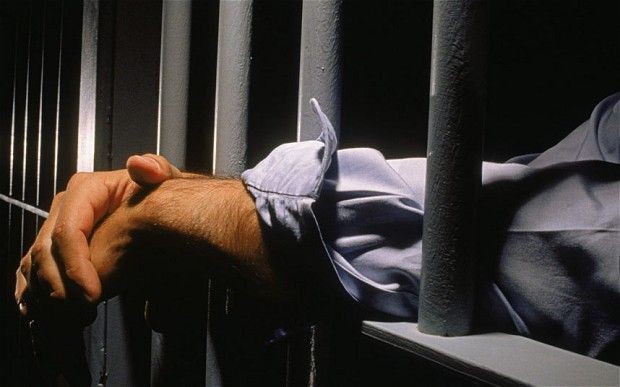
The judiciary has also tackled delays in the resolution of bail applications. Bail applications should typically be resolved within two months, as extended delays compromise personal liberty.
The Court has, in numerous instances, admonished subordinate courts for their lack of promptness in addressing bail applications, emphasising the necessity for sensitivity in issues about personal liberty.
Restrictions on the Principle of Delay
The Court has underscored the significance of speedy trials, yet it has also specified that mere delay does not inherently grant an accused the right to bail. In instances like those of Umar Khalid and Sharjeel Imam, the Court determined that the substance and gravity of the allegations must also be taken into account.
Significant Judicial Precedents on Speedy Trials and Rights of Undertrials
The acknowledgement of the right to a speedy trial as a fundamental aspect of Article 21 has been influenced by numerous major decisions of the Supreme Court of India. One of the most notable cases is Hussainara Khatoon v State of Bihar, in which the Court examined the circumstances of undertrial inmates detained for prolonged periods without trial. The ruling represented a pivotal moment in Indian criminal law, as it affirmed that the right to a quick trial is a basic right inherent in Article 21. The Court mandated the release of certain undertrial detainees and underscored the State’s duty to guarantee prompt justice.
The case of Kadra Pahadiya v State of Bihar is significant, as the Court reaffirmed that delays in trial infringe upon fundamental rights and mandated the swift resolution of matters concerning undertrial prisoners. These decisions together determined that prolonged detention without trial contravenes the norms of equity and justice.
In Supreme Court Legal Aid Committee v Union of India, the Court reinforced the rights of undertrial prisoners by mandating the release of those who had been incarcerated for protracted durations under harsh legislation. This ruling emphasised the necessity of reconciling national security interests with personal freedoms.
The jurisprudence was subsequently refined in Shaheen Welfare Association v Union of India, when the Court examined delays in trials under specific laws and determined that prolonged incarceration without trial is unjust, even in instances of significant offences. These precedents collectively establish the principle that detention without trial constitutes punishment.
Societal Implications of Prolonged Undertrial Detention
Undertrial detention has significant ramifications for society. Individuals detained for protracted durations without conviction may encounter significant social, economic, and psychological repercussions. The loss of employment, disruption of familial dynamics, and stigma linked to jail can exert enduring impacts on individuals and their communities.
The occurrence of undertrial detention indicates fundamental disparities within the criminal justice system. Marginalised groups, particularly economically disadvantaged individuals, are disproportionately impacted due to restricted access to legal representation and financial resources. This intensifies existing socioeconomic inequalities and undermines the notion of legal equality.
The effect on the correctional system is also substantial. Prison overcrowding is primarily due to the substantial population of undertrial prisoners, resulting in degraded living conditions and heightened resource strain. This circumstance impacts the welfare of convicts and presents difficulties for prison administration.
Institutional Obstacles and Procrastination in Criminal Justice
The continuation of undertrial detention is intricately connected to systemic inefficiencies within the criminal justice framework. Indian courts are encumbered by a substantial backlog of cases, leading to protracted delays in trial proceedings. Investigative agencies sometimes encounter resource limitations, resulting in postponements in the submission of chargesheets and the presentation of evidence.
The Supreme Court has consistently emphasised the problem of insufficient infrastructure for trial proceedings, especially in cases handled by specialised authorities like the National Investigation Agency. In July 2025, the Court noted that if the State does not establish sufficient infrastructure for speedy trials, courts may be obligated to give bail to undertrial prisoners.
The Court’s rhetorical question, “For how long can suspects be held in indefinite custody?” underscores the imperative of resolving these systemic concerns. In the absence of extensive reforms, the issue of undertrial imprisonment is expected to endure.
Bail Jurisprudence and the Principle of Liberty
The notion that “bail is the rule and jail is the exception“ has been fundamental to Indian criminal law. The Supreme Court has consistently underscored that pre-trial detention must be employed judiciously and solely when essential to guarantee the accused’s presence or to avert interference with the investigation.
The Court has recognised the necessity for elevated standards for granting bail in the face of tough regulations concerning terrorism and economic offences. Nonetheless, it has also warned against the exploitation of these powers to rationalise extended imprisonment. The 2024 insight that strict bail restrictions cannot serve as a mechanism to detain an accused without trial demonstrates a judicious approach that emphasises personal liberty while acknowledging valid law enforcement concerns.
Reconciling Personal Liberty with Societal Welfare
The judiciary has actively protected the rights of undertrial prisoners while acknowledging the necessity of balancing individual liberty with public interest. In instances of grave offences, the substance of the allegations and their potential societal consequences must be evaluated.
The decision of the Court in the instances of Umar Khalid and Sharjeel Imam exemplifies this intricate methodology. The Court asserted that a delay in trial does not serve as an automatic justification for bail, underscoring the necessity of assessing each case based on its own merits.
This equitable method guarantees that the principle of an expedited trial does not compromise the administration of justice, especially in cases involving serious offences.
Conclusion
The decision of the Supreme Court in Pardeep Kumar v State of Punjab reaffirms the essential tenets of personal liberty and due process. The Court has underscored a significant issue by acknowledging that prolonged undertrial detention constitutes punishment, impacting thousands of individuals nationwide.
The extensive jurisprudence regarding undertrial rights demonstrates a dedication to ensuring that justice is administered both promptly and fairly. Nonetheless, attaining this objective necessitates continuous endeavours throughout all governmental branches.
The safeguarding of undertrial inmates’ rights is not just a legal duty but also a moral obligation, crucial for maintaining the rule of law and the principles of constitutional democracy.

 Judicial Concerns in Vanashakti v. Union...
 Trial by Social Media: Public Shaming, D...










 WhatsApp





