
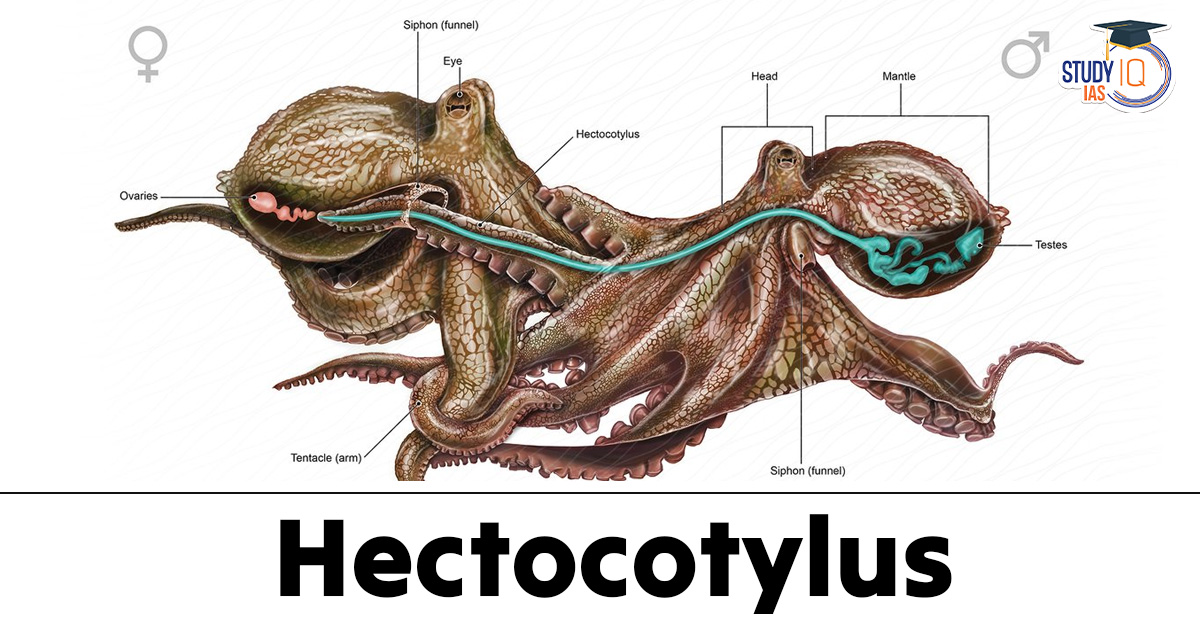
Context: New research shows Hectocotylus is more than just a sperm delivery tool.
About Hectocotylus
- Hectocotylus is a male octopus’s specialised arm.
- Scientists previously viewed the hectocotylus primarily as a mechanical appendage for gamete delivery.
- The new study shows the arm specifically detects progesterone, a hormone present in the female octopus’s skin and reproductive tract.
- Researchers identified a specialised receptor called CRT1 on the arm that triggers mating behaviour.
About Octopuses
- An octopus is a cephalopod mollusk, belonging to the same broader family as clams and snails, but with a highly evolved nervous system and no shell.
- They do not have “tentacles” (which usually have suckers only at the tips). Octopus arms have suckers along their entire length.
- Blue Blood: Their blood is copper-based and blue. This helps them transport oxygen in cold, deep water.
- Three Hearts: Two hearts pump blood to the gills. The third heart circulates it to the rest of the body.
- Decentralized Brain: Two-thirds of an octopus’s neurons are in its arms. Each arm can “think” and act on its own.
- They use chromatophores to change colour and texture in milliseconds.

 Species in News for UPSC Prelims 2026: C...
 What is Manche Shlok? Meaning, Origin an...
 India Facing Groundwater Crisis: Causes,...













 WhatsApp





