
Table of Contents
Context
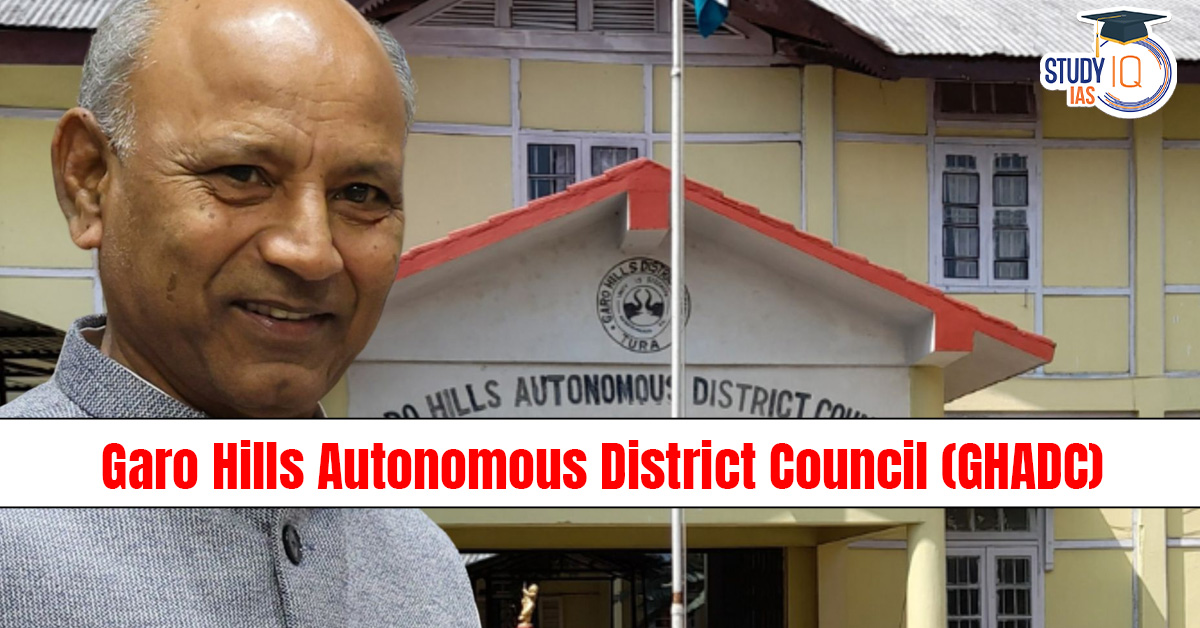
The Garo Hills Autonomous District Council (GHADC) has amended its membership rules to make it mandatory for candidates to possess a valid Scheduled Tribe certificate in order to contest elections to the council.
Garo Hills Autonomous District Council (GHADC): Background
- About the council: The Garo Hills Autonomous District Council is a local self-governing body created to protect the rights and interests of tribal communities in the Garo Hills region.
- Mixed population context: The region has both tribal and non-tribal residents, especially in border areas, which has led to disputes over electoral eligibility.
Tensions and unrest
- Disagreements between tribal and non-tribal groups led to protests and law-and-order concerns.
- Scheduled council elections were postponed, and the council’s term was extended.
- The earlier executive head resigned, and new leadership facilitated the passage of the amendment.
Key Provisions of the Amendment
- ST certificate made mandatory: Only individuals belonging to recognised Scheduled Tribes can now contest elections to the council.
- Exclusion of non-tribals: Non-tribal residents, even if permanent inhabitants, are no longer eligible to become members.
Rationale
- Protection of tribal interests: The amendment aims to ensure that governance in autonomous councils remains in the hands of indigenous tribal communities.
- Long-pending demand: Tribal groups had been demanding such a provision for decades to preserve their political representation.
About Autonomous District Councils (ADCs)
|
Details About Autonomous District Councils (ADCs) |
Constitutional Basis
Composition and Tenure
Legislative Functions
Administrative Functions
Financial Powers
|
|
Read More Notes |
|
| Environment Notes | Art and Culture Notes |
| Science and Tech | History Notes |
| Geography Notes | Indian Polity Notes |
| General Knowledge | International Relation |
|
Explore StudyIQ Courses |
|

 CAPF Bill 2026: Formalising IPS Deputati...
 Chhattisgarh Freedom of Religion Bill 20...
 Important Reports on Indian Federalism: ...













 WhatsApp





