
Table of Contents
Context: A recent study published in the journal Clean Water (March 2026) reported that extracellular RNA (exRNA) from bacteria can persist in disinfected drinking water, helping scientists understand bacterial survival strategies and improve water disinfection methods.
About Extracellular RNA (exRNA)
- Definition: RNA present outside cells in body fluids (blood, saliva, urine, CSF).
- Discovery: Earlier thought unstable outside cells; later found actively exported for signalling (exRNA research accelerated after 2010 NIH exRNA initiative).
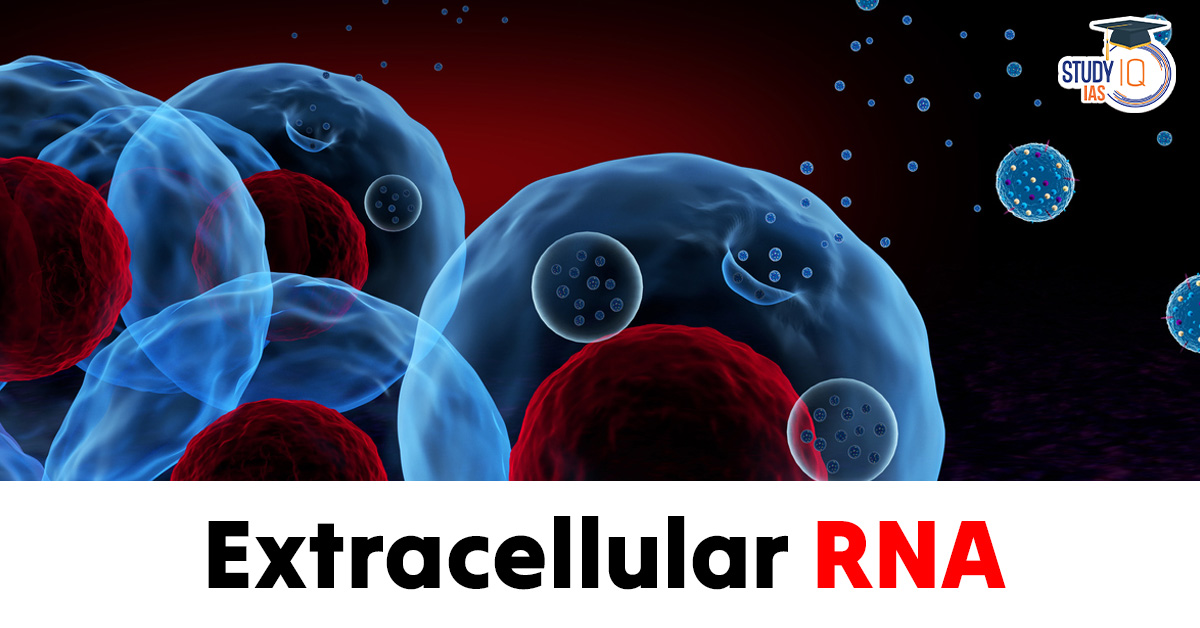
- Transport: Protected in exosomes/microvesicles/protein complexes (prevents RNase degradation).
- Biological Role: Acts as a molecular signalling system enabling communication between distant cells.
- Packaging: Transported in protective carriers such as extracellular vesicles (exosomes, microvesicles) or bound to proteins/lipoproteins to prevent enzymatic degradation.
- Stability: Encapsulation protects RNA from RNase enzymes, allowing it to remain stable in extracellular environments.
Types of Extracellular RNA
- Messenger RNA (mRNA): Carries genetic instructions for protein synthesis.
- MicroRNA (miRNA): Short RNA molecules regulating gene expression and cellular processes.
- Long Non-coding RNA (lncRNA): Involved in gene regulation, epigenetic control and cellular signalling.
- Small interfering RNA (siRNA): Participates in RNA interference and gene silencing mechanisms.
Functions of exRNA
- Cell-to-Cell Communication: Transfers genetic signals between cells, influencing cellular behaviour.
- Immune Coordination: Regulates immune responses and inflammation signalling.
- Tissue Repair: Helps coordinate wound healing and tissue regeneration processes.
- Developmental Regulation: Controls gene activation during embryonic development and differentiation.
- Pathogenic Signalling: Cancer cells release exRNA to promote tumour growth, metastasis and immune evasion
Applications of exRNA
- Medicine: Used as biomarkers in liquid biopsy to detect diseases such as cancer, cardiovascular disorders and neurological conditions.
- Diagnostics: Blood or body-fluid analysis of exRNA enables non-invasive disease detection and early diagnosis.
- Therapeutics: Extracellular vesicles carrying RNA are explored as drug-delivery platforms for gene therapy and RNA medicines.
- Immunology: Helps study immune signalling, inflammation and tissue repair mechanisms.
- Cancer Research: Cancer cells release exRNA to promote tumour growth, metastasis and immune evasion, aiding cancer studies.
- Environmental Science: exRNA in water helps detect microbial activity and resistance strategies in bacteria.
- Water Treatment: Studying bacterial exRNA helps design better disinfectants and water purification strategies.

 Jungle Cats: Habitat, Characteristics an...
 Niacin (Vitamin B3) Supplement: Benefits...
 EV Charging Infrastructure: Background, ...













 WhatsApp





