
Table of Contents
India celebrates two major national festivals every year – Independence Day on 15 August and Republic Day on 26 January. Though both are deeply patriotic and historically important, their meanings and purposes are different. Independence Day marks freedom from foreign rule, while Republic Day marks the beginning of self-governance under the Constitution.
Understanding the difference between Independence Day and Republic Day is essential for students, competitive exams, and every citizen who wishes to understand India’s democratic journey.
Historical Context of Independence Day and Republic Day
Independence Day (August 15)
India gained independence from British rule on August 15, 1947. This date marks the end of nearly two centuries of colonial domination and the beginning of a new era of self-governance. The struggle for independence was marked by relentless efforts and sacrifices by numerous freedom fighters, including Mahatma Gandhi, Jawaharlal Nehru, Subhas Chandra Bose, and many others. Independence Day thus serves as a tribute to their valor and the spirit of resistance that led to the nation’s liberation.
Republic Day (January 26):
While India achieved independence in 1947, it was not yet a republic. The Indian Constitution was adopted by the Constituent Assembly on November 26, 1949, and came into effect on January 26, 1950. This date marks the transition of India from a British Dominion to a republic governed by a democratically elected body and a written constitution. Republic Day celebrates this pivotal transformation and the values enshrined in the Constitution, which include justice, liberty, equality, and fraternity.
Difference Between Independence Day and Republic Day
| Independence Day (August 15) | Republic Day (January 26) | |
|---|---|---|
| Historical Significance | Marks India’s independence from British rule in 1947. | Celebrates the adoption of the Indian Constitution in 1950. |
| Year of Celebration | First celebrated in 1947. | First celebrated in 1950. |
| Key Figures | Jawaharlal Nehru, Mahatma Gandhi, Bhagat Singh, etc. | Dr. B.R. Ambedkar, Constituent Assembly members. |
| Flag Hoisting | Prime Minister hoists the flag at the Red Fort. | President unfurls the flag at Rajpath. |
| Symbolism | Represents freedom from colonial rule. | Symbolizes democratic governance and the Constitution. |
| Main Activities | Flag hoisting, military parade, cultural programs, kite flying. | Republic Day parade, military displays, cultural performances. |
| Significance of Date | Commemorates the end of British rule. | Marks the implementation of the Constitution. |
| Ceremonial Location | Red Fort, Delhi. | Rajpath, Delhi. |
| Special Features | Kites flying, patriotic songs, and speeches. | Military and cultural parades, awards, and foreign dignitary presence. |
| Traditional Emblem | Indian flag with kites in the sky. | Military and cultural displays at Rajpath. |
Basis of Celebration
- Independence Day: This day commemorates India’s freedom from British rule. It is a celebration of the nation’s sovereignty and the sacrifices made by freedom fighters. The emphasis is on national pride and the historical struggle for independence.
- Republic Day: This day celebrates the adoption of the Indian Constitution and the establishment of India as a republic. It highlights the country’s commitment to democratic principles and the rule of law.
Flag Hoisting Ceremony
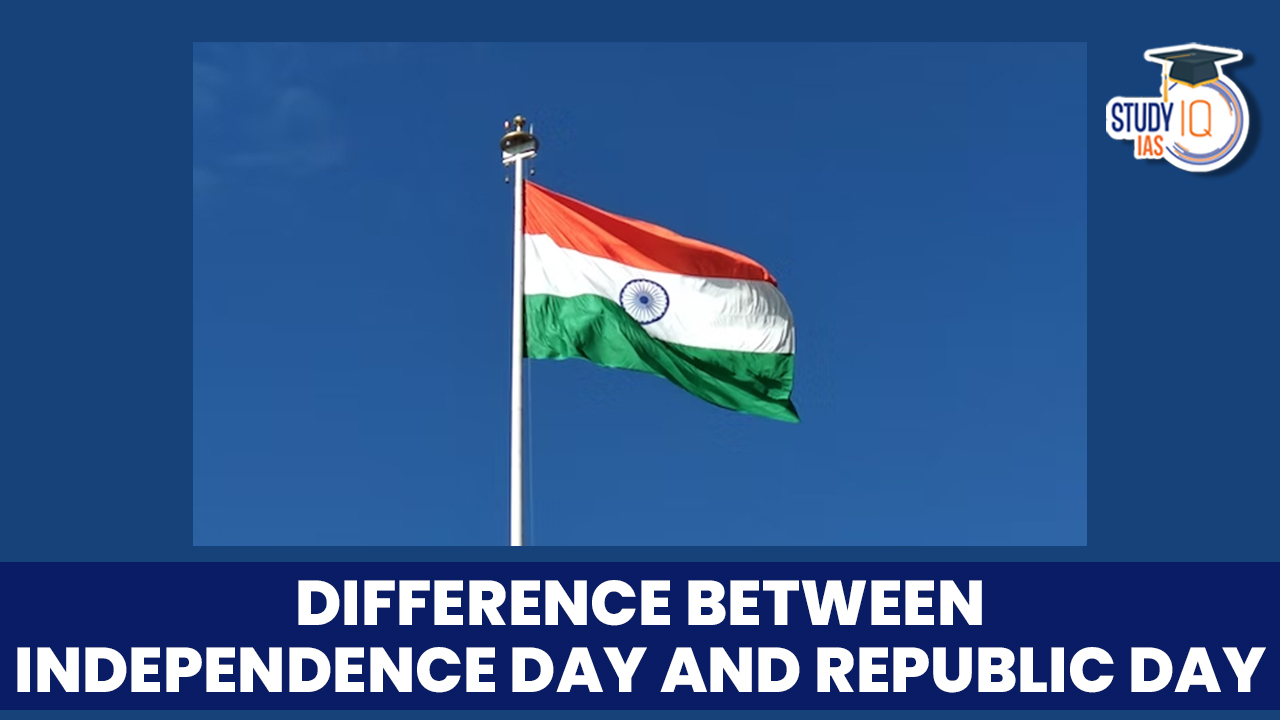
- Independence Day: The Prime Minister hoists the national flag at the Red Fort in Delhi. The flag is raised from the bottom of the pole and is an iconic symbol of freedom.
- Republic Day: The President of India unfurls the flag at Rajpath in Delhi. The flag is pulled from the top of the pole, symbolizing the nation’s democratic governance and the implementation of the Constitution.
Significance and Symbolism
- Independence Day: Symbolizes the end of colonial rule and the nation’s emergence as a free state. The day is associated with the sacrifices of freedom fighters and the struggle for independence. The flying of kites, particularly in the tricolors of the Indian flag, is a traditional activity that represents freedom.
- Republic Day: Highlights the significance of the Indian Constitution and the principles of democracy. It features military parades, cultural performances, and displays of national pride and unity.
Celebrations
Independence Day
- Flag Hoisting: The Prime Minister hoists the flag at the Red Fort, followed by a speech reflecting on the country’s achievements and future goals.
- Military Parade: Includes a display of India’s military strength and cultural diversity. Performances by various states and union territories showcase the nation’s rich heritage.
- Cultural Events: Schools, colleges, and communities organize various programs, including music, dance, and patriotic performances. Kite flying is a popular tradition.
Republic Day
- Republic Day Parade: Held at Rajpath, the parade features military and cultural displays, including performances by the Indian Army, Navy, and Air Force. The President of India presides over the event, which often includes a foreign dignitary as a guest of honor.
- Awards and Honors: The Padma Awards and gallantry awards are presented to individuals who have made significant contributions to society and the nation.
- Cultural Programs: Schools and colleges participate in flag-hoisting ceremonies and cultural performances. A special ceremony at India Gate honors martyrs, and patriotic films are broadcasted on television.
Republic vs Independence: The Deeper Meaning
Independence without a Constitution would be chaos.
Republic without independence would be meaningless.
Together they represent:
-
Freedom + Responsibility
-
Power + Accountability
-
Rights + Duties

 FIFA World Cup Winners List 1930-2026: S...
 List of Chief Ministers of Tamilnadu (19...
 Districts of Kerala: Complete List, Map ...










 WhatsApp





