
Table of Contents
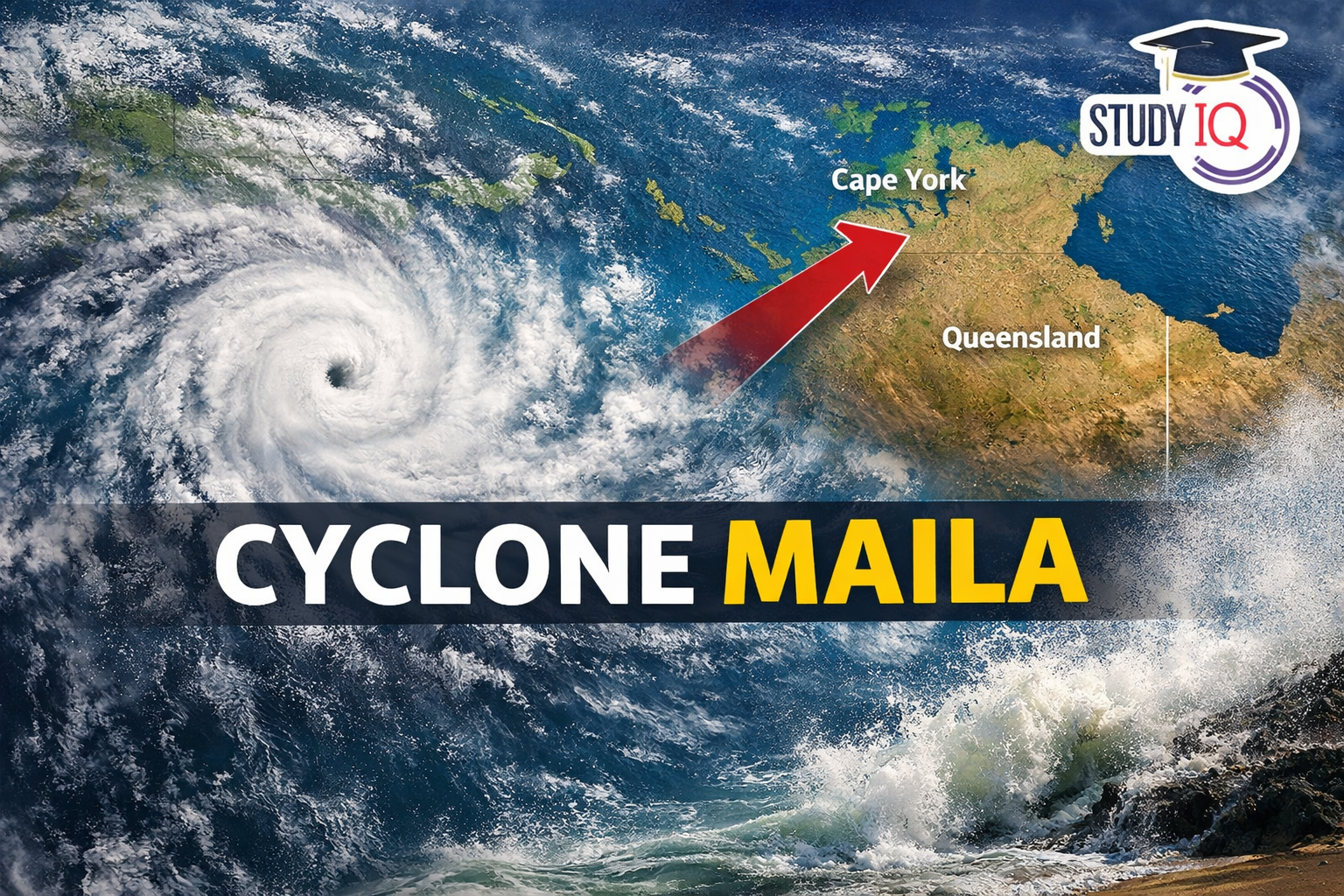
A powerful tropical system, Cyclone Maila, is rapidly gaining attention across the Pacific as it barrels westward over the Solomon Sea, with forecasters warning of a potential landfall along Australia’s vulnerable northern coastline early next week.
What is Cyclone Maila?
Cyclone Maila is a powerful tropical cyclone currently active over the Solomon Sea, drawing global attention due to its rapid intensification and potential landfall in Australia.
It has already impacted vulnerable island regions and is expected to pose a serious threat to Far North Queensland in the coming days.
Cyclone Maila Track and Movement
The cyclone is moving west to southwest, following a classic tropical cyclone path driven by easterly winds.
Expected Path:
- Formation near Solomon Sea
- Impact on Solomon Islands
- Movement across Papua New Guinea
- Entry into Coral Sea
- Possible landfall at Cape York Peninsula
Expected Landfall: Early next week (around Monday)
Cyclone Maila Intensity and Wind Speed
- Category: Severe Tropical Cyclone (Category 4)
- Sustained winds: 165 km/h
- Wind gusts: Up to 230 km/h
Although the cyclone may weaken slightly due to land interaction with Papua New Guinea, it is still expected to remain dangerous.
Expected Impact on Queensland
Communities in northern Queensland should prepare for:
Major Risks:
- Heavy rainfall → Flooding in low-lying areas
- Strong winds → Structural damage, power outages
- Coastal surge → Erosion and dangerous sea conditions
Regions near Cape York Peninsula are particularly vulnerable due to their proximity to the projected path.
Impact on Solomon Islands & Papua New Guinea
Before reaching Australia, Cyclone Maila is already affecting:
High-Risk Areas:
- Island communities in Solomon Islands
- Milne Bay region in Papua New Guinea
Authorities have issued severe weather warnings for islands such as:
- Woodlark
- Misima
- Rossel
These regions may experience strong winds, heavy rainfall, and infrastructure damage.
Another Cyclone Alert: Vaianu
At the same time, another system—Cyclone Vaianu—is moving toward New Zealand, signaling an unusually active cyclone phase in the region.
Climate Change & Cyclone Trends
Cyclone Maila highlights a broader climate trend:
Key Observations:
- Fewer cyclones overall
- Higher intensity storms
- Slower movement → prolonged damage
- Increased rainfall → severe flooding
Experts warn that future cyclones may not just be stronger—but also longer-lasting and more destructive inland.
Cyclone Season Insights (Australia)
- Cyclone season: November to April
- Average cyclones per season: ~10
- Severe cyclones: 3–5
- 2026: Above-average severe cyclone activity
Safety Advisory
Residents in affected regions should:
- Monitor official weather updates
- Prepare emergency kits
- Avoid coastal and flood-prone areas
- Follow evacuation advisories
|
Read More Notes |
|
| Environment Notes | Art and Culture Notes |
| Science and Tech | History Notes |
| Geography Notes | Indian Polity Notes |
| General Knowledge | International Relation |
|
Explore StudyIQ Courses |
|
 List of Military Exercises of India 2026...
 Illegal Sand Mining in National Chambal ...
 16th Finance Commission: Key Facts, Func...













 WhatsApp





