
Table of Contents
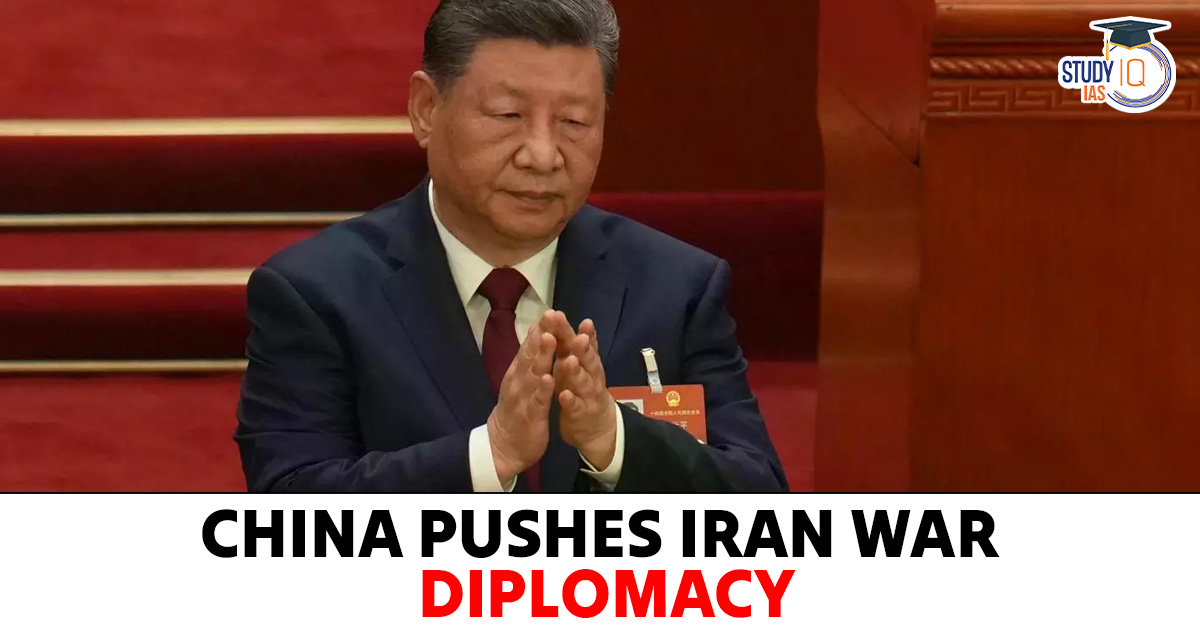
Context: Despite China’s active diplomatic efforts to mediate the U.S.–Israel–Iran conflict, the United States has shown little interest in Beijing’s mediation.
What Are the Mediation Efforts by China
- Five-Point Peace Proposal: China, along with Pakistan, proposed a five-point framework calling for a ceasefire, diplomatic dialogue, and reopening the Strait of Hormuz to ensure maritime stability.
- Engagement with Global Institutions: China sought support from the European Union and the United Nations members to build international backing for diplomatic solutions.
- Opposition to Military Escalation: China opposed proposals at the United Nations Security Council to authorise force to reopen the Strait of Hormuz, arguing that such steps could escalate the conflict.
- Regional Diplomatic Visits: China dispatched special envoys and held consultations with Gulf states to promote a ceasefire and maintain regional stability.
Why China Is Mediating
- Energy Security Concerns: China imports significant oil from West Asia (Iran accounts for ~13% of Chinese oil imports), making stability in the region critical for energy security.
- Protection of Maritime Trade: The Strait of Hormuz carries nearly one-fifth of global oil trade, disruption of which could raise global energy prices and affect the Chinese industry.
- Global Leadership Ambitions: China aims to project itself as a responsible global power and alternative diplomatic actor to the United States.
- Economic Stability: China’s export-driven economy depends on stable global energy prices and uninterrupted shipping routes.
- Strategic Narrative: China seeks to portray itself as a champion of diplomacy and multilateralism, contrasting with what it portrays as U.S. military interventionism.
Why the United States Is Not Interested in China’s Mediation
- Strategic Rivalry: The United States is reluctant to allow Beijing to gain diplomatic influence in West Asia (Middle East).
- Control Over Conflict Diplomacy: The United States prefers to retain control over negotiations and security arrangements in the region rather than rely on third-party mediation.
- Distrust of China’s Neutrality: Washington believes China maintains close economic and strategic ties with Iran, raising doubts about its neutrality as a mediator.
- Perception of Symbolic Diplomacy: Some analysts view China’s proposals as largely rhetorical or symbolic rather than detailed peace plans, reducing U.S. confidence in their effectiveness.
| How China escaped the early consequences of the Iran War |
|

 Anganwadi Workers in India: Roles, Impor...
 India and Bangladesh Border: Map, Disput...
 Plastic Waste Management (Amendment) Rul...












 WhatsApp





