Table of Contents
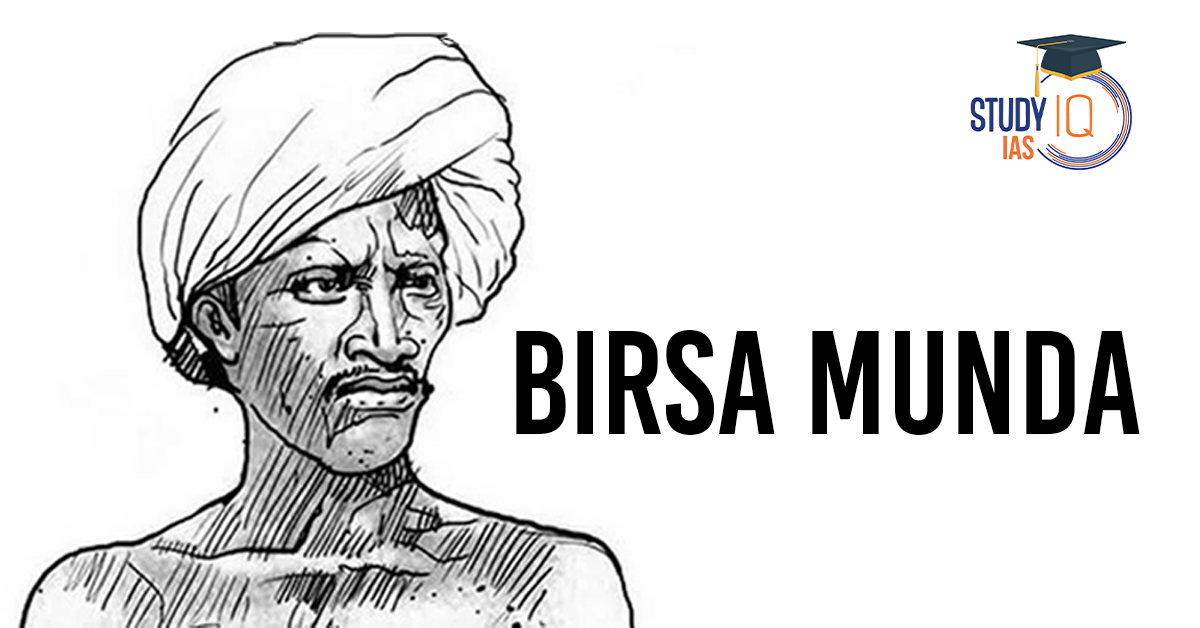
Birsa Munda, one of India’s greatest freedom fighters and tribal leaders, stands as a symbol of resilience, determination, and sacrifice. Revered as “Bhagwan Birsa” by his followers, he played a pivotal role in the Munda Rebellion (Ulgulan) against the British colonial powers and the exploitative practices of landlords and moneylenders in the late 19th century. His contributions to the tribal community and his leadership in the fight for land rights have made him a prominent figure in India’s struggle for independence. Birsa Munda’s legacy continues to inspire generations, especially within tribal communities, for his unwavering spirit in fighting for justice and equality.
In this article, we will explore Birsa Munda’s life, his struggles, his leadership in the Munda Rebellion, and his significant impact on tribal rights in India, focusing on aspects important for UPSC aspirants.
Birsa Munda Death Anniversary 2026
Birsa Munda Death Anniversary 2026 is being observed on 9 June 2026, commemorating the 126th death anniversary of one of India’s greatest tribal freedom fighters and social reformers. Revered as “Dharti Aba” (Father of the Earth), Birsa Munda dedicated his life to protecting tribal rights, land ownership, culture, and identity against British colonial rule and exploitative landlord systems. He passed away on 9 June 1900 in Ranchi Jail at the young age of 25, but his legacy continues to inspire millions across India.
Who Was Birsa Munda?
Birsa Munda was born on 15 November 1875 in Ulihatu village, present-day Jharkhand. He belonged to the Munda tribe and emerged as a charismatic tribal leader, religious reformer, and anti-colonial revolutionary. Through his leadership, he mobilized tribal communities against British exploitation and became a symbol of resistance across the Chotanagpur region.
Birsa Munda at a Glance
| Particulars | Details |
|---|---|
| Full Name | Birsa Munda |
| Birth Date | 15 November 1875 |
| Birth Place | Ulihatu, Khunti (Jharkhand) |
| Community | Munda Tribe |
| Popular Title | Dharti Aba |
| Major Movement | Ulgulan Movement |
| Death Date | 9 June 1900 |
| Death Place | Ranchi Jail |
| Known For | Tribal Rights, Anti-British Resistance |
Birsa Munda’s Early Life and Background
Birsa Munda was born on November 15, 1874, in Ulihatu, a small village in present-day Jharkhand, into a tribal Munda family. The Mundas belong to the Austro-Asiatic ethnic group, and their livelihood was traditionally centered around agriculture and forest resources. Birsa’s early life was marked by the hardships faced by the Munda tribe due to the interference of the British and their allies — the moneylenders and landlords — who had begun to encroach upon tribal lands.
Birsa’s family were sharecroppers, and his early exposure to poverty, displacement, and social injustice deeply influenced his future role as a leader and reformer. At a young age, Birsa was sent to a Christian missionary school where he learned about Christianity and its influence on tribal communities. However, he soon became disillusioned with the missionaries, seeing them as agents of colonialism who undermined tribal culture, religion, and customs.
Rise as a Spiritual and Political Leader
Birsa Munda’s leadership journey began in the 1890s when he started gaining prominence as a spiritual and political leader among the Munda tribe. He was inspired by both indigenous traditions and his exposure to Christianity. Birsa interpreted his visions and experiences as divine, calling on the Munda people to revolt against British rule and to reclaim their rights over their ancestral lands. His movement, which is known as Ulgulan (The Great Tumult), combined both social and political aspects, encouraging tribal unity, cultural revival, and armed resistance.
Birsa’s message was rooted in social reforms, such as prohibiting the consumption of liquor, stopping animal sacrifices, and promoting the wearing of sacred threads (traditionally worn by high-caste Hindus), all aimed at revitalizing Munda society. His teachings were a blend of religious and social reforms, incorporating elements of tribal and Christian ideologies, which helped him unite both tribal and non-tribal communities in his struggle.
Munda Rebellion (Ulgulan) – 1899-1900
The Munda Rebellion was a major tribal uprising led by Birsa Munda against the British colonial government, landlords, moneylenders, and Christian missionaries. The rebellion took place in the region that is now Jharkhand, primarily in the areas surrounding Ranchi, Khunti, and Gumla.
Key Causes of the Munda Rebellion:
- Land Alienation: The British and their allies, the zamindars and moneylenders, were encroaching upon the tribal lands through exploitation and unfair land revenue policies. This led to the loss of ancestral lands under the Khuntkatti system, which was the traditional land tenure system of the Mundas.
- Economic Exploitation: The tribal people were burdened by heavy taxes, forced labor (Beth Begari), and exploitative practices of moneylenders and landlords. Birsa fought against these unjust economic practices to reclaim tribal independence.
- Religious and Cultural Oppression: The missionaries were seen as part of the British effort to suppress tribal culture and religion. Birsa called for the restoration of traditional tribal customs and religious practices, opposing missionary conversions.
- Political Oppression: Birsa Munda’s movement challenged the British colonial administration’s control over tribal territories. He sought to establish Birsa Raj, where the Munda people could govern themselves.
Key Events during the Rebellion:
- The rebellion gained momentum during Christmas 1899, when Birsa’s followers attacked police stations, churches, and government officials.
- Birsa’s forces symbolically destroyed British symbols and began attacking the police and moneylenders’ properties. They also targeted Christian missionaries who were accused of eroding tribal culture.
- The movement turned violent, with tribal people ambushing government forces using traditional weapons such as bows and arrows.
Birsa’s movement, though powerful, was eventually suppressed by the British authorities. Birsa was arrested in March 1900 and died under mysterious circumstances on June 9, 1900, in British custody. However, the rebellion significantly impacted the Munda tribe and has since been remembered as a major tribal resistance movement.
Impact of Munda Rebellion
- Political and Social Impact:
- The Munda Rebellion was a critical moment in tribal resistance against colonial oppression. Although it did not succeed in achieving its immediate goals, it sent a strong message of tribal resilience and the demand for self-governance.
- Birsa Munda’s efforts inspired future generations of tribal leaders and social reformers to continue their fight for justice and equality.
- Legislative Changes:
- The rebellion led to the passing of the Chotanagpur Tenancy Act (1908), which provided legal safeguards for tribal land rights and restricted the transfer of land to non-tribals. This act was a major victory for the tribal people and prevented further exploitation of their land.
- The Beth Begari system (forced labor) was also abolished in the aftermath of the rebellion.
- Cultural Revival:
- Birsa Munda’s call for the revival of tribal culture and customs played a key role in strengthening tribal identity and preserving traditional practices.
- The Munda tribe, and other indigenous communities, found strength in their cultural roots, which fostered unity and pride.
- Foundation of Jharkhand:
- The state of Jharkhand was created on November 15, 2000, Birsa Munda’s birthday, to recognize the contributions of tribal communities and their historic struggles. The day is celebrated as Birsa Munda Jayanti, a state holiday in Jharkhand, and is a symbol of tribal unity and identity.
Legacy and Significance of Birsa Munda
Birsa Munda is remembered as a freedom fighter, reformer, and tribal hero. His leadership in the Munda Rebellion is considered one of the earliest instances of organized tribal resistance against British colonialism. His message of social reform, economic justice, and cultural revival continues to resonate today, particularly among tribal communities.
- Birsa Munda Jayanti is celebrated not only in Jharkhand but across India to honor his memory. His contributions to the tribal cause and his role in India’s broader struggle for independence have earned him a place among the national heroes.
- The Birsa Institute of Technology, Birsa Agricultural University, and various other institutions in Jharkhand and beyond are named after him as a tribute to his work.
Birsa Munda UPSC
Birsa Munda’s life and struggle represent the epitome of tribal resilience and their battle for justice against colonial oppression. His movement, while primarily aimed at the British, also sought to preserve the dignity, culture, and traditions of indigenous communities. For UPSC aspirants, understanding Birsa Munda’s role in the larger context of India’s freedom struggle is crucial in grasping the multifaceted nature of colonial resistance, the role of tribal uprisings, and the socio-political changes in pre-independence India. Birsa Munda’s legacy remains an enduring symbol of self-determination, tribal empowerment, and indigenous rights.

 Bhikaji Cama Birth Anniversary 2026: Lif...
 16 Mahajanapadas: List, Capitals, Locati...
 Ghaznavid Empire in Punjab: History, Rul...














 WhatsApp