
Table of Contents
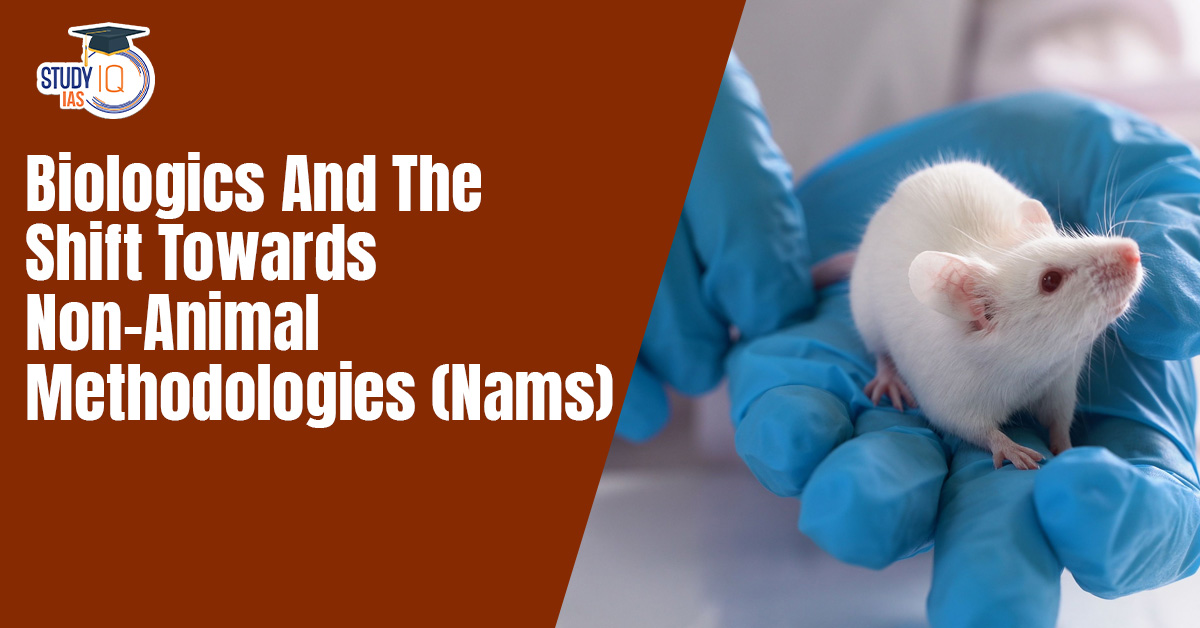
Context: The shift toward human-relevant Non-Animal Methodologies (NAMs) is accelerating in India via Biopharma SHAKTI, addressing the critical failure of animal models to predict human responses to complex biologics.
What are Biologics?
Biologics are large, complex medicines produced from living cells or organisms, unlike conventional chemical drugs, which are synthetically manufactured.
- Examples of Biologics: Common biologics include monoclonal antibodies (mAbs), vaccines, insulin, gene therapies and cell-based therapies, widely used for treating cancer, autoimmune diseases, diabetes and rare genetic disorders.
- Rising Global Importance: Biologics are becoming a major segment of the pharmaceutical industry, with increasing use in the treatment of chronic and complex diseases.
Biosimilars
When the patent of a biologic drug expires, biosimilars (generic versions of biologics) can be developed, though they require extensive testing because biologics are structurally complex molecules.
Issues with Biologics
- Limitations of Animal Models: Animal experiments often fail to accurately predict how biologics behave in humans because biologics interact with human-specific receptors and immune pathways that may not exist or function differently in animals.
- Differences in Immune Response: Human immune systems react differently to biologics compared with animals, making toxicity and immune reactions difficult to predict during pre-clinical trials.
Examples of Failure of Animal Testing
- Theralizumab trial (2006) caused severe immune reactions in human volunteers despite appearing safe in monkey studies.
- Semorinemab (Alzheimer’s drug) worked in mouse models but failed during human clinical trials.
| About Non-Animal Methodologies (NAMs) |
| Non-Animal Methodologies (NAMs) refer to human-relevant experimental systems used to study drug safety and efficacy without using animals.
Key Technologies Used in NAMs
These systems mimic human physiology more accurately than animal models. |
Advantages of using Non-Animal Methodologies (NAM)
- Better Human Relevance: NAMs use human cells and tissues, making them more predictive of human biological responses.
- Improved Drug Testing: They allow researchers to test drug safety, immune responses, and treatment effectiveness in controlled human-like environments.
- Eg. A breast cancer-on-chip model has been used to study CAR-T cell therapy, enabling researchers to observe how immune cells attack tumours without using animals.
- Cost Reduction: Organ-on-chip technology is estimated to lower drug development costs by 10–26%.
- Shorter Development Time: NAMs may reduce drug development timelines by around 19%, speeding up identification of promising drug candidates.
Challenges in the Development of NAMs
- Limited Accessibility: NAM technologies are not yet as widely available as traditional animal testing systems.
- Lack of Standardisation: Many NAM models require validated protocols, standardisation and reproducibility before they can be widely adopted by industry.
- High Infrastructure Costs: Development of organ-on-chip systems and advanced cell models requires specialised laboratories and advanced equipment.
- Slow Industry Adoption: Although over 90 academic labs in India are working on NAM technologies, their transition to industrial drug testing remains limited.
- Regulatory Uncertainty: Regulatory agencies are still developing frameworks to validate and approve NAM-based testing methods.
Government Support to NAMs
- Biopharma SHAKTI (BioPharma Strategy for Health Advancement through Knowledge, Technology, and Innovation: The Union Budget 2026 announced the Biopharma SHAKTI programme, with an outlay of ₹10,000 crore, to strengthen India’s biologics and biosimilars ecosystem. It supports through:
- Boosting Domestic Biologics Production: The initiative aims to support research, manufacturing, and commercialisation of biologics and biosimilars.
- Funding Infrastructure for NAMs: Biopharma SHAKTI can provide financial support for advanced laboratories, predictive human model systems and NAM research platforms.
- Regulatory Reforms: India’s New Drugs and Clinical Trials (Amendment) Rules 2023 promote the use of non-animal testing methods in drug development.
- Support for Start-ups and MSMEs: Government agencies such as DBT (Department of Biotechnology) and ICMR are supporting biotech start-ups working on biologics and NAM technologies.

 Great Atlantic Sargassum Belt (GASB): Gr...
 China’s Global Ocean Mapping Initiativ...
 Ancient Marine Snail Discoveries in Guja...













 WhatsApp





