
Table of Contents
Context: The Government of Rajasthan has transferred ₹1,000 each to about 1.22 lakh Anganwadi workers through Direct Benefit Transfer (DBT) to support uniform expenses. Additional measures such as honorarium hikes, nutrition schemes, and digital support have also been announced.
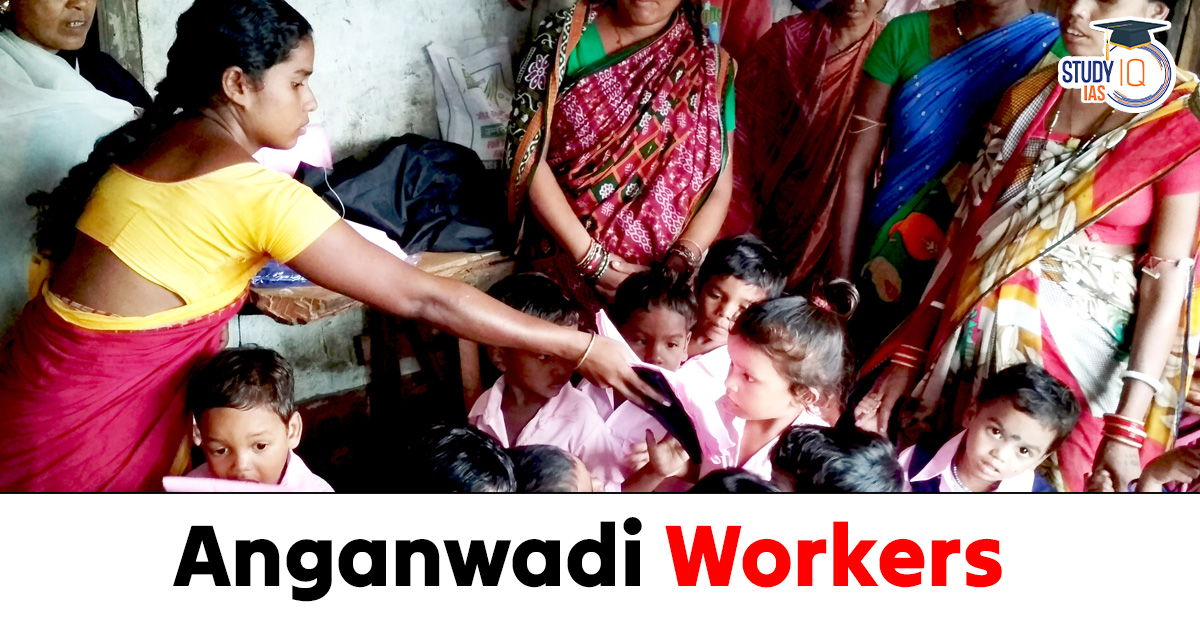
About Anganwadi Workers
- Frontline functionaries: Anganwadi workers function under the Integrated Child Development Services (ICDS) and operate Anganwadi centres at the village level.
- Child nutrition and health: Provide supplementary nutrition, immunisation support, and health check-ups. They act as the first point of contact for child health services.
- Pre-school education: Deliver early childhood care and education for children aged 3–6 years. This builds a foundation for formal schooling.
- Maternal care and awareness: Educate mothers on nutrition, hygiene, and childcare. This improves overall family health outcomes.
- Implementation of welfare schemes: Assist in delivering various government schemes at the grassroots level. They bridge the gap between the state and the community.
Legal Status of Anganwadi Workers
- Not regular Government Employees: Anganwadi workers are classified as “scheme-based workers”, not permanent government staff. They receive honorarium instead of a fixed salary.
- Judicial Interpretation: The Supreme Court of India has held that they are voluntary workers engaged under welfare schemes. Hence, they are not entitled to the same service benefits as government employees.
- Constitutional Linkages: Their work is aligned with the key Directive Principles of State Policy:
- Article 39(f): Protection and development of children.
- Article 47: Duty of the State to improve nutrition and public health.
- Demand for recognition: Workers have long demanded regularisation and better wages. This reflects the gap between their responsibilities and service conditions.
| Rajasthan government’s support to Anganwadi workers |
|
Significance for governance and development
- Human capital formation: Early childhood care directly impacts long-term development.
- Women empowerment: Provides employment opportunities to rural women.
- Last-mile delivery: Ensures welfare schemes reach the most vulnerable sections.
- Inclusive growth: Focus on nutrition and early education to reduce inequalities.
Check here: Schemes For Aganwadi Workers
| Quick Facts About Anganwadi Workers |
|

 China Pushes Iran War Diplomacy: Challen...
 Plastic Waste Management (Amendment) Rul...
 Stampedes in India: Status, Causes, Majo...











 WhatsApp





