Table of Contents
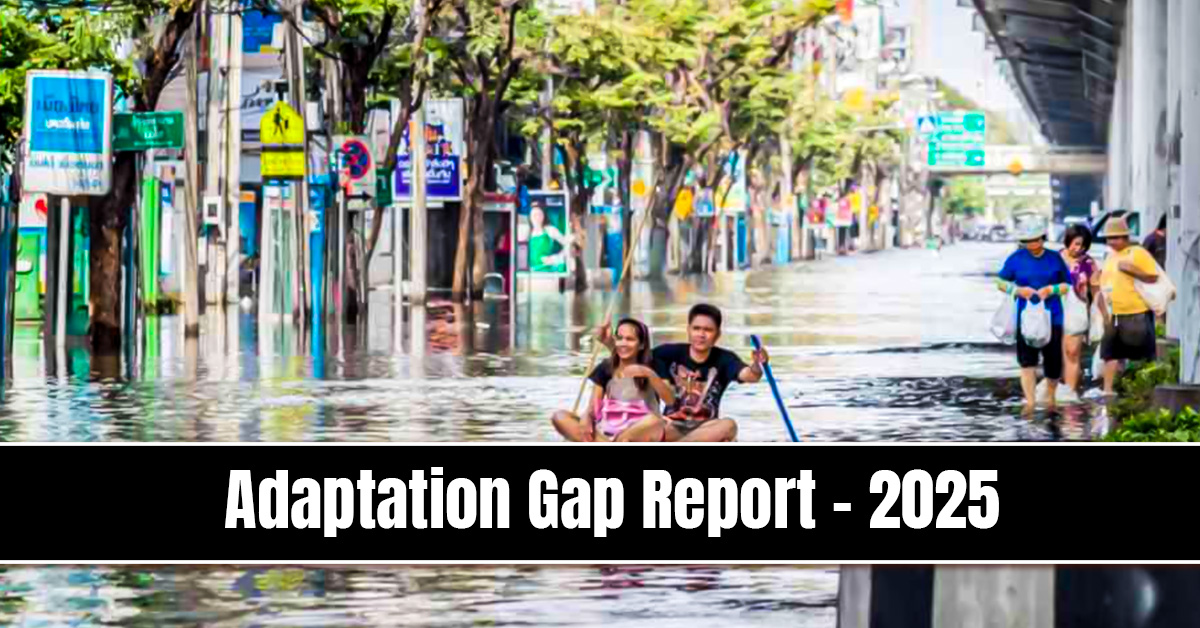
The United Nations Environment Programme (UNEP) has released its Adaptation Gap Report 2025, titled “Running on Empty”, highlighting a growing divide between climate adaptation needs and available financing, especially for developing nations.
As global temperatures continue to rise and climate impacts intensify, the report warns that insufficient adaptation finance is putting lives, livelihoods, and economies at severe risk.
Key Findings of the Adaptation Gap Report 2025
According to the UNEP report, the cost of climate adaptation in developing countries is far outpacing current financial flows, revealing an alarming adaptation finance gap.
1. Rising Adaptation Costs
-
Adaptation costs in developing countries are projected to reach US$310 billion per year by 2035, based on modelled data.
-
When considering Nationally Determined Contributions (NDCs) and National Adaptation Plans (NAPs), this figure rises to US$365 billion per year.
2. Declining Finance Flows
-
International public adaptation finance to developing countries fell to US$26 billion in 2023, down from US$28 billion in 2022.
-
This means the current funding is only 1/12th to 1/14th of what is required.
3. Missed Climate Finance Goals
-
The Glasgow Climate Pact goal to double adaptation finance from 2019 levels by 2025 will not be met if current trends continue.
-
The New Collective Quantified Goal (NCQG) for climate finance also remains insufficient to close the widening gap.
Private Sector Potential and Policy Challenges
While public finance remains critical, the private sector has the potential to contribute an additional US$50 billion per year—but only with targeted policy incentives, risk-sharing mechanisms, and blended finance models that reduce investment risks in vulnerable economies.
However, the report cautions that both public and private finance must avoid increasing the debt burden of developing nations, many of which are already financially strained.
Progress in Adaptation Planning and Implementation
Despite financial challenges, countries have made measurable progress in developing and implementing climate adaptation strategies:
-
Over 1,600 adaptation actions have been reported globally, focusing on biodiversity, agriculture, water management, and infrastructure.
-
Nearly all countries now have at least one national adaptation policy, strategy, or plan.
-
Many governments are mainstreaming climate adaptation into their national development planning frameworks.
Climate funds also saw a temporary increase in adaptation project approvals in 2024, although UNEP warns that emerging financial constraints could threaten this progress in the near future.
Executive Director’s Statement: The Price of Inaction
UNEP Executive Director emphasized that the world is witnessing record-breaking climate disasters, citing Hurricane Melissa in Jamaica—the strongest ever to hit the nation—as an example of the urgent need for adaptation investments.
“Every nation is facing climate impacts—heatwaves, floods, wildfires, droughts, or desertification. We must invest now, or pay later,” the statement read.
The report’s video campaign, titled “Invest Now. Or Pay Later.”, echoes this call, underlining that delaying adaptation efforts will multiply future costs—both human and economic.
Global and Regional Implications
The Adaptation Gap Report 2025 carries strong warnings for developing economies in Asia, Africa, and Latin America, which face intensifying climate impacts despite contributing least to global emissions.
-
South Asia, in particular, remains highly vulnerable to floods, cyclones, and heatwaves, threatening food security and water resources.
-
African nations face rising agricultural losses and drought-driven migration.
-
Small Island Developing States (SIDS) risk existential threats due to sea-level rise and coral reef loss.
Key Recommendations from UNEP’s 2025 Report
The report calls for urgent collective action to bridge the adaptation finance gap and strengthen resilience:
-
Increase international public finance to meet adaptation goals by 2025.
-
Mobilize private finance through blended models, green bonds, and risk guarantees.
-
Strengthen national adaptation plans and integrate them with economic policies.
-
Enhance transparency and accountability in climate finance reporting.
-
Avoid debt-based financing for the most vulnerable nations.
Conclusion
The Adaptation Gap Report 2025 sends a clear message — the world is running on empty when it comes to adaptation finance.
Without immediate, large-scale investments, the most climate-vulnerable countries could face irreversible economic and ecological losses within the next decade.
UNEP urges world leaders, financial institutions, and private investors to step up climate finance, ensuring that adaptation keeps pace with the rapidly escalating impacts of the global climate crisis.
 US Treasury Yields at 25-Year High: Impa...
 National Coastal Mission 2.0 (NCM 2.0): ...
 New CAFE Norms 2027–32: Key Features, ...













 WhatsApp