Table of Contents
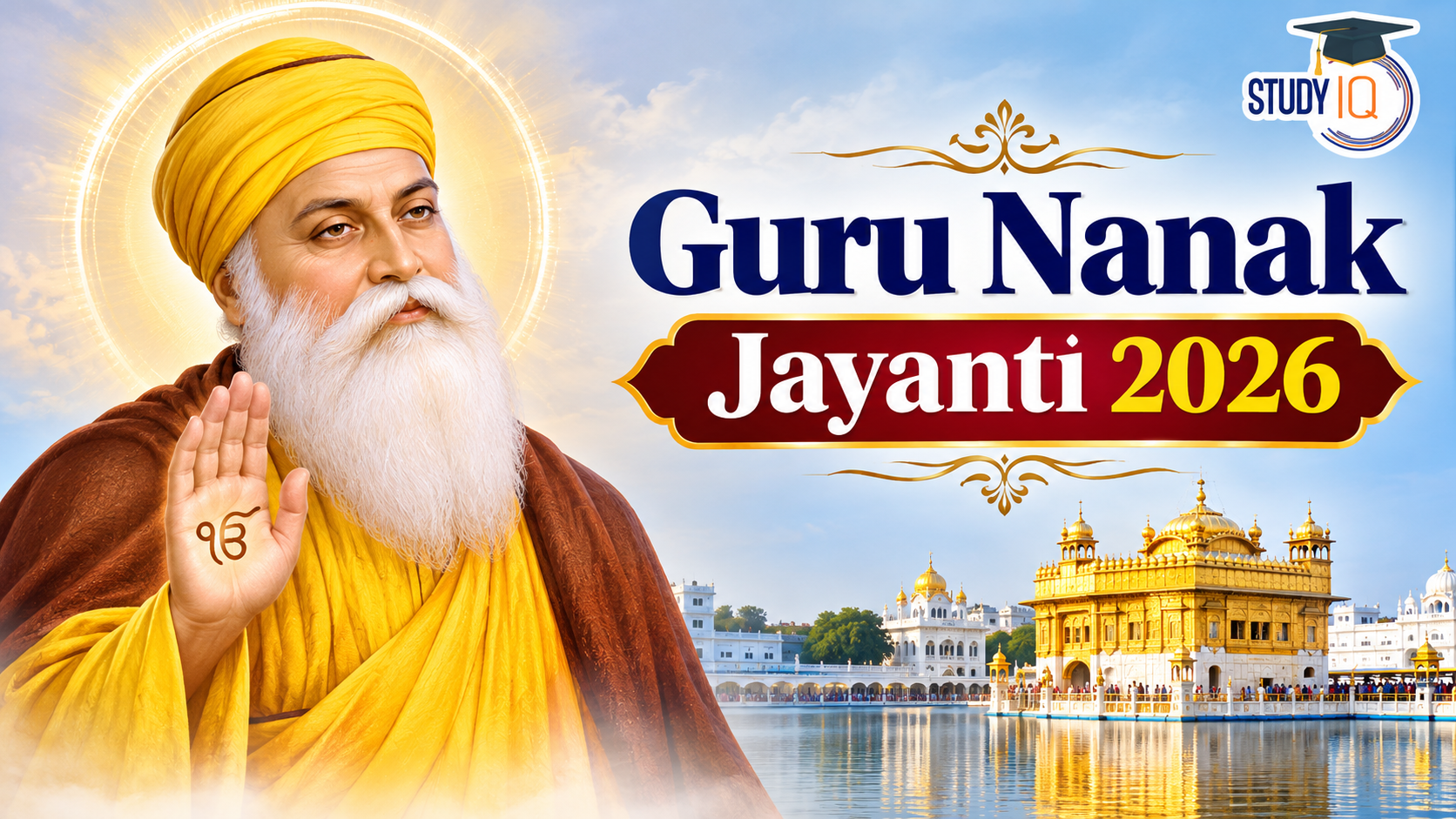
Guru Nanak Jayanti 2026 will be celebrated on Tuesday, November 24, 2026, marking the 557th birth anniversary of Guru Nanak Dev Ji, the founder of Sikhism and the first of the ten Sikh Gurus. Also known as Gurpurab and Prakash Parv, this sacred occasion falls on Kartik Purnima, the full moon day of the Hindu lunar month of Kartik. The festival commemorates Guru Nanak Dev Ji’s teachings of one God, equality, truthfulness, compassion and selfless service.
Guru Nanak Jayanti 2026: Key Highlights
-
Festival: Guru Nanak Jayanti 2026
-
Date: November 24, 2026 (Tuesday)
-
Occasion: 557th birth anniversary of Guru Nanak Dev Ji
-
Also known as: Gurpurab and Prakash Parv
-
Lunar occasion: Kartik Purnima
-
Founder of: Sikhism
-
Birthplace: Rai Bhoi di Talwandi (present-day Nankana Sahib, Pakistan)
-
Father: Mehta Kalu (Kalyan Das)
-
Mother: Mata Tripta
-
Major teachings: Naam Japna, Kirat Karni and Vand Chakna
Who Was Guru Nanak Dev Ji?
Guru Nanak Dev Ji was born in 1469 at Rai Bhoi di Talwandi, now known as Nankana Sahib in present-day Pakistan. He was the founder of Sikhism and the first Sikh Guru.
His father, Mehta Kalu, was a village revenue official, while his mother was Mata Tripta. From an early age, Guru Nanak demonstrated a deep interest in spirituality and questioned social practices based on caste discrimination, religious divisions and inequality.
At approximately 30 years of age, he experienced a profound spiritual awakening and began travelling extensively to spread his message of universal brotherhood, devotion to one God and equality among all human beings.
His spiritual compositions and teachings became an important foundation of Sikh religious philosophy.
History of Guru Nanak Jayanti
Guru Nanak Jayanti commemorates the birth of Guru Nanak Dev Ji and celebrates the spiritual and social transformation he inspired during the 15th and 16th centuries.
During his lifetime, Guru Nanak travelled extensively across different regions to communicate his message of peace, humanity and devotion. These journeys are traditionally known as Udasis.
He challenged religious orthodoxy, caste-based discrimination, meaningless rituals and social inequalities. Instead, he emphasised inner devotion, honest work and service to humanity.
Guru Nanak spent his later years at Kartarpur, where he established a community based on collective worship, honest living and sharing.
His teachings were preserved in sacred hymns, many of which were later incorporated into the Guru Granth Sahib by Guru Arjan Dev, the fifth Sikh Guru. Guru Gobind Singh subsequently affirmed the Guru Granth Sahib as the eternal Guru of the Sikhs.
Significance of Guru Nanak Jayanti 2026
Guru Nanak Jayanti holds immense religious, cultural and spiritual significance. It reminds people of Guru Nanak Dev Ji’s vision of a society founded on equality, justice, compassion and universal brotherhood.
The major principles highlighted through this festival include:
-
Equality and Human Dignity: Guru Nanak rejected caste discrimination and social hierarchies. He advocated equal respect for every individual, irrespective of caste, religion, gender or social status.
-
Religious Harmony: He promoted the belief in one Supreme God and encouraged people to rise above religious divisions.
-
Truthful Living: He emphasised honesty, integrity and earning a livelihood through hard work.
-
Selfless Service: He encouraged individuals to help the needy and contribute to the welfare of society.
-
Universal Brotherhood: His teachings promoted peace, love, humility and mutual respect among communities.
Three Fundamental Teachings of Guru Nanak Dev Ji
Guru Nanak Dev Ji’s philosophy is commonly explained through three fundamental principles that continue to guide Sikh religious and social life.
1. Naam Japna (Remembering God)
Naam Japna means remembering and meditating on the name of the one Supreme God. It encourages individuals to develop spiritual awareness, devotion and inner discipline.
2. Kirat Karni (Honest Living)
Kirat Karni means earning one’s livelihood through honest work and ethical means. Guru Nanak emphasised dignity of labour and rejected exploitation and dishonest practices.
3. Vand Chakna (Sharing with Others)
Vand Chakna means sharing one’s earnings, resources and food with others, particularly those who are disadvantaged. It promotes generosity, equality and collective responsibility.
Together, these three principles provide a foundation for a spiritually meaningful and socially responsible life.
How Is Guru Nanak Jayanti Celebrated?
Guru Nanak Jayanti is celebrated with devotion and enthusiasm in India and across the world. Gurdwaras organise religious programmes, community activities and charitable initiatives.
The major celebrations include:
-
Akhand Path: Continuous, uninterrupted recitation of the Guru Granth Sahib, traditionally completed over approximately 48 hours.
-
Nagar Kirtan: Religious processions organised through streets, accompanied by devotional singing and the recitation of Sikh hymns.
-
Prabhat Pheris: Early-morning devotional processions in which devotees sing hymns and spread Guru Nanak’s teachings.
-
Kirtan and Prayer: Special prayer meetings and devotional music programmes are organised in Gurdwaras.
-
Langar: Community kitchens serve free meals to everyone, regardless of religion, caste, gender or economic background.
-
Decoration of Gurdwaras: Religious places are illuminated with lights, decorated with flowers and prepared for special celebrations.
-
Seva: Devotees participate in voluntary service, charitable activities and community welfare programmes.
Relevance of Guru Nanak Dev Ji’s Teachings in Modern Society
Guru Nanak Dev Ji’s teachings remain highly relevant in contemporary society, particularly in addressing social inequality, religious intolerance, discrimination and economic injustice.
His emphasis on equality supports the constitutional values of justice, liberty, equality and fraternity enshrined in the Indian Constitution.
Similarly, the principle of Langar reflects social inclusion and community participation, while Kirat Karni promotes ethical employment and dignity of labour.
In an increasingly divided world, his message of universal brotherhood and peaceful coexistence offers an important foundation for social harmony.

Frequently Asked Questions (FAQs)
Q1. When is Guru Nanak Jayanti 2026 celebrated?
Guru Nanak Jayanti 2026 will be celebrated on November 24, Tuesday, coinciding with Kartik Purnima.
Q2. Who founded Sikhism?
Guru Nanak Dev Ji founded Sikhism and was the first of the ten Sikh Gurus.
Q3. Where was Guru Nanak Dev Ji born?
He was born in 1469 at Rai Bhoi di Talwandi, now known as Nankana Sahib in Pakistan.
Q4. What are the three main teachings of Guru Nanak Dev Ji?
The three fundamental teachings are Naam Japna, Kirat Karni and Vand Chakna.
Q5. What is Langar in Sikhism?
Langar is a community kitchen where free meals are served to everyone, irrespective of religion, caste, gender or social background.
 Bagheera AT1 Anti-Tank Guided Missile: F...
 India’s Indo-Pacific Strategy 2026: Ke...
 First SCO Civilisational Dialogue Forum ...













 WhatsApp