Table of Contents
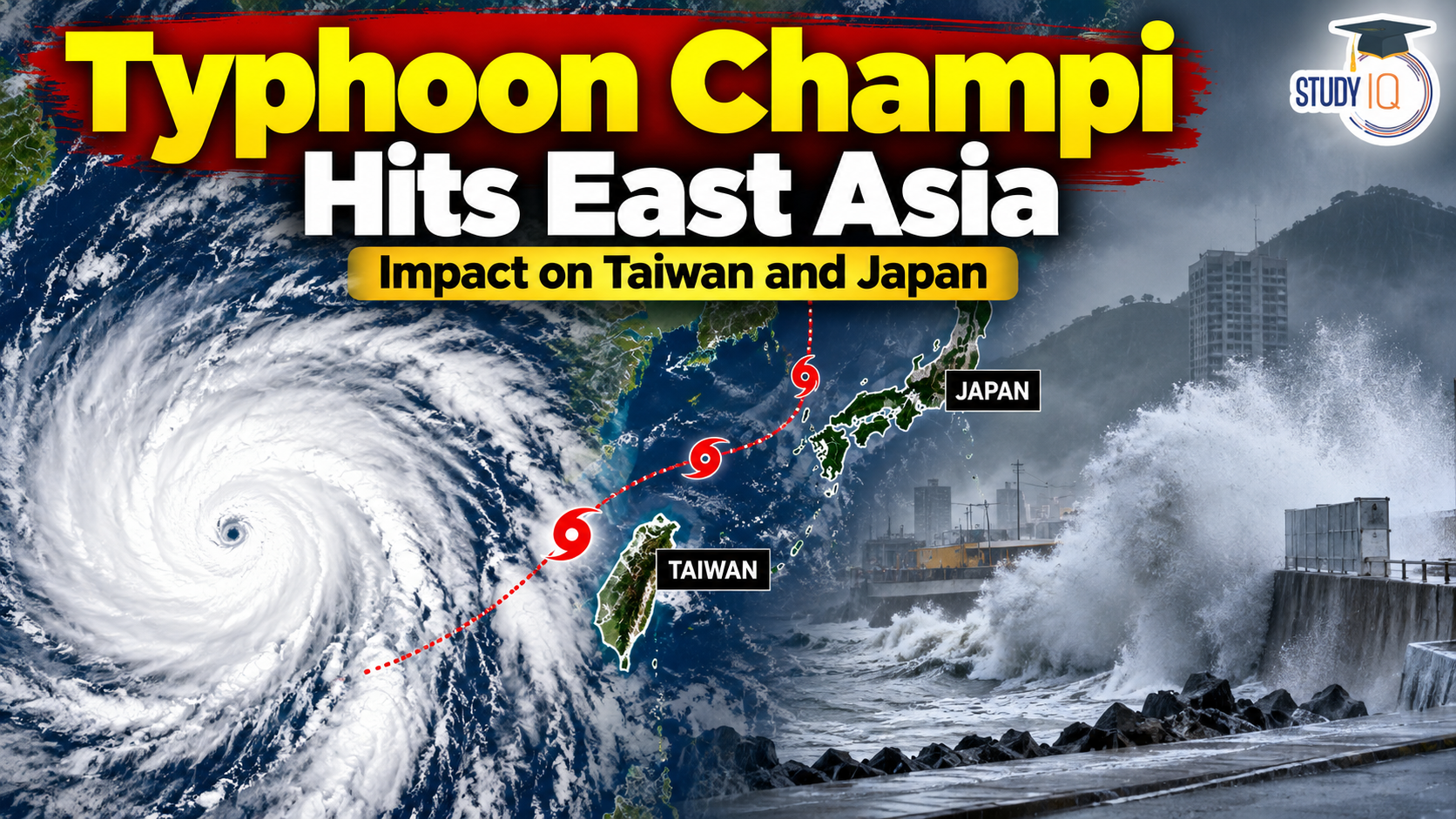
Typhoon Champi has triggered widespread disruption across East Asia, with Taiwan and Japan preparing for strong winds, torrential rainfall and coastal hazards. Although the storm weakened after reaching super typhoon intensity over the Philippine Sea, it continued to pose serious risks to communities, transport networks and infrastructure. Authorities issued warnings, suspended transport services and evacuated vulnerable residents to reduce the impact of the approaching storm.
What Is Typhoon Champi?
Typhoon Champi is a tropical cyclone that developed over the northwestern Pacific Ocean. It previously reached maximum sustained wind speeds of approximately 298 km/h, making it one of the strongest storms reported in 2026.
The storm subsequently weakened but continued to generate powerful winds and heavy rainfall. Its large circulation, with a reported radius of around 320 kilometres, increased the potential for widespread impacts even without direct landfall on Taiwan.
Impact of Typhoon Champi on Taiwan
Taiwan experienced significant disruption as the typhoon approached the island on October 23, 2026.
Major developments included:
- Flight cancellations: Authorities cancelled all 262 domestic flights and more than 660 international flights scheduled for Friday, according to the news report.
- School and office closures: Work and classes were suspended across nearly all of Taiwan’s counties and cities.
- Casualties and evacuations: Authorities reported at least one death, 94 injuries and the evacuation of more than 1,000 people.
- Heavy rainfall: Some areas of Taipei recorded over 200 mm of rainfall within 24 hours.
- Flood and landslide risks: Authorities warned residents to avoid beaches, mountainous areas and streams. Residents near a potentially dangerous landslide dam were also advised to evacuate.
Financial markets, railway services and ferry operations were suspended as part of precautionary measures.
Impact on Japan and the Philippines
Japan also faced the effects of Typhoon Champi, particularly in its southern Okinawa region. More than 160 flights were cancelled across four Japanese airlines, while approximately 3,630 households experienced power outages in Okinawa.
Authorities warned residents about storm surges, flooding, overflowing rivers and landslides. The Philippines’ northern Batanes islands also experienced strong winds and heavy rainfall as the storm moved towards Taiwan.
What Is the Connection Between El Niño and Typhoons?
El Niño is a climate phenomenon characterised by unusually warm sea-surface temperatures in the central and eastern equatorial Pacific Ocean. It influences atmospheric circulation and can alter tropical cyclone activity across different regions.
However, El Niño does not automatically increase typhoon frequency or intensity everywhere. Regional ocean temperatures, wind shear and atmospheric conditions also influence storm development.
Conclusion
Typhoon Champi highlights the vulnerability of East Asian countries to tropical cyclones and extreme rainfall. Early warnings, timely evacuations, resilient infrastructure and effective disaster management are essential to minimise casualties and economic losses. The event also underlines the importance of regional cooperation and improved preparedness for weather-related disasters.

 Agrivoltaics in India 2026: 10% of Suita...
 India–Poland Relations 2026: Strategic...
 Supreme Court on Children's Right to Int...














 WhatsApp