Table of Contents
Context
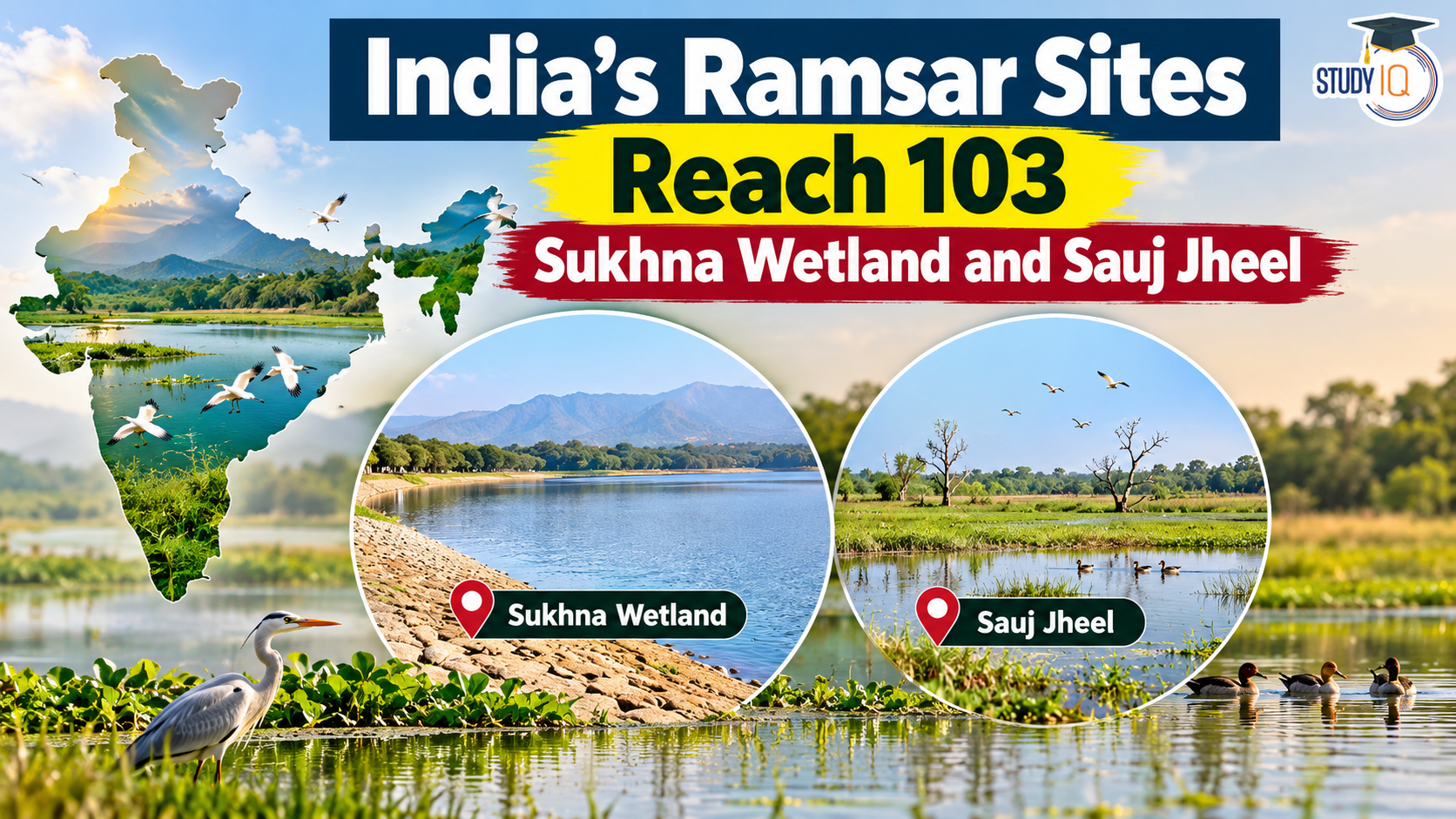
India’s Ramsar site count has reached 103 with the addition of Sukhna Wetland in Chandigarh and Sauj Jheel in Uttar Pradesh.
About Sukhna Wetland
- Location: Chandigarh, at the foothills of the Shivalik Range.
- Origin: Man-made freshwater reservoir created in 1958 by damming the seasonal Sukhna Choe stream.
- Ecological Importance: A stopover on the Central Asian Flyway, supporting migratory waterbirds and threatened species such as the Common Pochard, Pallas’s Fish Eagle and Black Pond Turtle.
- Habitat: Includes open water, marshes, reed beds, scrub and surrounding forest.
- Conservation Focus: Catchment management, soil and moisture conservation, control of siltation and removal of invasive aquatic weeds.
About Sauj Jheel
- Location: Mainpuri district, Uttar Pradesh, near Kishni; part of the Indo-Gangetic floodplain.
- Nature: Perennial, shallow floodplain lake and an Important Bird and Biodiversity Area (IBA).
- Ecological Importance: Supports over 30,000 waterbirds and provides habitat for the Sarus Crane and Greater Spotted Eagle.
- Vegetation: Includes lotus and wild sugarcane, which provide nesting cover and habitats for aquatic fauna.
- Conservation Focus: Seasonal fishing restrictions, prohibition of destructive fine-mesh monofilament nets and regulation of livestock grazing.

 Kigali Amendment to Montreal Protocol: O...
 Daily Current Affairs PDF 2026: Download...
 Southern Indian Ocean Fisheries Agreemen...














 WhatsApp