Table of Contents
Context
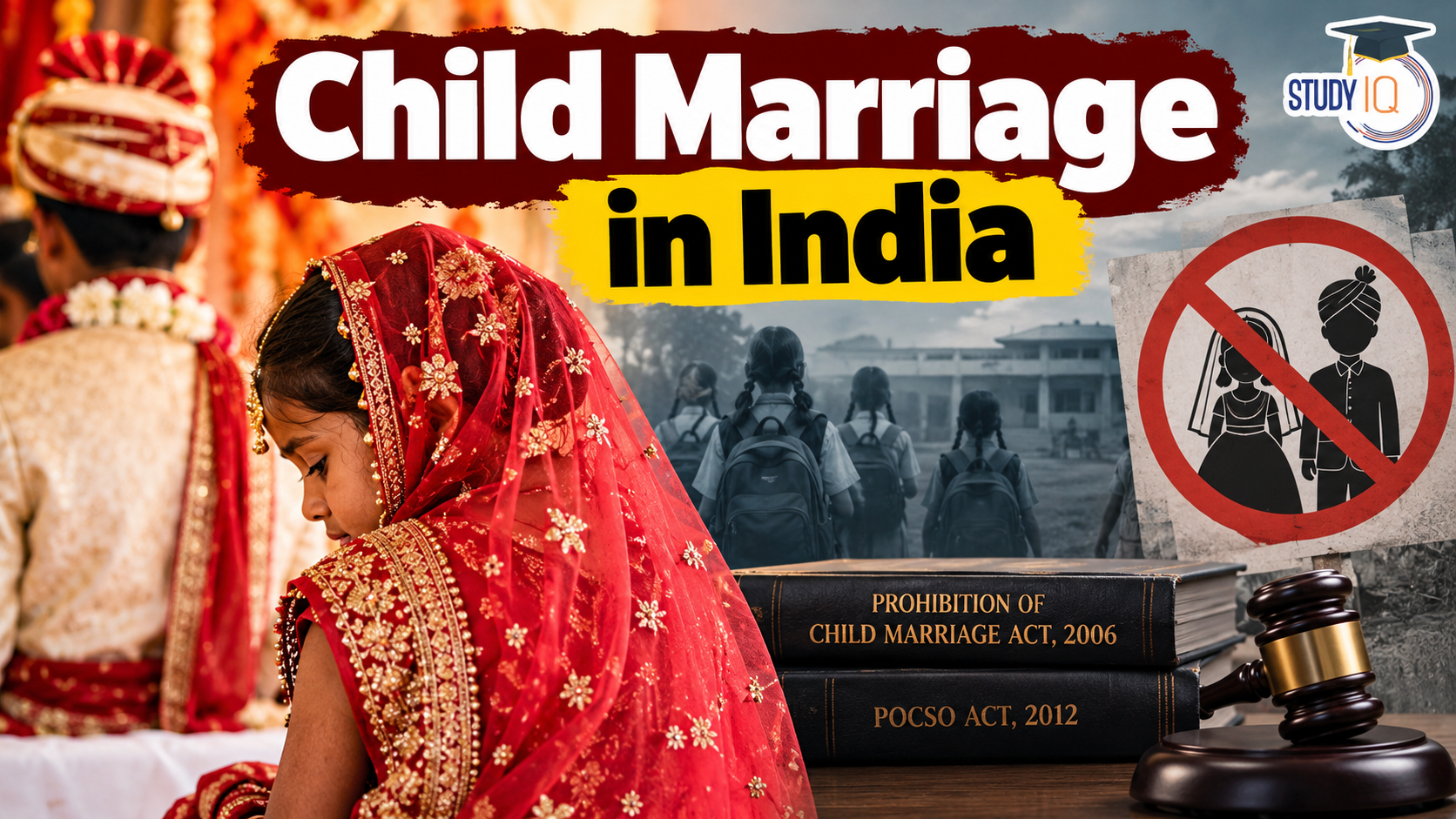
Despite sustained progress, child marriage remains a major barrier to gender equality and human development in India. According to NFHS-6 (2023–24), 20.1% of women aged 20–24 were married before the age of 18, down from 23.3% in NFHS-5 and 47.4% in NFHS-3. Telangana’s reported interception of over 2,000 child marriages between 2025 and mid-2026 highlights the persistence of the practice. The central challenge is that stopping a wedding does not necessarily eliminate the poverty, school dropout and social pressure that place girls at risk.
Read Also: UPSC Daily Current Affairs 2026
Why does child marriage persist despite legal restrictions?
- Economic insecurity: Families facing poverty may view early marriage as a way to reduce household expenses, particularly when they have limited livelihood opportunities.
- Family crises: Parental illness, the loss of a breadwinner and indebtedness can push girls out of school and into early marriage as households struggle to cope with financial shocks.
- Patriarchal social norms: Ideas about family honour, female sexuality and gender roles encourage families to prioritise marriage over girls’ education, independence and aspirations.
- Educational exclusion: School dropouts, unsafe transport, inadequate sanitation and limited access to secondary education can reduce girls’ opportunities to continue studying. The Telangana report’s identification of girls who had already left school illustrates this vulnerability.
- Unequal decision-making power: Girls may have little influence over marriage decisions because of family pressure, community expectations or coercion by influential individuals, leaving them unable to exercise meaningful choice.
How does child marriage undermine social progress?
- Health risks: Early pregnancy increases the risk of adverse maternal and newborn outcomes, including pregnancy complications, preterm birth and low birth weight.
- Educational deprivation: Marriage and domestic responsibilities often interrupt schooling, limiting girls’ literacy, skills and opportunities for higher education.
- Loss of autonomy: Early marriage can restrict girls’ control over mobility, reproduction, relationships and life choices, reinforcing gender inequality.
- Exposure to violence: Unequal power relations within marriage can increase vulnerability to sexual coercion, intimate-partner violence and psychological trauma.
- Intergenerational poverty: Reduced education and earning opportunities can perpetuate poverty, poor health and gender disadvantage across generations.
What legal and institutional measures has India adopted to prevent child marriage?
- Prohibition of Child Marriage Act, 2006: Defines a child as a male below 21 years or a female below 18 years. Most child marriages are voidable at the option of the contracting party who was a child, subject to statutory conditions; certain marriages are void from the outset. The Act also provides penalties and empowers authorities to prevent impending marriages.
- POCSO Act, 2012: Protects children below 18 from sexual offences. Marriage does not provide a general exemption from the Act’s protections against sexual offences involving children.
- Child Marriage Prohibition Officers: Help prevent child marriages, collect evidence, raise awareness and support enforcement of the law.
- Child protection mechanisms: The Child Helpline 1098, District Child Protection Units and Child Welfare Committees help identify children at risk and facilitate protection and rehabilitation.
- Community-level interventions: Anganwadi workers, ASHA workers, schools, panchayats and self-help groups can identify warning signs, counsel families and connect vulnerable girls with support services.
Way Forward: How can India move from stopping child marriages to preventing it?
- Provide targeted financial support: Expand scholarships and social-protection benefits for vulnerable households, linking assistance to school attendance and educational progression while ensuring that out-of-school girls are not excluded.
- Keep girls in education: Improve access to secondary schools, safe transport, hostels, sanitation and bridge courses to reduce dropout rates and support the re-enrolment of girls who have left school.
- Strengthen early-warning systems: Train frontline workers and school authorities to identify prolonged absences, sudden withdrawals and other warning signs, with clear referral procedures for child-protection services.
- Combine enforcement with rehabilitation: Investigate violations and hold responsible adults and facilitators accountable while providing affected girls with counselling, safe accommodation, education and livelihood support.
- Transform social attitudes: Engage parents, adolescent groups, teachers, community leaders and self-help groups to challenge patriarchal norms and promote girls’ education, agency and equal opportunities.

 World Development Report 2026: The Promi...
 US Suspension of PERM Filings by Major I...
 World Mental Health Day 2026: Theme, Dat...













 WhatsApp