Table of Contents
Context
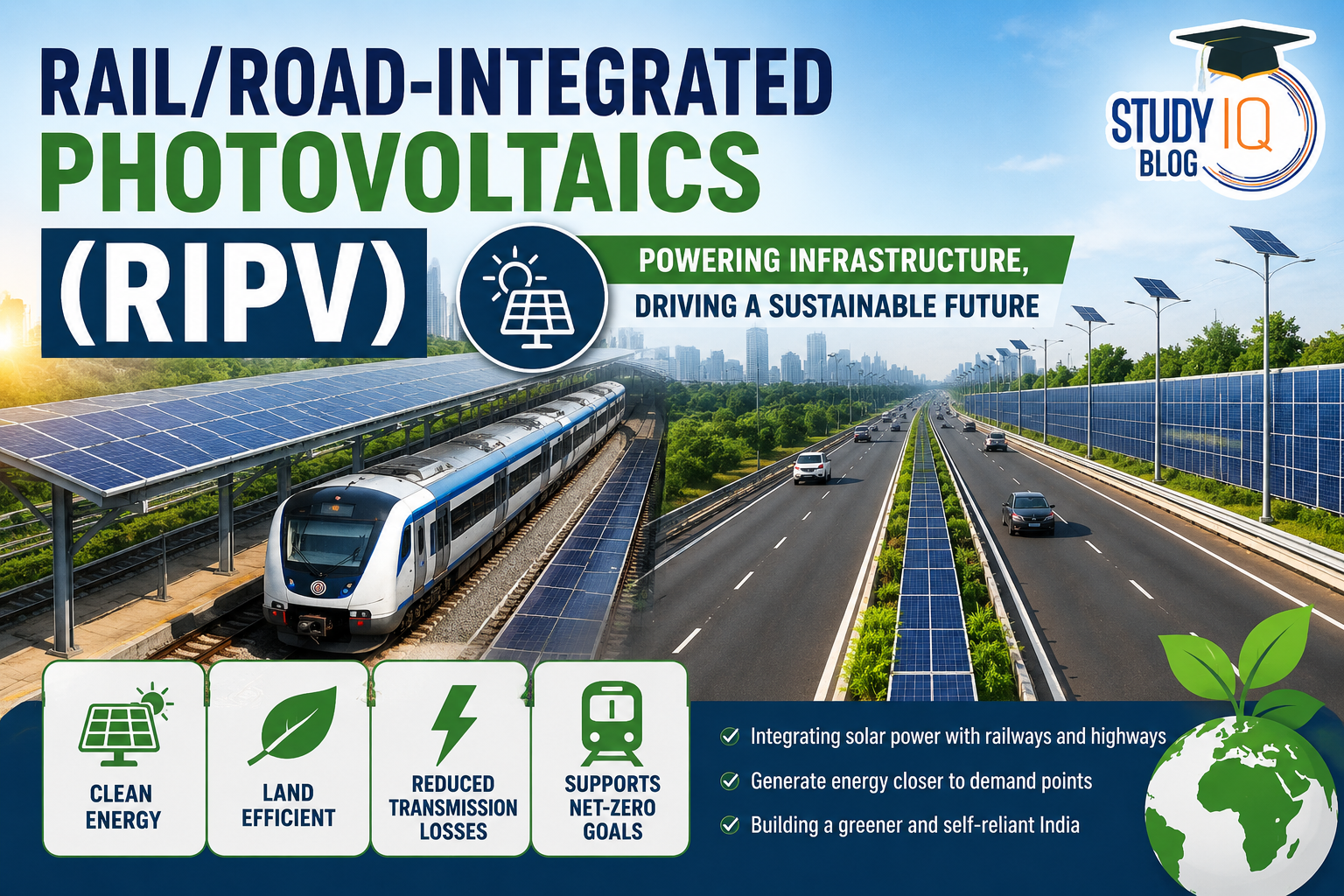
India’s transport infrastructure is now also being explored as a source of clean energy through Rail/Road-Integrated Photovoltaics (RIPV).
About RIPV
-
- Concept: Integration of solar photovoltaic (PV) systems directly into existing rail and road infrastructure (tracks, highway dividers/medians, noise barriers, guardrails)
- Key advantage: Eliminates need for dedicated land; panels installed on existing structures, bringing generation closer to point of consumption
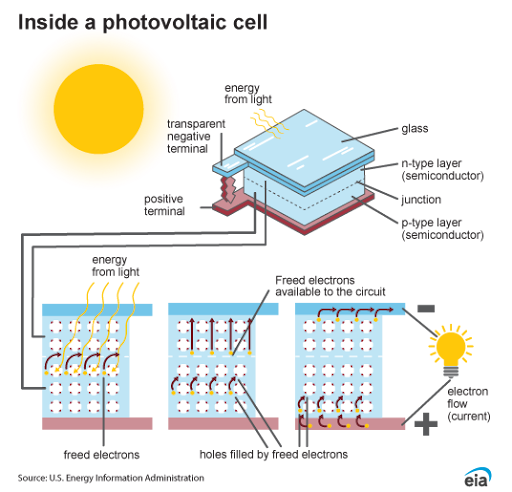
- Working principle: PV cells absorb photons from sunlight and release electrons, generating electricity (photovoltaic effect)
Significance for India
-
-
- India has over 1.4 lakh km of national highways and 99,000 km of railway tracks; vast potential infrastructure base
- Indian Railways target: Net-zero carbon emissions by 2030; aims to add ~30 GW renewable energy capacity
- Reduces transmission losses by generating power near demand points (logistics hubs, traction substations, EV charging stations)
-
Challenges
-
- Lack of design standards, safety/security norms, O&M practices, financing mechanisms
- Higher cost than conventional solar PV due to additional structural requirements
Latest UPSC Updates
| Resource | Link |
|---|---|
| UPSC Prelims Result 2026 | Check Here |
| UPSC Exam Calendar 2027 | View Calendar |
| UPSC Question Paper 2026 | Download PDF |
| UPSC Prelims Answer Key 2026 | Check Answer Key |
| UPSC Cut Off 2026 | View Cut Off |
| UPSC Syllabus 2026 | Read Syllabus |
| Daily Current Affairs 2026 | Read Updates |
| StudyIQ UPSC IAS Foundation 2027 (English) | Join Course |
| StudyIQ UPSC IAS Foundation 2027 (Hindi) | Join Course |
| StudyIQ UPSC IAS Foundation 2027 (Bilingual) | Join Course |
 Species in News: Cheetah | Project Cheet...
 Quantum Computing: RRI Scientists Demons...
 Artificial Intelligence in Warfare: How ...














 WhatsApp