
Table of Contents
Context
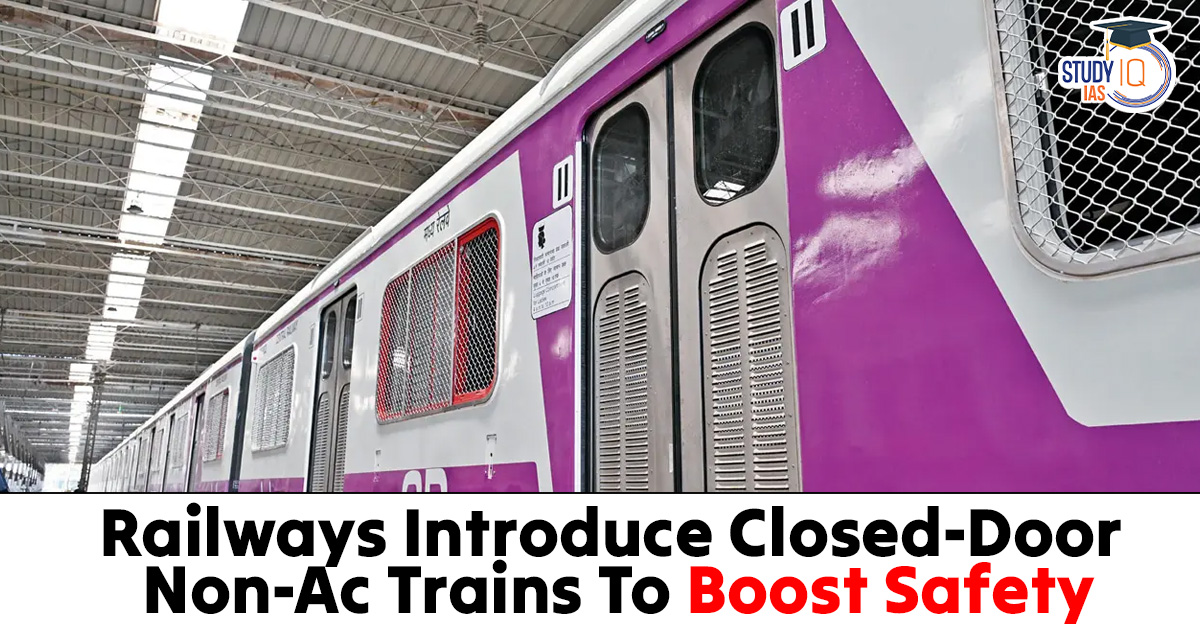
- Indian Railways has introduced a non-AC suburban train with automatic door-closing features for trial in the Mumbai Suburban Railway network, aiming to enhance safety & reduce fatalities.
- Electric Multiple Unit: An EMU is an electric train in which multiple coaches are powered by motors rather than by a single locomotive.
- Manufacturing: Built by Integral Coach Factory, Chennai, currently under trial.
- The 2025 Mumbra accident and 6,760 fall-related deaths (2014–2025) exposed the risks of overcrowded open-door non-AC trains, while safer AC closed-door trains remain limited and costly.
In a significant move to enhance passenger safety and improve travel experience, Indian Railways has introduced closed-door non-AC trains across select routes. This initiative aims to address long-standing safety concerns associated with open-door travel while maintaining affordability for millions of daily passengers.
What Are Closed-Door Non-AC Trains?
Closed-door non-AC trains are conventional trains equipped with automatic or semi-automatic doors, similar to those found in metro systems and premium trains. Unlike traditional non-AC coaches, where doors remain open during travel, these trains ensure that doors stay closed while the train is in motion, opening only at designated stops.
Key Features of the Initiative
- Automatic Door System: Doors close securely before the train starts moving
- Improved Passenger Safety: Prevents accidental falls and unauthorized entry/exit
- Affordable Travel: Maintains a non-AC fare structure for wider accessibility
- Modern Coach Design: Upgraded interiors with better ventilation and ergonomics
- Better Crowd Management: Controlled boarding and deboarding at stations
- Ventilation: Louvred doors, roof-mounted ventilation units, and larger windows to address CO₂
- Convenience: Vestibules for movement, passenger information system, emergency talk-back units, and alternate exit doors.
Why This Move Is Important
1. Enhancing Passenger Safety
Open doors in moving trains have long been a major safety hazard. By introducing closed-door systems, Indian Railways aims to significantly reduce accidental falls, overcrowding risks, and fatalities.
2. Reducing Unauthorized Travel
The closed-door mechanism discourages ticketless travel and prevents people from boarding or alighting trains unsafely between stations.
3. Aligning with Modern Standards
Globally, most railway systems have adopted closed-door mechanisms. This move brings India’s rail network closer to international safety standards.
4. Supporting High-Density Routes
On busy suburban and intercity routes, where overcrowding is common, controlled entry and exit can help manage passenger flow more efficiently.
Challenges and Concerns
1. Infrastructure Readiness
Stations need to be equipped to handle synchronized door operations, especially on older platforms.
2. Passenger Adaptation
Many passengers are accustomed to open-door travel. Awareness campaigns will be required to ensure smooth adaptation.
3. Emergency Situations
Ensuring quick evacuation during emergencies remains a critical consideration, requiring reliable fail-safe mechanisms.
Pilot Implementation and Future Plans
The initiative is expected to be rolled out in phases, starting with high-traffic routes and gradually expanding nationwide. If successful, closed-door systems may become a standard feature in future non-AC train designs.
Impact on Commuters
- Safer journeys, especially for daily commuters
- Reduced overcrowding near doors
- More disciplined boarding practices
However, passengers may initially experience slightly longer boarding times due to controlled access.
Conclusion
The introduction of closed-door non-AC trains marks a crucial step toward modernizing India’s railway system. By balancing safety, affordability, and efficiency, Indian Railways is addressing a critical gap in passenger security. While challenges remain, this initiative has the potential to transform everyday train travel into a safer and more reliable experience for millions.

 Skyroot Vikram-1 Mission Aagaman: India'...
 Oor Pare Prehistoric Site: Location, Roc...
 Assam Election 2026: Exit Poll, Result D...














 WhatsApp





