
Table of Contents
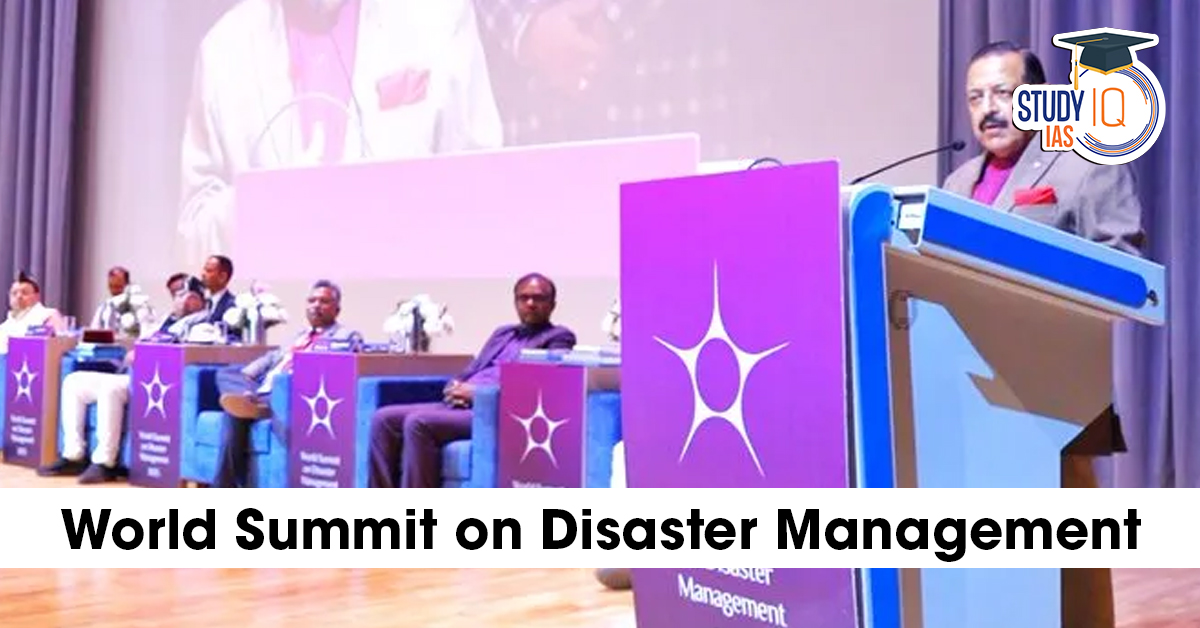
The World Summit on Disaster Management (WSDM) 2025, held from November 28–30 in Dehradun, Uttarakhand, has just concluded as one of the most impactful global gatherings on disaster resilience this year.
With climate-induced disasters becoming more frequent and severe, the summit brought together policymakers, scientists, disaster responders, and international delegates to turn ideas into action.
Official Theme of WSDM 2025
“Strengthening International Cooperation for Building Resilient Communities”
The focus was clear: move beyond national borders and build collective strength against floods, landslides, cloudbursts, wildfires, and glacial lake outbursts — especially in vulnerable regions like the Himalayas.
Top 10 Key Highlights & Announcements
- Dehradun Declaration Adopted A landmark global commitment to share real-time disaster data, invest in AI-driven early warning systems, and prioritize community-led resilience.
- Three New Doppler Weather Radars for Uttarakhand Announced for Haridwar, Pantnagar, and Auli as new locations. Once operational in 2026, these will complete near-total radar coverage of the Himalayan state, dramatically improving flash flood and cloudburst forecasts.
- November 28 Declared “Silkyara Vijay Diwas” Uttarakhand CM Pushkar Singh Dhami announced the date of the successful 2023 Silkyara Tunnel rescue will now be celebrated annually to honor rescue teams and rapid response capabilities.
- Uttarakhand Positioned as Regional Disaster Science Hub Plans to make Dehradun the nerve center for Himalayan disaster research, early warning systems.
- Massive Push for AI & Space Technology Sessions highlighted satellite-based monitoring, drone deployment, and machine-learning models for predicting GLOFs (Glacial Lake Outburst Floods).
- Focus on Disaster Risk Financing New models discussed for insurance pools, catastrophe bonds, and climate resilience funds for mountain communities.
- Community-First Approach (5E Model) Engage → Educate → Enable → Empower → Excel became the guiding framework for grassroots disaster preparedness.
- Carbon Ecosystems & Green Recovery Special track on protecting forests and wetlands as natural shields against landslides and floods.
- Media’s Role in Saving Lives Dedicated session on responsible, real-time disaster reporting and countering misinformation during crises.
- Global Participation Delegates from over 20 countries, UN agencies, World Bank, and Asian Development Bank pledged stronger South-South and North-South cooperation.
Why WSDM 2025 Is a Game-Changer for India
- India loses ₹2–3 lakh crore every year to disasters. Better forecasting and preparedness can save thousands of lives and tens of thousands of crores.
- Himalayan states (Uttarakhand, Himachal, Sikkim, Arunachal) now have a unified action plan.
- The summit showcased India’s evolution from disaster response → disaster prevention leader.
What’s Next After WSDM 2025?
- Rollout of the Dehradun Declaration action plan in 2026
- Operationalization of new radars and AI early-warning network
- Expansion of school and village-level disaster training under the 5E model
- Potential hosting of WSDM 2026 in another disaster-prone region
In a world where disasters no longer respect borders, WSDM 2025 sent a powerful message: resilience is built together.
 Mascots for Census 2027 in India: Theme,...
 The Legality of The U.S.-Israel Strikes ...
 Gravity Bombs Explained: Types, Features...











 WhatsApp





