
Table of Contents
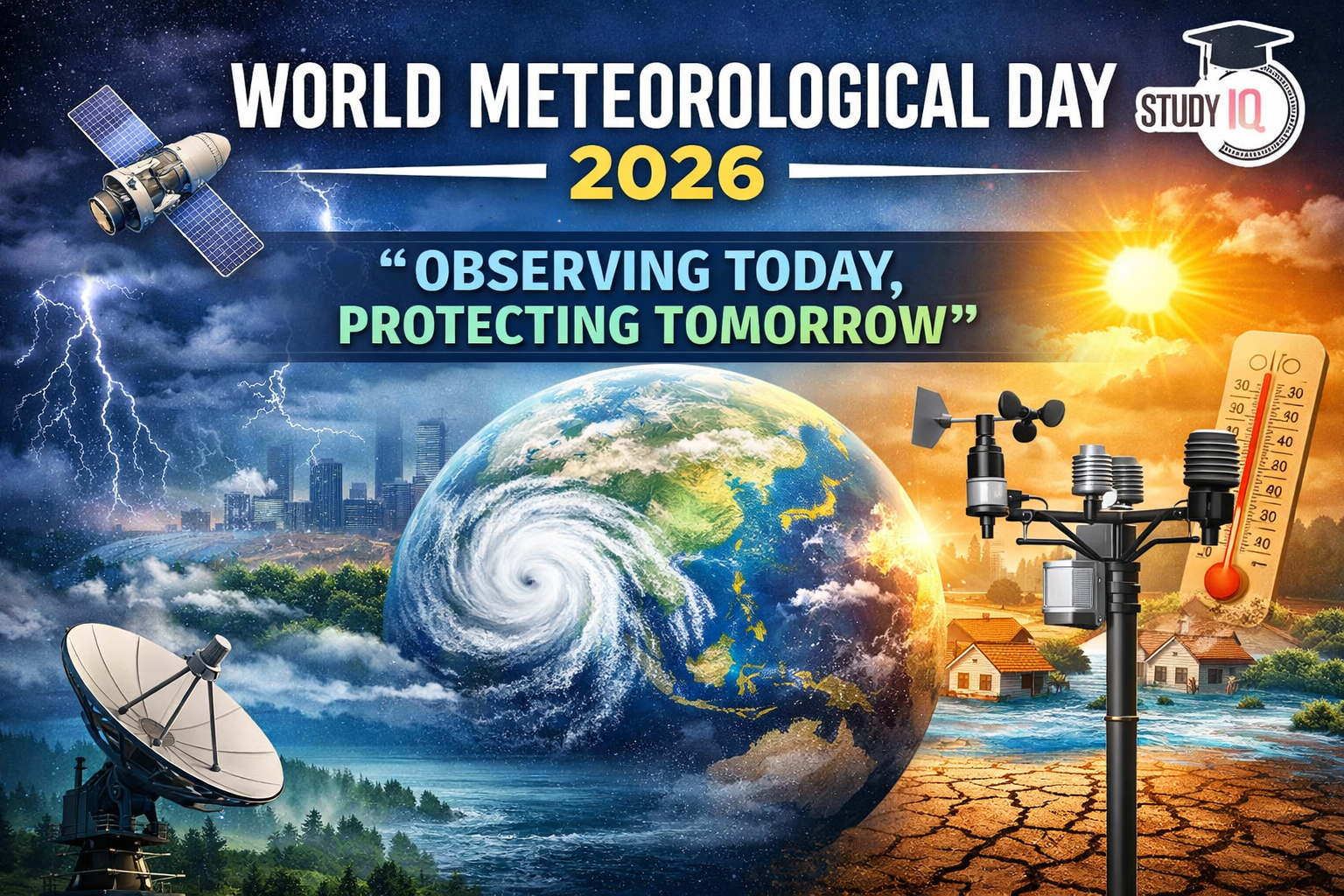
World Meteorological Day 2026 is observed on March 23 across the globe to highlight the crucial role of weather, climate, and water in sustaining life on Earth. The day brings attention to the importance of meteorological science in disaster management, climate monitoring, and sustainable development.
With climate change intensifying and extreme weather events becoming more frequent, the relevance of this day has grown significantly in recent years.
World Meteorological Day 2026: Overview
| Particulars | Details |
|---|---|
| Event Name | World Meteorological Day 2026 |
| Date | March 23, 2026 |
| Theme | “Observing Today, Protecting Tomorrow” |
| Organized By | World Meteorological Organization |
| First Observed | 1961 |
| Significance | Promotes weather awareness, climate science, and disaster preparedness |
Theme of World Meteorological Day 2026
The theme for 2026, “Observing Today, Protecting Tomorrow”, focuses on the importance of collecting accurate weather and climate data to safeguard the future.
This theme emphasizes:
- The role of real-time observation systems
- Importance of early warning mechanisms
- Need for advanced forecasting technologies
- Long-term climate monitoring for sustainable planning
The message is clear: better observation today leads to better protection tomorrow, especially in the face of climate risks.
History of World Meteorological Day
World Meteorological Day commemorates the establishment of the World Meteorological Organization (WMO) on March 23, 1950.
Key historical milestones:
- 1950: WMO Convention came into force
- 1951: WMO became a specialized agency of the United Nations
- 1961: First World Meteorological Day celebrated
The WMO was created to enhance global cooperation in meteorology, hydrology, and climate science. Today, it plays a key role in coordinating international efforts related to weather forecasting and climate monitoring.
Importance of World Meteorological Day
1. Disaster Risk Reduction
Nearly 90% of natural disasters are related to weather, climate, or water. These include:
- Cyclones
- Floods
- Heatwaves
- Droughts
Accurate forecasting and early warning systems help minimize damage and save lives.
2. Climate Change Awareness
The day raises awareness about:
- Global warming
- Rising sea levels
- Extreme weather patterns
Meteorological data helps scientists understand long-term environmental changes and guide policy decisions.
3. Role in Daily Life
Weather impacts multiple sectors:
- Agriculture: Crop planning and irrigation
- Transport: Aviation, shipping, and road safety
- Energy: Renewable energy forecasting
- Health: Heatwave and pollution alerts
4. Promoting Global Cooperation
Weather systems do not follow political boundaries. The WMO facilitates:
- International data sharing
- Joint research initiatives
- Capacity building in developing countries
Role of Meteorology in Modern Times
Meteorology has evolved with technological advancements, making forecasting more accurate and timely.
Key Technologies Used:
- Satellite observation systems
- Doppler radar networks
- Automatic weather stations
- Climate models and AI-based predictions
These tools enable governments and agencies to respond proactively to natural hazards.
World Meteorological Day and Climate Action
World Meteorological Day serves as a platform to:
- Encourage climate resilience strategies
- Promote sustainable development goals (SDGs)
- Strengthen community awareness and participation
The 2026 theme particularly highlights the need for data-driven decision-making to tackle future climate challenges.
How World Meteorological Day is Celebrated
Across the world, the day is observed through:
- Educational seminars and workshops
- Public awareness campaigns
- Science exhibitions
- Social media initiatives (#WorldMetDay)
Meteorological departments release reports and updates on climate trends and weather patterns.
India’s Perspective on World Meteorological Day
In India, the day is observed by organizations like the India Meteorological Department (IMD), which plays a vital role in:
- Monsoon forecasting
- Cyclone tracking in the Bay of Bengal and Arabian Sea
- Issuing early warnings for extreme weather events
Given India’s vulnerability to climate-related disasters, meteorological services are critical for national preparedness.
Key Takeaways for Competitive Exams
- Observed on March 23 every year
- Marks the establishment of the WMO (1950)
- First celebrated in 1961
- Theme 2026: “Observing Today, Protecting Tomorrow”
- Important for Environment, Geography, and Disaster Management
 Water Governance in India, Current Crisi...
 World Bear Day 2026: Date, Theme, Histor...
 Shaheed Diwas 2026: History, Significanc...











 WhatsApp





