
Table of Contents
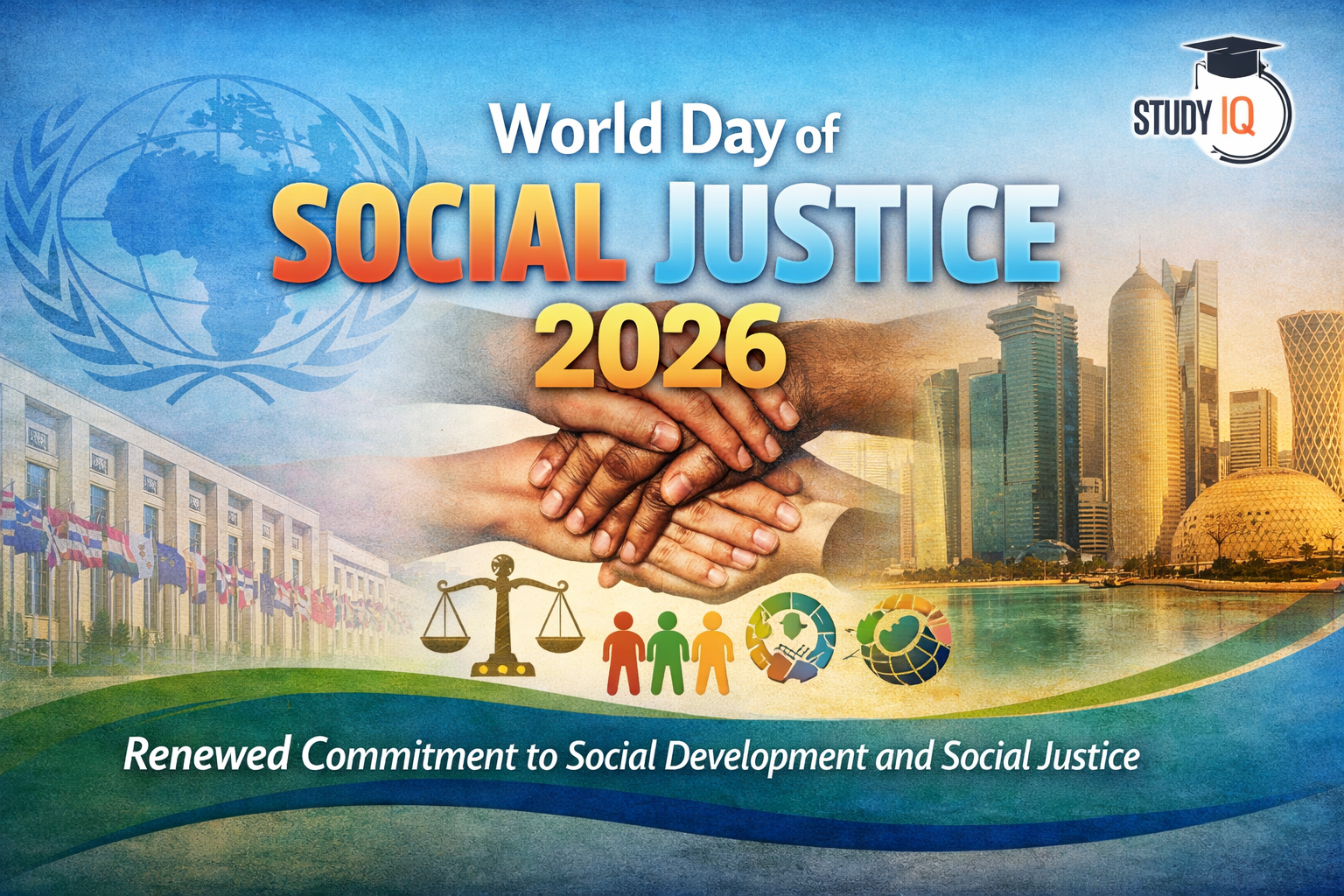
World Day of Social Justice 2026 is observed globally on 20 February, reaffirming the international community’s commitment to equality, dignity, and inclusive development. The 2026 theme “Renewed Commitment to Social Development and Social Justice” reflects the urgency of turning global promises into measurable action, especially following the Second World Summit for Social Development and the adoption of the Doha Political Declaration.
This day highlights that poverty eradication, decent work, gender equality, and social inclusion are fundamental pillars of sustainable development and global peace.
Why is World Day of Social Justice Celebrated?
The United Nations General Assembly proclaimed 20 February as World Day of Social Justice on 26 November 2007.
The observance aims to:
-
Address poverty and unemployment
-
Reduce social exclusion and inequality
-
Promote human dignity and equal opportunity
-
Strengthen inclusive economic growth
The United Nations recognizes that social injustice can lead to instability, conflict, and economic disparities. Therefore, social justice is central to achieving long-term peace and sustainable development.
Theme of World Day of Social Justice 2026
“Renewed Commitment to Social Development and Social Justice”
The 2026 theme underscores both progress made and challenges that persist worldwide. Despite improvements in poverty reduction and access to education, new structural challenges have emerged:
-
Rising income inequality
-
Informal labour markets
-
Gender wage gaps
-
Youth unemployment
-
Climate vulnerability
-
Digital divide
The Doha Political Declaration reaffirms earlier commitments made at the Copenhagen Summit in 1995 and calls for stronger policy coherence across labour, climate, digital, and economic sectors.
The Four Pillars of Social Justice
According to the International Labour Organization (ILO), social justice rests on four essential pillars:
1. Human and Labour Rights
This pillar focuses on protecting fundamental rights at work, including:
-
Freedom of association
-
Elimination of forced and child labour
-
Safe and secure working conditions
Strong labour rights ensure fairness and dignity for workers.
2. Equal Opportunities for All
Social justice demands non-discrimination in:
-
Employment
-
Education
-
Access to resources
-
Participation in economic activities
This pillar ensures that marginalized communities receive equal access to opportunities.
3. Fair Distribution of Benefits
Economic growth must be inclusive. This includes:
-
Living wages
-
Social protection systems
-
Access to healthcare and pensions
-
Redistribution mechanisms
Growth without equity can deepen inequality, making fair distribution essential.
4. Inclusive and Fair Societal Transitions
As economies shift toward green and digital models, transitions must be just and inclusive. This involves:
-
Just transition policies in climate action
-
Digital inclusion
-
Youth employment promotion
-
Support for vulnerable groups during economic restructuring
These pillars align closely with Sustainable Development Goals (SDGs), particularly SDG 1 (No Poverty), SDG 5 (Gender Equality), and SDG 8 (Decent Work and Economic Growth).
Role of the International Labour Organization
Founded in 1919, the ILO plays a central role in shaping global labour standards and advancing social justice.
Key milestones include:
-
1919 – ILO Constitution adopted
-
1944 – Philadelphia Declaration
-
1998 – Declaration on Fundamental Principles and Rights at Work
-
2008 – ILO Declaration on Social Justice for a Fair Globalization
The 2008 Declaration institutionalized the Decent Work Agenda as a key development objective in the era of globalization.
What is Decent Work?
The concept of “Decent Work” includes:
-
Fair income
-
Workplace security
-
Social protection
-
Equal opportunity
-
Freedom of expression and participation
Decent Work is central to sustainable development and is embedded in SDG 8, which promotes inclusive economic growth and productive employment.
World Day of Social Justice in India
India has been observing World Day of Social Justice since 2009, aligning it with constitutional values such as:
-
Equality (Article 14)
-
Social, economic, and political justice (Preamble)
-
Protection of marginalized communities
Government initiatives aimed at advancing social justice include:
-
Social welfare schemes for marginalized groups
-
Educational and economic empowerment programs
-
Skill development missions
-
Social protection and rehabilitation schemes
These initiatives aim to reduce inequality and promote inclusive growth across society.
Current Global Challenges in 2026
Despite progress in education and poverty reduction, global inequalities remain significant. Major challenges include:
-
Growing wealth concentration
-
Informal employment
-
Gender pay disparities
-
Climate-related displacement
-
Youth underemployment
-
Limited access to digital resources
The 2026 observance emphasizes embedding social justice principles into climate policy, digital governance, labour reforms, and industrial strategies.
Why Social Justice Matters for Peace and Stability
The United Nations framework recognizes that social justice is essential for:
-
Global peace and security
-
Democratic stability
-
Inclusive globalization
-
Protection of human rights
Without fairness, equality, and opportunity, sustainable development cannot be achieved.
|
Read More Notes |
|
| Environment Notes | Art and Culture Notes |
| Science and Tech | History Notes |
| Geography Notes | Indian Polity Notes |
| General Knowledge | International Relation |
|
Explore StudyIQ Courses |
|
 NHAI to Develop India’s First Bee Corr...
 Loggerhead Turtles – Ecology, Habitat,...
 Upgradation of Helsinki Treaty and Green...











 WhatsApp





